Home Blog Page 161

LAWMA DISENGAGES SWEEPERS OVER ILLEGAL DUMPING IN OWORONSHOKI

0

The Lagos Waste Management Authority (LAWMA) has disengaged some street sweepers, their supervisors and the service provider following investigations that established their involvement in indiscriminate waste dumping along the Oworonshoki-Berger axis of Lagos.

Speaking on the development at the weekend, the Managing Director/Chief Executive Officer of LAWMA, Dr Muyiwa Gbadegesin, said the action followed sustained investigation and surveillance of the median, which had been identified as a recurring waste blackspot.

He said the sweepers confessed to perpetrating the act, adding that their disengagement underscored the Authority’s commitment to ensuring that all personnel and service providers engaged in waste management upheld the required standards and did not contribute to the environmental challenges they were employed to address.

The LAWMA boss said the Authority would continue to investigate recurring waste hotspots and take appropriate action against anyone found contributing to indiscriminate waste disposal, irrespective of their status or role in the waste management system.

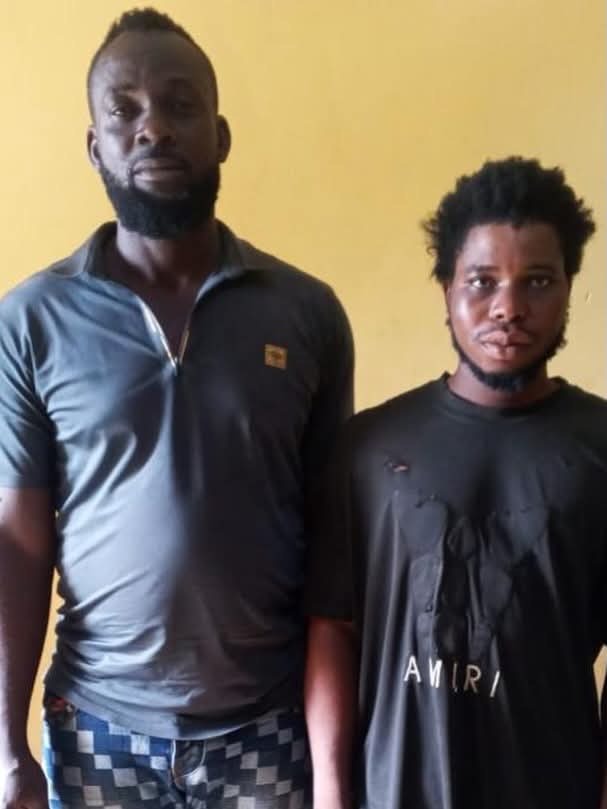
The second suspect, a suspected cart pusher, was arrested for allegedly engaging in unauthorised waste collection within the same area.

The two suspects have been taken to the Oshodi Task Force Office (Mobile Court) for further investigation and prosecution in accordance with relevant environmental laws of Lagos State.

Gbadegesin urged residents, businesses and waste collectors to dispose of waste through approved channels and patronise only assigned Private Sector Participants (PSPs).

He stressed that waste management personnel and service providers must uphold the same standards required of other stakeholders.

The Authority said it would sustain surveillance along the Berger-Oworonshoki axis and other identified waste hotspots, with further enforcement actions to be taken where investigations establish violations.

LAWMA also urged residents to report cases of indiscriminate dumping and unauthorised waste collection through the appropriate channels and support ongoing efforts to achieve a cleaner Lagos.

Oluremi Tinubu announces N500m relief for Calabar fire victims

0

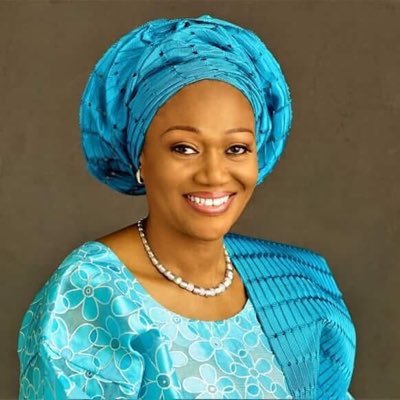
First Lady Oluremi Tinubu has announced a N500m presidential relief package for 18 business owners affected by the August 22 fire at the SPAR shopping mall in Calabar, Cross River State.

Tinubu made the announcement on Friday during the launch of the South-South zonal phase of the National Community Food Bank Programme in Calabar.

She said President Bola Tinubu had approved N25m for each of the 18 affected business owners, totalling N450m, to help them recover from the losses caused by the fire.

“Mr. President commiserates with the government and people of Cross River over this unfortunate incident that destroyed many businesses and livelihoods.

“Mr President has asked me to give N25 million for each of the 18 business owners affected. This intervention is to provide immediate support and help victims recover from their losses,” she said.

Tinubu also announced an additional N50m for women’s groups, which she said was presented to the wife of the Cross River State Governor, Bishop Eyoanwan Otu, while N15m was given to women who welcomed her to the state.

The August 22 fire at the shopping mall affected several businesses and left owners facing substantial financial losses.

The relief package, according to the First Lady, was intended to provide immediate assistance to the affected entrepreneurs and support their recovery from the incident.

She said the foodbank initiative was a deliberate and sustainable response to food insecurity and malnutrition among vulnerable households across Akwa Ibom, Bayelsa, Cross River, Delta, Edo and Rivers states, adding that the programme targets children under six, pregnant women and lactating mothers.

Actress Sikiratu Sindodo opens up on battle with strange illness

0

Actress Tayo Odueke popularly known as Sikiratu Sindodo has spoken about her near-death experience, revealing she battled a strange illness that left her in a coma and gave her a 50/50 chance of survival.

In an interview with Oyinmomo TV, the actress said she was initially treated for what appeared to be malaria or typhoid before her condition worsened, leading to months of hospital visits.

“I was sick like someone who had malaria. Malaria/typhoid, that was it, and that was how it started gradually. From one Hospital to another. I can’t remember how long it lasted. I think it lasted for months because I was in a coma and was given a 50/50 chance. My mum was even told to go home”, she recalled.

Sindodo said the experience was traumatic, but credited her recovery to faith and prayers.

While speaking on her trials, she held back tears as she reflected on God’s faithfulness.

“God answered a lot of prayers in my life. God has been faithful because I don’t want to be emotional,” she said.

The actress did not disclose further details about the diagnosis, but said the ordeal taught her to appreciate life and divine intervention.

Sikiratu Sindodo is a familiar face in Yoruba cinema, known for her roles in indigenous films.

She joins a growing list of Nollywood actors who have spoken publicly in recent years about health challenges.


Celestial pastor Bidemi Odukoya kills wife over infidelity, runs into speeding truck

0


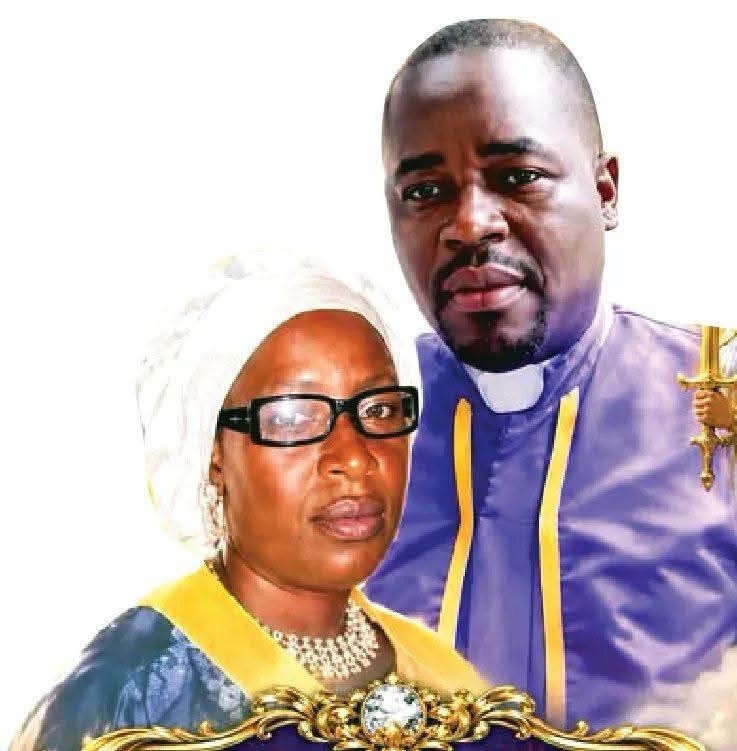
On Monday, August 31, Bidemi Odukoya, the Shepherd of Iri Orun Parish of the CCC, allegedly macheted his wife to death during a midnight domestic dispute before reportedly taking his own life.The incident reportedly occurred around 2am.

After allegedly attacking his wife, Odukoya, a father of three boys, reportedly fled the community and headed for the Coker junction, Ifo section of the Lagos-Abeokuta Expressway, about 20 minutes drive away from Akiode community.

He was later alleged to have thrown himself in front of a moving truck, resulting in his instant death. Both husband and wife were buried beside their home on Monday evening.

Fuel subsidy: Nigerians shouldn’t pay for govt’s failures, says Makinde

0


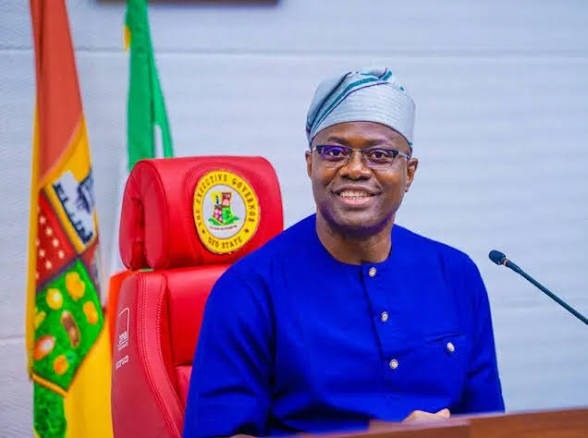
Oyo State Governor, Seyi Makinde, has lamented that the national conversation on petrol subsidy had been wrongly reduced to a choice between subsidising petroleum products and allowing Nigerians to pay full market prices.

Makinde, in the latest edition of his newsletter, The Business of Governance, called for a rethink of Nigeria’s petroleum pricing system, arguing that citizens should not be made to bear additional costs arising from the government’s inability to secure the country’s borders.

According to him, the more fundamental issue is whether Nigeria, as an oil-producing country, has a petroleum pricing framework that is fair, transparent and enables citizens to benefit from the natural resources they own.
“For years, the debate in Nigeria has largely been presented as a choice between subsidising petroleum products or allowing Nigerians to pay the full market price. “I believe we are asking the wrong question. The more important question is: what is the right pricing framework for an oil-producing country like Nigeria?” he said.

The governor said the components used in determining pump prices should be made public, including the crude oil benchmark, refining costs and margins, exchange-rate assumptions, logistics and distribution costs, taxes and levies.

He said making the variables public would enable Nigerians to understand and interrogate how the prices they pay for petroleum products are arrived at.

“What Nigerians deserve to know is the current pricing framework and the assumptions that determine what we pay at the pump: the crude price benchmark, refining costs and margins, exchange-rate assumptions, logistics and distribution costs, taxes and levies, and the other variables included in that calculation,” Makinde said.

He also rejected the argument that Nigerians should pay higher petrol prices in order to eliminate the price differential that encourages the smuggling of petroleum products into neighbouring countries.

According to him, securing Nigeria’s borders is the responsibility of the government and the cost of its failure to do so should not be passed on to citizens. “We should also reject the argument that Nigerians must pay more for petroleum products simply to eliminate the price difference that makes smuggling into neighbouring countries profitable.

“Nigerians should not be made to bear the cost of government’s inability to secure its borders,” he said.

Makinde disclosed that he would unveil an alternative approach to the country’s petroleum pricing system in the coming weeks, saying Nigerians should examine the proposal on its merits.

He said the petroleum debate should focus on whether the existing pricing arrangement serves Nigeria’s peculiar circumstances and guarantees citizens a fair return from the country’s resources.

“Reset Nigeria means being willing to interrogate the system itself. The petroleum question should therefore not simply be whether subsidy should return or remain removed.

“It should be whether the pricing system we are using is the right one for Nigeria and whether it allows Nigerians to derive a fair benefit from the natural resources they own,” he said.

The governor said his proposed Reset Nigeria initiative would extend beyond petroleum pricing to the economy, security architecture, education, institutions and the country’s social and political order.

He argued that Nigeria’s problems could not be solved merely by replacing individuals in government, saying attention must also be paid to reforming systems and institutions that repeatedly produce poor outcomes.

“Too many of our people are still trapped in poverty. Too many families work hard without experiencing real progress. Too many young Nigerians are unable to see a clear path from education to opportunity,” Makinde said.

He added that insecurity and weak institutions continued to undermine the wellbeing and economic prospects of Nigerians.

Makinde said achieving a national reset would require accountable leadership as well as active participation by citizens, stressing that rebuilding the country could not be the responsibility of one individual.

“This will not be an instant transformation, nor will it be the work of one person. It must be a deliberate national effort supported by a clear roadmap, measurable priorities and the sustained participation of Nigerians at home and abroad,” he said. The governor said he would continue to outline his ideas for resetting Nigeria’s economy, security architecture, education system, institutions and political order, while inviting Nigerians to contribute to the conversation on areas that should receive priority attention.

Sun

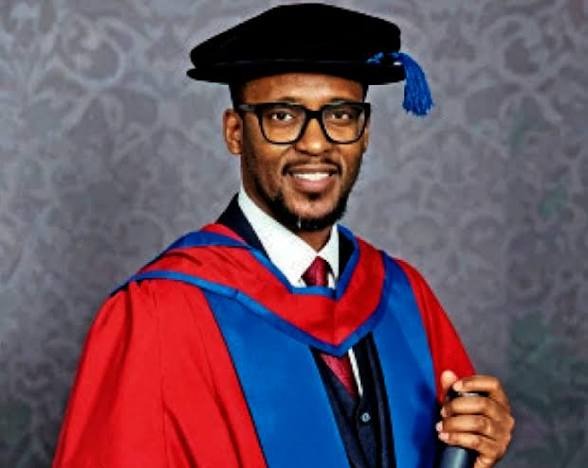
Chigozie Chukwu: He failed school cert 9 times, UTME 7 times, but he’s now prof in UK varsity

0

• What Nigeria needs is execution, not more policy announcements


From failing WAEC nine times and writing the Unified Tertiary Matriculation Examination (UTME) seven times to earning a PhD, becoming an Assistant Professor and attaining the prestigious Senior Fellowship of Advance HE (SFHEA), Dr Chigozie Chukwu’s journey is one of resilience, faith and determination. Now affiliated with the University of Wolverhampton in the United Kingdom, where he contributes to teaching, research and academic development, Chukwu has turned the struggles of his early years into a passion for empowering students and influencing development policy.


He spoke more in this interview

What was your childhood like, and what kind of environment and experiences shaped the person you are today?

My childhood was filled with complexities and memorable experiences. There were sweet moments, but honestly, there were more challenging ones.

I lost my father at a very young age, and that changed the direction of our family. Suddenly, everything became about survival, resilience and figuring things out. Growing up in a large family came with its own challenges. Resources were limited, attention was stretched, and there was always pressure to do more with less. It taught me early to be independent, to share and to look out for others.

School was not easy either. My academic performance in primary school was poor, and I struggled to keep up. That continued into secondary school, where I failed the school certificate examination conducted by the West African Examinations Council (WAEC) nine times and sat for the UTME by the Joint Admissions and Matriculations Board (JAMB) seven times before eventually gaining admission. Those repeated failures were painful and discouraging, but they taught me persistence. I learned that just because you start at the back does not mean you have to stay there.

Looking back, those experiences shaped me deeply. Losing my father, facing financial hardship and enduring repeated academic setbacks taught me empathy, discipline and the value of hard work. They also gave me a deep appreciation of education as a tool for transformation — not just for myself, but for others from similar backgrounds.

There is a quote that has stayed with me: “It’s not about how hard you fall, but how you rise and who you become on the way up.”

That has really been the story of my childhood and early life. It was not easy, but it built the foundation of who I am today — someone who values resilience, service and the belief that circumstances do not have to define your future.

Where did you grow up?

I was born in Lagos, and I spent all my formative years there. Lagos shaped many of my early experiences and values. Growing up there was not easy. I did a lot of menial jobs to get by, but those experiences helped me grow and built my resilience. They taught me early that there is dignity in labour and that you have to be willing to do what is necessary to move forward.

Which schools did you attend during your formative years?

I started my primary education at Hope Children School. For secondary school, I initially attended Hope Bay College. After the passing of my father, I transferred to Festac Grammar School in Lagos, where I completed my secondary education.

Those years were important in shaping me, even though academically they were very challenging.

You said you failed WAEC nine times and JAMB seven times, alongside experiences of neglect and discouragement. How did you endure those years without giving up on yourself?

Those years were some of the hardest of my life, and I will not pretend otherwise. Writing WAEC nine times and JAMB seven times was not just about examinations; it came with neglect, whispers and discouragement. There were moments when even those who should have supported me had written me off.

What kept me going was a combination of stubbornness, faith and purpose.

After losing my father, I had seen what giving up looked like. I watched my family struggle and told myself I could not add quitting on myself to that story. Despite poor results and limited opportunities, I knew education was the only ladder I had.

I also learned to separate people’s opinions from my potential. The discouragement hurt, but it became fuel. Every “you won’t make it” pushed me to try again, but smarter. I began asking, “What am I doing wrong?” and treating every failure as data, not a verdict.

Above all, I held on to my faith in God and the belief that my story was not finished. There were nights I cried and almost gave up, but something kept telling me, “Just one more attempt.”

I continued because I wanted a different life — not just for myself, but to honour my father’s memory and show people from backgrounds like mine that their starting point is not their destination.

Those years taught me resilience, humility and empathy. I know what it feels like to be counted out, and I also know what it means to keep showing up until the door finally opens. Looking back, every struggle I endured was worth it.

How were you able to get through university given the financial challenges you’ve mentioned?

I studied Economics at the University of Abuja. To support myself, I leaned into entrepreneurship. I discovered I had a talent for teaching when I started helping my classmates understand course materials. That grew into private tutoring — both one-on-one and at a weekend tutorial centre I set up.

During holidays, I also ran a small trading business. I would travel from Abuja to Kano to buy brocade fabrics and then sell them in Lagos at a profit.

Between my tutorial work, trading and occasional support from my mother, I was able to fund much of my education largely independently.

Could you tell us about your Master’s degree?

After completing my BSc in Economics with Second Class Upper Honours in 2011, I returned to the University of Abuja in 2015 to pursue an MSc in Economics, which I completed in 2017.

The Master’s degree was an important stage in my academic journey because, by then, I had already experienced many setbacks. It showed me that the academic struggles of my earlier years did not have to define my future.

Was there a defining moment or turning point when you began to believe that your circumstances did not have to determine your future?

Yes, there was a defining moment, although it was not a big ceremony or a particular examination success. It was very quiet.

I was sitting with a stack of past WAEC and JAMB papers after another failed attempt. I was tired, and I could hear voices around me saying I was wasting my time. In that moment, I realised something: I had been waiting for my circumstances to change before changing myself. I was allowing loss, poverty and past failures to write the script for my life.

That night, I made two decisions.

First, I would stop asking, “Why me?” and start asking, “What next?”

Second, I would treat studying like a job. I created a timetable. I could not afford private lessons, so I had to figure things out on my own.

That shift — from victim to student, from waiting to working — was the turning point. I began to understand that my future could be built; it did not have to be inherited.

A line that stayed with me was: “Your present circumstances don’t determine where you can go; they merely determine where you start.”

Earlier, you spoke about your faith. How did it evolve during those difficult years, and who or what kept you spiritually and emotionally grounded?

My faith did not grow in a church hall during that season. It grew in small, quiet places — in struggle, waiting and repeated disappointment.

My first anchor was my mother. After we lost my father, she became both parents to us. I remember nights when things seemed impossible, and she would lay hands on me while I slept and pray. One of her favourite prayers was, “You will succeed in life, in Jesus’ name.”

She had neither money nor connections, but she had prayer and faith. Her prayers reminded me that even when people forgot about us, God had not. They gave me the foundation that I was seen, even when I felt invisible.

But the person God used most practically during that period was Mrs Mercy Okorie – God bless her greatly. She stepped in when almost everyone else had stepped back. She would sit with me while I cried, counsel me, give me food and encourage me when I was ready to quit. She spoke life into me when I had none left for myself.

What I will never forget is that she continued to buy my JAMB forms year after year, even when people said I had wasted enough chances. She simply said, “Let’s try again.”

She saw potential in me when others saw only failure. She kept me emotionally and mentally grounded and taught me that faith without action is empty. Through her, I learned that God often answers prayers through people.

My faith therefore became less about grand miracles and more about daily trust — trust in God, the process and the people He places along our path.

My mother gave me spiritual covering, while Mrs Mercy Okorie gave me practical support and belief. Together, they helped keep me from giving up on myself.

You once mentioned that before leaving for your PhD in 2020, your spiritual father prayed over you. Looking back now, with a PhD, international experience and academic recognition, what does that prayer mean to you?

That moment meant everything to me. Before I left Nigeria for my PhD studies in 2020, my spiritual father, Apostle Goodheart Ekwueme of Revival House of Glory International Church (RHOGIC) called me aside and prayed over me. He laid hands on me and committed my journey, my mind and my purpose into God’s hands.

At the time, I did not fully understand how significant that prayer would become. I was nervous and excited, but I was also carrying the weight of years of struggle — WAEC, JAMB, family expectations and everything that had brought me to that point.

Looking back, I see that prayer as both a covering and a commissioning. It was God reminding me, through a father in the faith, that I was not going alone.

During the difficult months abroad — the loneliness, academic pressure and cultural adjustment — I would remember that prayer, and it strengthened me. It reminded me that my assignment was bigger than simply obtaining a degree. It was about representation and lifting others as I climbed.

Academically, the moment became a reference point for responsibility. I realised that people had invested in me — my spiritual father through prayer, Mrs. Mercy Okorie through the JAMB forms she bought for me over the years, and my mother through her sacrifices. I could not waste the opportunity.

Professionally, it also shapes how I see my work today. The PhD, international experience and SFHEA recognition are not just about me. They are about honouring that prayer and paying it forward.

Every lecture I teach, every paper I write and every student I mentor is part of fulfilling what was spoken over me that day.

That prayer was not the end of a chapter. It was the beginning. Everything I have achieved since has been me walking in it.

You arrived in the UK in the middle of the COVID-19 lockdowns. What was that experience like, and how did you overcome the isolation, uncertainty and academic challenges to complete your PhD?

Arriving in the United Kingdom in 2020 was not the PhD experience I had imagined. I arrived amid lockdowns, uncertainty and closed borders. The airport and streets were quiet, and for the first few months, life was largely my room, my laptop and Teams.

I never knew what depression was until I came to the UK. I was adjusting to a new country, a different system, unfamiliar weather and a new way of life, while carrying the emotional weight of leaving home during a global crisis. You could not hug people, easily build a community or simply go to campus to meet supervisors and colleagues. Everything felt distant.

Isolation and uncertainty were my biggest personal challenges. Without family and with limited social interaction, loneliness was real. I had to learn to sit with myself, remain grounded in faith and intentionally reach out to people, even through a screen.

Academically, remote learning and research brought their own difficulties. My first year was largely online, with limited access to physical resources and fewer opportunities for face-to-face engagement. I had to become self-directed quickly, manage my time effectively and learn to build academic relationships remotely.

Research was also affected by limited access to data, fieldwork and collaboration, forcing me to rethink aspects of my methodology and become more flexible. Coming from a different educational background, I also had to adapt quickly to UK academic writing, critical thinking and research expectations.

But discipline, faith and supportive people got me through. I built a routine, leaned on my supervisors and kept reminding myself why I came — to grow, learn and return with something that could help others.

COVID did not make the journey easier, but it made me sharper. It taught me adaptability, independence and gratitude. I arrived in a storm, but I came through that season with a PhD, international exposure and a deeper understanding that growth is possible even in restricted spaces.


Chukwu at work

From associate lecturer to assistant professor, PhD holder and Senior Fellow of Advance HE, which milestone stands out as the most meaningful to you, and why?

If I am honest, each milestone has mattered for a different reason. Becoming an associate lecturer was my first foot in the door; becoming an assistant professor validated my ability to teach and lead at that level; while the PhD proved that persistence could rewrite a story that began with writing WAEC nine times and JAMB seven times.

But the milestone that stands out most is becoming a Senior Fellow of Advance HE (SFHEA). It is not about the title, but what it represents — international recognition of teaching excellence, student impact and a commitment to raising standards in higher education.

For someone who struggled academically and was told in many ways that he would not make it, being recognised for how I teach, mentor and support learners truly closes a circle for me.

Teaching is where my purpose lives. My heart is in the student who thinks they are “not smart enough”, the international student adjusting to a new system, and the young person from a background like mine who simply needs someone to say, “You can do this.”

SFHEA tells me that the way I show up for those students is seen and valued. But it also comes with responsibility — to practise reflectively, mentor colleagues and contribute to the wider academic community.

So, while the PhD proved I could endure, and becoming an assistant professor, showed I could grow, SFHEA tells me I am making a difference where it matters most — in people’s lives. That is why it remains my most meaningful milestone.

How have your own academic struggles influenced your approach to teaching, mentoring and supporting students who may be facing similar challenges?

My academic struggles are the lens through which I teach. I did not start out strong. My performance in primary and secondary school was poor, and I failed WAEC nine times and JAMB seven times. I know what it feels like not to understand in class, receive poor results, feel ashamed and hear, “Maybe this is not for you.” I also know what it means to be counted out and, more importantly, to have just one person believe in you.

Because of that, my approach to teaching is built around three things: access, empathy and high expectations.

First, access. I do not assume every student has the same foundation. I break concepts down, use real-life examples and provide step-by-step guidance. I remember Mrs Mercy Okorie patiently sitting with me and even buying my JAMB forms when others had given up. I try to be that person for my students. When a student struggles, I ask, “What support do you need?”

Second, empathy. Struggle is not always academic. Students may be dealing with financial, emotional or personal challenges. I try to create a classroom where they feel safe to ask questions, make mistakes and try again. I share my story not for sympathy, but to remind them that their starting point is not their destination.

Third, high expectations. Empathy without standards is not enough. I push students because I know what persistence can achieve. I give honest, constructive feedback and mentor them on study habits, time management and seeking help early.

Ultimately, my struggles taught me that potential is often hidden beneath fear and circumstances. As a lecturer and SFHEA, my role is to help uncover that potential. If I can help one student believe that their story can change, then every WAEC and JAMB failure I endured will have been worth it.

Beyond the classroom, what more should a lecturer offer students?

Delivering academic content is the baseline. A lecturer’s real responsibility goes far beyond the slides and syllabus.

First, I see myself as a builder of confidence. Many students enter lecture halls carrying doubts arising from past failures, family pressure or a feeling that they do not belong. I know that feeling.

My responsibility is to show them, through my teaching and the time I give them, that they are capable. Improved outcomes do not start with grades; they start when a student believes they can succeed.

Second, I see myself as a mentor and navigator. University can be overwhelming, especially for first-generation and international students. Beyond academic content, students need guidance on how to study, manage their time, write critically and access support services.

Third, I believe lecturers must serve as role models for character and purpose. Students observe how we respond to feedback, treat colleagues and handle setbacks. I try to model resilience, integrity and curiosity because those qualities will stay with them beyond the classroom.

Finally, there is a responsibility to equity. That means designing fair assessments, providing timely feedback and creating opportunities for students with different learning needs.

At its heart, teaching is not simply about transferring knowledge. We are shaping people who will go on to shape communities.

If my students leave with better grades and a stronger belief in themselves, then I have done my job.

How do you see your research in development economics, public finance and related fields contributing to Nigeria’s economic development and policy direction?

My research is driven by one question: How do we turn evidence into better outcomes for ordinary Nigerians?

My work focuses on the structural issues that constrain growth in low- and middle-income countries, particularly Nigeria. A significant part of my research examines how government spending, taxation and fiscal policy affect economic growth, poverty and service delivery. My published work also explores the relationship between public expenditure, institutional quality and development outcomes.

The message is clear: it is not simply about spending more, but spending wisely and ensuring accountability. For Nigerian policymakers, this means strengthening budget transparency, tracking projects at the state and local levels, and linking expenditure to measurable outcomes in health, education and infrastructure.

Another strand of my research examines the size, drivers and impact of the shadow economy. Nigeria has one of the largest informal sectors in Africa and globally. My work shows that informality is not just a tax issue; it is also a problem of governance and inclusion. Formalisation must therefore be accompanied by access to credit, simpler registration processes and social protection, if Nigeria is to expand its tax base without suffocating small businesses.

I also examine how trade openness affects growth. The lesson is that trade liberalisation alone is not enough. It must be supported by investment in human capital, infrastructure and strong institutions that reduce rent-seeking. That is how we move from growth that benefits a few to growth that creates jobs and opportunities.

I do not conduct research simply for academic journals. I want policymakers, legislators and technocrats to ask: “What does this mean for our budgets, reforms and people?”

Ultimately, my goal is to bridge the gap between academia and policy. Nigeria does not necessarily lack ideas; the bigger challenge is translating evidence into effective implementation. My research is my contribution to ensuring that policy is driven not by guesswork, but by data, strong institutions and the lived realities of citizens.

If you had the opportunity to advise Nigerian policymakers directly, what key reforms or priorities would you focus on to improve economic and social outcomes?

If I were advising Nigerian policymakers today, I would focus on three priorities: fiscal discipline, institutional reform and human capital investment. My research in development economics and public finance continually points to these areas.

Nigeria’s challenge is not just revenue but efficiency. We need a budget process that links every naira to measurable outcomes in health, education, roads and power, alongside stronger fiscal rules, transparent project-performance data and empowered oversight institutions.

We must also reduce the cost of formalising businesses through simpler registration, affordable credit and social protection for MSMEs. Rather than over-taxing compliant businesses, we should broaden the tax base by bringing more informal businesses into the formal economy.

Long-term growth also requires investment in education, healthcare and skills, including stronger technical and vocational education, alongside civil service reform and an independent justice system.

The bottom line is that Nigeria does not lack potential; we lack execution. Policy must move from announcements to implementation and from politics to evidence. If we get public finance right, reduce informality and invest in people, we can achieve growth that creates jobs and reduces poverty — not just higher GDP figures on paper.

Looking beyond academia, how have your family, personal interests and life outside work shaped you, and what legacy do you hope to leave behind?

Beyond the titles, I am someone who grew up understanding struggle.

Outside work, I am quite reserved and conservative by nature. I try to read widely, and I write and publish children’s educational materials. I also enjoy spending time listening to people who keep me grounded.

I believe strongly in giving back. Whether through mentoring students, speaking to young people or creating fun educational books for children, I try to be useful.

In the last 60 days alone, I have had the opportunity to speak to more than 500 young people through different youth programmes. Those engagements matter to me because someone once invested in me.

Life outside academia has also taught me humility. Failing WAEC and JAMB multiple times did not break me; it built me. It taught me patience, faith and how to see people — especially those who are struggling.

The legacy I hope to leave is simple: that I lifted others as I progressed.

I want to be remembered not simply for academic achievements or positions, but for the students who believed in themselves because I believed in them first; for policies that became better because research spoke to reality; and for showing that where you start does not determine where you finish.

If my life can give one person the courage to try again, then it will have been worth it.

Sun

Unbelievable! So men also experience menopause!

0

• Andropause shows up in mood swings, fatigue, belly fat, but many men feel it’s old age, stress
• What men over 40 need to know about andropause, by medical experts

For a lot of men, being sexually active is tied to strength, drive and overall sexual health. But when those things gradually slip, it becomes a major issue. Studies have shown that as women experience menopause as part of their life cycle, men have continued to ignore the realities that comes with andropause.


According to experts, andropause is a medical term used to define a period when the male hormone, the testosterone, begins to decline gradually from about the third to the fourth decades of life. A lot of men suffer in silence because they lack the basic knowledge of what andropause is, including the symptoms and how it could be managed as they grow older. For many, andropause is not just a medical issue. It is a lifestyle, social, and emotional experience men usually face in silence. When energy and motivation slip, the result can be anxiety, low mood, and withdrawal. The medical community, it was gathered, agreed that decline in the testosterone levels in men begin from ages between 30 and 40. Medical experts also explained that andropause is gradual in men and is also an age-related decline in testosterone, the primary male sex hormone.

Apart from the age-related ailments, findings also revealed that sicknesses like hypertension, diabetes, smoking, high fat, blood fat, lack of sleep, lack of exercise and alcohol have severe effects on men.

As it is generally agreed that most women experience menopause at a very later stage of their lives, it is not always the case with men. Findings reveal that andropause, in some cases, begins much earlier than expected. However, men rarely talk about it. Not because it is insignificant, but because some men believe such hormonal change come with societal shame. It was gathered that there are books, clinics, and groups that support women with advocacy services, especially during the early stage of their menopausal years. But when men begin to experience their own age-related hormonal decline, the conversation almost disappears. Yet, the millions quietly face changes that affect their bodies, minds, relationships, and sense of identity.

According to medical experts, a good number of men ignorantly engage in activities that can easily affect their testosterone levels and that could also lead to faster decline in the levels.

Findings also revealed that men, especially, those that are in their middle-ages are prone to having gradual decline in testosterone levels, whereas older people of ages 70 and above have 60 per cent less testosterone levels than when they were 25 years old.

To mitigate the decline, experts also advise men, especially the middle-aged, to cut down on belly fat. Fat belly, they said, is the biggest destroyer of testosterone. An urologist and medical expert, Edidiong Uko, explained that belly fat produces anti-hormone that competes with it, noting that heart hormone really affects testosterone levels. Uko advised men to cut down on belly fat, reduce alcoholic intake and eat food that contains all the essential fatty acid, vitamin D, zinc, and protein.

“I always believe that as you get older, the more protein you need. Protein is very important for middle-aged men and older men. And then physical activity and good sleep in particular. Unlike menopause, which brings a sudden, complete stop to ovarian function, men’s hormonal change is slow, subtle, and very often it is misunderstood,” he said.

Medical professionals say testosterone typically decreases by one per cent to 1.6 percent per year starting around age 40. For them, there’s no dramatic pause, just a steady hormonal drift a lot of men mistake for stress, aging, or personal failure.

“Andropause isn’t a collapse; it’s a slow drift that many men don’t recognise until it affects their daily lives,” Uko said. For decades, testosterone issues have been reduced to one health issue – erectile dysfunction affecting the libido. But doctors say that is only a small part of the story. For instance in men, testosterone is a master hormone that touches almost every system in the body. When it declines, the effects show up far from the bedroom.

According to experts, testosterone is produced mainly in the testes, with a small amount from the adrenal glands. It peaks in a man’s late teens and early 20s, then it also begins a gradual decline of about 1 to 1.6 percent per year from age 30 or 40.

Andropause symptoms, findings revealed, range from mild to severe, and fall into three major categories.

Most men will experience sexual symptoms like reduced libido, erectile dysfunction, and decreased fertility as well as physical symptoms, including fatigue and low energy even after sleep, loss of muscle mass, decreased bone density, increased abdominal fat, especially around the belly. These, according to medical professionals, are some of the symptoms that bring men to the clinic. Abayomi Ogunbekun revealed that health experts usually urge men from age 40 and above to recognise symptoms of age-related testosterone decline and adopt lifestyle and medical care for better quality of life.

“As men age, their bodies undergo natural hormonal changes similar to menopause in women. This condition, known as andropause or late-onset Hypogonadism, is a gradual decline in testosterone levels that typically begin after age 40,” he said.

Some of the causes of andropause, he stated are combination of normal aging, testicular and pituitary gland changes, as well as lifestyle factors.

Ogunbekun explained further that key contributors include chronic stress, obesity, diabetes, poor sleep, excessive alcohol, and certain medications. Belly fat, he noted in particular also accelerates the decline by converting testosterone to estrogen.

“A lot of men mistake andropause symptoms for just getting old or depression, thus delaying proper care. But as medical professionals, there is a need for us to educate people on some of the approach to be taken.”

Some of the approach, he said include weight management and good nutrition that can naturally boost testosterone. He advised individuals to cultivate daily medical evaluation – a simple morning blood test for testosterone, as well as regular screening for diabetes and thyroid issues, which he said helps in confirming diagnosis.

According to Ogunbekun, treatment options for men with confirmed low testosterone and symptoms, include lifestyle coaching and, when appropriate, physician-supervised Testosterone Replacement Therapy (TRT). He advised that men should be encouraged to speak openly with their doctors and not suffer in silence. Spouses, families, and faith communities must also play a key role in encouraging regular health checks.

“Men should not take andropause lightly. Seek medical help early and seek enlightenment as regards this condition from medical experts, not from your friends, family or neighbours,” he said.

Meanwhile, Olaoluwa Jegede a physician said as men age and sleep quality declines, testosterone drops further, which then makes sleep worse. He explained also that andropause symptoms are vague. According to him, fatigue is blamed on work, irritability is blamed on family, and weight gain is blamed on age.

“Physical activity is also very important because without the testosterone, you lose lean muscles. Muscle is not just for looks. It burns calories, supports joints, and protects against injury.

“Few men think about bone health until a fracture occurs. But testosterone plays a direct role in maintaining bone density. It helps convert to estrogen in small amounts, and both hormones signal bone cells to keep building new bone. When testosterone is low for years, bones become thinner and more fragile. This raises the risk of osteoporosis and fractures in men over 50,” he said.

Jegede also emphasised that low testosterone also linked to lower red blood cell production, adding that fewer red blood cells means less oxygen to tissues, which explains the constant fatigue and brain fog many men describe.

“Doctors now include bone scans in the workup for men with persistently low testosterone, especially if they have had unexplained fatigue or back pain. But how do you explain the ignorance of some young men who treat andropause with local herbs soaked with gins?

“Whenever I see young men in the streets buying local herbs, also known as Opa eyin or Afato in local parlance to cure natural health issues like andropause, I feel bad. Perhaps, this is not necessary because they are sick or having health challenges, but because of peer pressure and the need to belong.

“Many of them use the local herbs as sex enhancement products. Men that experience low sperm count and other similar ailments also take sex enhancement drugs as remedies and that is complete ignorance,” he said

He added that although testosterone naturally declines by 1-1.6% yearly from age 30 to 40, lifestyle and health can speed it up. Jegede also agreed that chronic diseases like diabetes, hypertension, and high cholesterol interfere with hormone production, even as obesity creates a very dangerous cycle.

“Belly fat produces compounds that lower testosterone, and low testosterone makes it harder to lose belly fat.

“Other accelerators include poor sleep, chronic stress, smoking, excess alcohol, and even medications for long-term illnesses,” he said.

Medical experts also say one of the best ways to manage andropause is to cut belly fat through less sugar and more movement, ensure they enjoy a seven-to-nine hours of sleep. All these, they say, are necessary because that’s when testosterone is made.

“People should eat to support hormones with protein, healthy fats, zinc, and vitamin D, while cutting down on alcohol.

“Daily exercise with a mix of strength training, cardio, and walking to build muscle and burn fat is also necessary and also by managing stress and avoid smoking.

“When lifestyle isn’t enough, doctors may consider Testosterone Replacement Therapy, but only under supervision.”

Findings also revealed that when testosterone is medically confirmed to be low and symptoms are significant, TRT may be considered. The TRT, doctors said is available as: gels, patches, injections, and pellets. It can improve muscle mass, bone density, and sometimes mood and sexual function, but it must be professionally supervised.

Sun

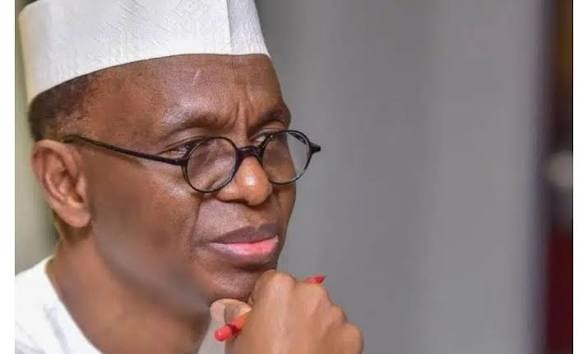
Atiku’s camp kicks as El-Rufai spends 200 days in detention

0

The camp of former Vice President Atiku Abubakar has criticised the continued detention of former Kaduna State Governor, Nasir El-Rufai, who has now spent 200 days in custody as of Friday, September 4.

In a Facebook post on Friday, Atiku’s media aide, Paul Ibe, said the former governor was not seeking immunity from investigation but was entitled to justice, due process and equal treatment under the law.

Ibe described El-Rufai as a political prisoner held because he chose a different political path, as permitted by the constitution.
He contrasted the situation with that of former Kogi State Governor, Yahaya Bello, who faces ongoing Economic and Financial Crimes Commission (EFCC) prosecution yet remains politically active and has secured the All Progressives Congress (APC) senatorial ticket for Kogi Central.

“Nobody should be above the law. But neither should the law become a political weapon,” Ibe stated.

He claimed that police, the EFCC, the Independent Corrupt Practices and Other Related Offences Commission (ICPC) and other state institutions, including elements of the judiciary, had become instruments of pressure against opposition figures ahead of the 2027 elections.

Ibe urged the ruling All Progressives Congress (APC) to campaign on its record of economic challenges, including hunger, inflation, high fuel and electricity prices and the high cost of living, rather than what he called the use of state power against opponents.

He argued that a confident government should not fear a strong opposition and that the opposition should be defeated by voters, not detained, intimidated or subjected to endless litigation.

“Democracy is not simply about holding elections. It is about ensuring that those elections are genuinely free and competitive,” Ibe observed.

“Today, it is El-Rufai. Tomorrow, it could be anyone. If state power is used to clear the political field before Nigerians get to vote, then the greatest casualty will not be the opposition. It will be Nigerian democracy. 2027 must be decided by THE PEOPLE—not by the machinery of government.”

El-Rufai has been in detention since mid-February 2026 voluntarily reported to the EFCC on February 16 over allegations linked to a Kaduna State House of Assembly report on financial mismanagement during his tenure.

He was later transferred to ICPC custody.

He also faces separate charges from the Department of State Services related to alleged unlawful interception of communications involving National Security Adviser Nuhu Ribadu.

El-Rufai has denied the allegations.

Sun

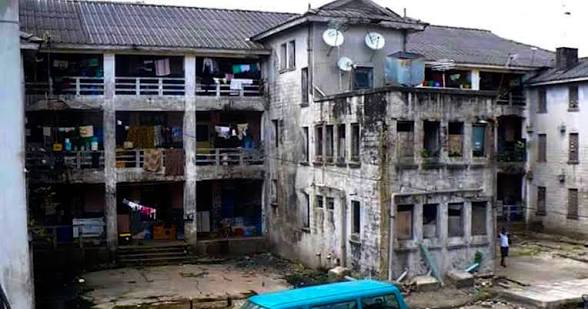
Police barracks of pain

0

•Families share toilets, live in squalor with derelict facilities •Buildings’ decay, demolitions, poor welfare breaking families, killing officers’ morale • IGP Disu currently touring barracks; he’ll address challenges

Several years after shocking revelations were made about the uninhabitable state of Police Barracks in the country, most police barracks across the country still remain an eyesore, even as fresh accomodation problems surface in some state commands.


Leaking roofs, broken fences, blocked and overflowing sewage systems; inadequate water supply and general neglect have become their lot in the dilapidated buildings.

In the Lagos State Police Command, some police some officers and men are now facing severe accommodation problems as some barracks are being demolished and redeveloped.


IGP Disu currently touring barracks; he’ll address challenges’

Efforts by this newspaper to get reactions from the police authorities were unsuccessful. The Force Public Relations Officer (FPRO), Ani Iniedu, directed the newspaper to an assistant, who promised to get the police spokesman to talk. Neither the FPRO not the assistant got back since Tuesday.


However, a senior police officer, who spoke on the condition of anonymity, said the IGP is currently touring police barracks across the country to have first-hand knowledge of the challenges confronting personnel.

The officer said the IGP would complete the tour before determining the areas requiring urgent intervention by the police high command.

“You know the IGP loves his subordinates very much. I am part of the entourage, and he will speak on these issues on Saturday.


“Actually, in every barracks we have visited so far, the officers have acknowledged that the present IGP has no hand in the challenges confronting the personnel. Rather, he is doing everything humanly possible to address those challenges,” the officer said.

Marked for demolition

Investigations revealed that about 25 police barracks and related facilities in Lagos have been earmarked for demolition and redevelopment. This is putting officers and men serving under the state command under accommodation pressures.


The barracks marked for demolition include Ije Police Barracks, Obalende; Highway Police Barracks, Ikeja; K9 Police Barracks, Ikoyi; Falomo Police Barracks A and B; Bar Beach Police Barracks, Victoria Island; MOPOL 20 Barracks, Ikeja; Women Police Barracks, Obalende, Model 2 Police Barracks, Keffi Street, South-West Ikoyi; and Mounted Troops Barracks, Ribadu Road, Ikoyi.

Others are Queen Barracks, Apapa; FPRO Annex Office and Barracks, Ijora Olopa; Iponri Police Barracks, Surulere; Adekunle Police Barracks, Yaba; Federal Highway Patrol Office, Yaba; Alausa Police Barracks, Ikeja, Mounted Troops Barracks, Ikeja; Okesuna Police Barracks, Obalende; and McCarthy Barracks, Obalende, among others.

Several of these facilities have already been demolished. Among them are Ije, Falomo, K9, Obalende, Iponri and Women Police Barracks. For policemen who still occupy some of the remaining facilities, demolition of the barracks is just a matter of time. An average policeman who lives in the barracks lives in anxiety. That is understandable.

Lagos: Lamentations over decay, accommodation crisis

At Ije Police Barracks, former residents said years of neglect had transformed the facility into one of the dirtiest police barracks in Lagos. The situation became so bad that passers-by may have to cover their noses as a result of the stench from leaking toilets and overflowing sewage.

A former resident who spent 12 years in the barracks before it was demolished, said the authorities did nothing to maintain the facility throughout his stay.

“My predecessors, who lived there for more than 20 years before I came, also said no repairs were done throughout their stay.

“I moved from Ije to Elere Police Barracks, Agege, and it was the same complaint – no repairs and no new construction. Some of us were living in a room and parlour apartments, while those who had connections were living in two rooms.

“But Elere, despite the same government neglect, is better than Ije. Here in Elere, everybody is living in a one-room apartment, but two families share one toilet.

“In Ije, five or more families shared one toilet. It was that bad. Each time the soak-away pit got to the brim, it took several months for residents to contribute money to evacuate it. That is why the place was always emitting foul odour.”

Another resident of Elere Barracks, who identified himself simply as Pastor for fear of victimisation, said policemen and their families had practically taken over the responsibility of maintaining the facilities.

“I have lived here for over 10 years, and we have been the ones maintaining the place. We contribute money to fix leaking roofs, repair damaged walls, sweep the barracks and carry out maintenance.

“There was a time the fence collapsed and we were exposed to external infiltration. Hoodlums were coming into the barracks at night to vandalise our vehicles until we contributed money to rebuild the fence.

“We used to go outside the barracks to fetch water until the 2023 general elections, when a politician graciously provided a borehole for us. Since then, we have been responsible for maintaining the borehole.”

But Pastor said residents were now living in fear of uncertainty as Elere Barracks was listed for demolition.

“Many of us have developed high blood pressure because we have seen what our colleagues in Falomo, Ikoyi, Queen Barracks, Obalende, Iponri and others are going through. Their barracks were demolished and the government gave them between N1 million and N2 million to relocate.

“To rent a room and parlour in Ikoyi or Iponri is not a tea party. So, many of them have sent their families back to the villages and are now squatting.”

A former resident of Iponri Police Barracks, an Assistant Superintendent of Police (ASP), also expressed disappointment over the demolition of the facility.

According to him, an insurance company operating in the area had been assisting with the maintenance of the barracks because it wanted police personnel to remain around its premises.

“The insurance company wanted the police to be around the company, otherwise, we wouldn’t have been able to maintain the place,” he said, adding, “We were shocked when the former Inspector-General of Police, Kayode Egbetokun, the Lagos State Government and a top All Progressives Congress (APC) stalwart sold the barracks and demolished it.

“Outside the senior police officers’ barracks in GRA, Ikeja, Iponri Barracks was one of the best because of maintenance.

“They chased us away and sold the barracks to private individuals. They have started mounting billboards showing that they are going to build a shopping mall, event centre and tower.”

The ASP, who has since relocated to Ikorodu, Lagos, said the demolition had created another security problem for policemen.

“I moved to Ikorodu to rent an apartment, living with civilians who hate the police. I don’t put on my uniform because I didn’t tell my landlord that I am a policeman. The government has exposed us to danger because we are living in the midst of people who see us as endangered species.

“All these are happening to us because the former IGP sold the barracks. A government that does not value us, can they try this with Army Barracks?

“They won’t try it because the Army authorities will resist them. But the police high command is treated as a pushover.”

The housing crisis, the officer said, also affects the families and marriages of policemen.

He said, “Some of our wives who refused to go back to the villages have divorced their husbands. This is a serious issue because it affects the morale of an average policeman. How do you concentrate on your duty when you are living with civilians and your family is torn apart?”

At the Alausa Police Barracks, Ikeja, residents are also living with the fear of eviction, demolition and possible sale of the facility. A resident, who identified himself as Justice, said the owner of the land had threatened to challenge any attempt to evict the police and sell the property to private interests.

“As you can see for yourself, our barracks is very clean because we contribute money to maintain it. Of course, you know that senior police officers live here. We have Commissioners of Police, Deputy Commissioners of Police, Assistant Commissioners of Police and other ranks living here.

“That is the reason the barracks is clean. Go to other barracks and see how dirty and dilapidated they are. Without maintenance, the barracks would have become dilapidated.”

Justice blamed the poor condition of many police barracks on the failure of the authorities to maintain them, adding that the authorities left the barracks the way colonial masters built them.

For a Deputy Superintendent of Police (DSP), Sunny (real name withheld), who lives in the senior police officers’ barracks in GRA, Ikeja, the good condition of the facility is largely the result of the personal contributions of its occupants.

“As senior officers, it will not be good if we leave our barracks dirty. We lead by example. We contribute individually towards maintenance and repairs. The government doesn’t do anything for us.

“The reasons police barracks are dilapidated are, first, government insensitivity to our plight. How much is the average salary of a rank-and-file policeman that he will use for the maintenance of a place when he is not even sure he will not be transferred to another state the next day?

“Second, an average policeman knows that when he is no more, his family will be chased out of the apartment and another policeman will take over almost immediately.

“Third, a police officer is disgruntled because he knows his salary cannot afford a flat, send his children to a good school and buy a car. What can N120, 000 or N200,000 do for an officer who works under the rain, in the sun and at night?”

The senior officer said the situation had created frustration among policemen, making many reluctant to spend their limited resources on facilities they could lose at short notice.

“You can see what has happened to our colleagues who were sent out of demolished barracks. Those who were staying in one room were given N1 million, while those who stayed in two rooms were given N2 million to rent new apartments.

“A man who was living in Ikoyi Barracks and had his children in school would have loved to get an apartment near the school, but can N2 million rent a room in Ikoyi or Ikeja? You find out that the person will be forced to go to a Lagos suburb and find new schools for his children.”

Police officers and men are appealing to the government to halt the sale of police barracks to private investors and urgently address the housing and welfare crisis confronting them.

“They have increased the salaries of the military twice but have not done anything concerning the police. Our pension scheme is nothing to write home about.

“If not for state governments, I wonder how we would manage our obsolete equipment, arms and other gadgets,” he lamented.

For the policemen, the barracks crisis goes beyond leaking roofs, broken fences, poor sanitation and inadequate water supply. It is a question of welfare, security, family stability and the morale of the men and women expected to protect the public.

They want the government and police authorities to embark on a comprehensive rehabilitation of existing barracks, provide new accommodation where necessary and, above all, ensure that policemen are not left at the mercy of an uncertain housing policy.

In Ogun police barracks, electricity, potable water are a luxury

In Ogun State, a visit to police barracks in Ibara and the state police headquarters in Eleweran, Abeokuta, showed that the structures have seen better days, and in a state of disrepair. At the police barracks in Ibara located opposite the Government House, the situation of the infrastructure such as the internal road and buildings are in a deplorable condition.

Also, amenities such as electricity and potable water have become luxury for the residents. The barracks, which shares a boundary with that of the Nigeria Correctional Service, has lost its colours due to long years of neglect and lack of renovations. Perimeter fencing which could deter, prevent and delay any invasion by intruders was non-existent. The barracks serve as a thoroughfare for civilians.

The situation at the Eleweran Police Headquarters is no different from the Ibara Police Barracks. Most of the buildings – bungalows and story buildings are decrepit.

While the roofs of some of the buildings have been blown off by windstorm, many others that appear worn and dilapidated are just being managed by the squatters.

A senior police officer who preferred anonymity, lamented that poor and deplorable physical infrastructure across the police barracks in the state is far from accommodating let alone befitting.

“The situation in our barracks is an eyesore. I am sure that you have visited Eleweran several times, what do you see – dilapidated buildings and worn-out facilities. Even though the roofs of many buildings have been blown off and begging for repairs over the years, nothing has been done. Personally, I feel some of our personnel being quartered in those buildings are risking their lives and that of their families.”

Plateau: State govt, HYPPADEC battle cracked walls, leaking roofs, failing structures

In Plateau State, the story is slightly different. In Jos, the Plateau state capital there are about six major barracks. They are the A division barrack, C division, Bukuru, Jos Laranto, and MOPOL Squadron 8, Anguldi barracks.

On the outskirts, there are smaller barracks in Bassa and Jengre as well as pockets of barracks housing a lesser number of policemen. The most prominent and fully completed renovation of a major police facility in Plateau State occurred in July 2024, when the Federal Government commissioned a massive renovation of police barracks. One of the barracks that received massive renovation work was the A division, which is the largest of the barracks in Jos. Apart from the A division police station, the vicinity of the barracks also houses the Area Command, Jos Prisons and the headquarters of the Department of State Services (DSS).

When our correspondent visited the barrack, all the buildings wore new looks as they appeared to be newly painted. Some of the buildings were also re-roofed.

Another barrack that received such rehabilitation was the MOPOL 8 Barrack, Anguldi. Built in 1976, the barrack had not received major rehabilitation work until 2024.

An officer who spoke under the condition of anonymity, said that prior to the recent works, the barracks suffered from cracked walls, leaking roofs, and failing infrastructure.

He said that although the barrack had received appreciable facelift, a large number of the building still have leaking roof. The officer said that sometimes some personnel who are newly posted to the command had to use their personal money to put some structures in order to make their families comfortable.

Apart from the renovation works by the Federal Government, some organisations had also undertaken rehabilitation works on some barracks as part of their corporate social responsibility.

In July 2024, the Secretary to the Government of the Federation officially commissioned the renovated Mobile Police Barrack in the Kakuruk Community, Barkin Ladi Local Government Area of the state. The project was funded by the National Hydro-Electric Power Producing Area Development Commission (N-HYPPADEC) as part of their CSR. The upgrade covered older structures that were converted to modernised administrative block, quarters for junior and senior officers, a multipurpose hall, and an armoury.

Also in January 2025, Plateau State Governor Caleb Mutfwang, unveiled a newly constructed Mobile Police barrack in the Gashish District of Barkin Ladi LGA.

The new barrack was necessitated by the need to station officers for easy deployment following the series of attacks in the area.

A senior officer in the works department at the police headquarters told our correspondent that one of the major factors hindering the renovation of police barracks was the centralisation of such projects at the Force Headquarters.

According to him, when reports are made, it usually takes a lot of bureaucratic bottlenecks before such projects are approved. He advocated that approvals be made for works departments in state commands to be able to handle minor rehabilitation works.

He said, “If such provisions were made, we won’t be able to have such massive dilapidations as we currently witness.”

Rivers: Overflowing sewage, abandoned toilets, broken railings

The state of police barracks in Rivers State remains dire, with officers lamenting their stay in over 50-year-old buildings with leaking roofs, no water, toilet facilities, and poor sanitation, even as they struggle to carry out renovations by themselves.

Investigation revealed that most of the barracks in Port Harcourt — Moore Road Barracks, Olu Obasanjo Police Station, and Mobile Police Barracks, Harbour Road — were constructed more than five decades ago and have received little or no renovations.

Overflowing sewage, abandoned toilets, broken railings and visibly deteriorating buildings throughout the premises are common sights in the barracks.

At Olu Obasanjo, many roofs have become dangerously weak after decades of exposure.

Similarly, At Mobile Barracks behind Harbour Road, walls and pillars have begun to crack. One officer described that situation as a disaster waiting to happen.

The standard barracks consist of old blocks of flats, mostly one and two bedroom units for Constables to Inspectors. Senior officers get slightly bigger apartments.

The only major new type in 10 years is the NDDC-built SPU Base 6 at Omagwa – 64 units of one-bedroom flats, plus commanders and 2ICs’ residence.

In one of the barracks in the state, officers who reside in a block, housing 27 families, each person contributes N100,000, amounting to N2.7 million for emergency repairs.

A source, who craved anonymity, said: “Without those self-funded interventions, many of the buildings would have become uninhabitable. We don’t have water. We don’t have toilets. We don’t have decent bathrooms. When it rains, our roofs leak. Water scarcity has compounded the misery. Residents often fetch water from nearby churches and neighbouring communities,” the source said.

At the Mobile Barracks, Harbour Road, one officer’s teenage son said: “When it rains, most rooms will be filled with water. The place is not hygienic for human habitation. The government should come here and evacuate everyone and then renovate it.”

Meanwhile, only one major project: The Nigeria Police Barracks, SPU Base 6, Omagwa, Ikwerre LGA, built by NDDC, has 66 units — an administrative block, armoury, gatehouse, underground cell, commander’s residence, 2IC residence, and 64 one-bedroom flats. It was inaugurated by former President Yemi Osinbajo on Sept 28, 2021.

It was gathered that allocation of an apartment is through the Command, usually prioritising married junior officers. But, spaces are grossly inadequate. For instance, in 2021, it was learnt that over 100 families were rendered homeless after demolition of illegal structures at Mobile Barracks, Harbour Road and Miniokoro Barracks.

Oyo: A call for integrity tests on buildings

A visit to four of the five police barracks in Ibadan – Testing Ground at Idi Ape, Sango, Iyaganku and Eleyele, revealed deteriorating infrastructure and inadequate basic amenities. But it was discovered that some intervention projects by the Oyo State government are providing a measure of relief in the barracks.

At Sango Barracks, some houses appeared to be in relatively good shape. But several blocks of two-storey buildings have deteriorated. Plaster has peeled off portions of the concrete decks, exposing reinforcing iron rods, while some roofs are partially damaged, making life uncomfortable for those who live in the upper floors of the buildings.

The smaller Testing Ground Barracks in Idi-Ape faces similar challenges. Erosion has damaged parts of the premises, while residents rely on well water. The barracks at Idi-Ape houses a divisional police headquarters and area command.

At Iyaganku, the buildings are obviously old. However, one block of flats was undergoing renovation, while work was also on-going on the internal road network. The barracks at Iyaganku is a divisional police headquarters, area command, and State Criminal Investigation Department (SCID).

At Eleyele, which is the headquarters of the state police command, one block of flats within the Police Training School had no roof. It was gathered that rainstorm wreaked the havoc sometime ago.

Although the Eleyele Barracks lacks tap water and residents depend on wells, its road network has been tarred. The road project at the command headquarters was also said to have been executed by the state government.

A policeman told Saturday Sun that only a small fraction of personnel live in the barracks, while majority live in towns. He added that vacant apartments were scarce and allocated through applications whenever an occupant moved out.

Another officer called for structural integrity tests on the buildings, warning that some of the structures could be disasters waiting to happen. He recalled a building collapse at Sango Barracks some years ago, alleging that no replacement had been provided. He also said he was unaware of any new block of flats constructed for policemen in the barracks in the past 10 years.

The exact number of policemen accommodated in the barracks and those living outside could not be obtained at the time of filing this report.

Imo: Leaking roofs, cracked walls, crumbling structures

The Nigeria Police Force is under public scrutiny in Imo State over plans to sell or redevelop police barracks in Owerri, amid warnings from officers and men that the exercise has no clear provision for alternative accommodation.

Authorities have described the move as part of a renovation drive. But the proposal comes at a time when housing conditions in the barracks have worsened due to decades of neglect.

A review of conditions inside the barracks shows widespread structural decay. Roofs leak in multiple blocks, walls are cracked, and concrete structures are crumbling.

Water supply is inconsistent and sanitary infrastructure has largely collapsed. In several quarters, blocked drainage channels are being used as makeshift toilets because the bathrooms are not functional, raising health concerns for families living on the barracks.

With little intervention from authorities, occupants say they have resorted to self-help. Families pool personal funds, often in excess of ₦100,000 per household, to carry out emergency repairs to roofs and walls.

Accommodation is processed through the Quartermaster’s Office at the Imo State Police Command Headquarters in Owerri and requires the approval of the Commissioner of Police.

The system is rank-based. Assistant Superintendents and above are allocated accommodation in the officers’ quarters, while Inspectors and below personnel are housed in separate blocks. Operational and tactical units are prioritised for on-site spaces to allow quick deployment during emergencies.

Command sources say available barracks infrastructure cannot house up to half of the personnel deployed to Imo. The deficit previously triggered protests by tactical officers over lack of residential quarters.

Officers are forced to live outside because of full capacity and collapsing structures, most officers serving in the state now live in private accommodations in Owerri, Orlu, and Okigwe.

Those without official barracks allotment are entitled to monthly rent allowances. However, officers say the allowances do not match prevailing rents for decent apartments in Owerri, forcing many to accept substandard housing or share accommodation.

Federal projects continue despite the housing crisis, federal budget lines for police infrastructure remain active. The Mbutu police station and barracks project is among those listed as receiving on-going allocations with work said to be progressing. For officers in Imo, the central question remains whether the planned sale and redevelopment in Owerri will deliver new, habitable quarters, or leave thousands of personnel and their families without a place to live.

Cross River: Families living in squalor

Officers of the Nigeria Police Force posted to Calabar, Cross River State capital are forced to live in barracks that pose grave health hazards. Visit to Akim Police Barracks and Moore Road Police Barracks reveal abject decay and a cruel deprivation where basic human dignity has been stripped away.

Dilapidated structures, leaking roofs, broken railings, abandoned toilets, and the absence of potable water and proper sewage systems have turned these barracks into nightmare for officers.

At the Akim Police Barracks, the story of deprivation is particularly heart-wrenching. An officer who craved anonymity said he has lives there for years and the toilet facility has been bad over the years.

“Since I started living here eight years ago, I have never for once made use of the toilet in the barracks,” he said.

The toilet pipes are leaking and the septic tank in front of one of the blocks in the barracks has been damaged. Another resident in the barracks said there has been no renovation of the barracks for the past two decades at least. He added that most parts of the roof in the building are leaking and this year’s rains have destroyed their files, electronics and food items.

“This building would have collapsed years ago because of poor maintenance and why it is still standing today is because of the skeletal maintenance officers living in each room contributes. The little changes you see are from our personal contributions,” he said.

The story is not different at the Moore Road Police Barracks, where officers and their families endure comparable hardships. The buildings constructed decades ago have received little or no rehabilitation, leaving occupants to battle with the same issues of water scarcity, poor sanitation, and structural decay.

Besides, no new police barracks have been constructed in the state in the last decade.

The state government intervened recently by constructing an access road within the Akim Barracks, which has improved access. This intervention was also extended to other police formations within the state but the condition of officers in the barracks which is a direct responsibility of police authorities remains very critical.

And police spokesman keeps mum

Several efforts to get the reaction of the police spokesman to the story were frustrated.

Messages by Saturday Sun to the Force Public Relations Officer (FPRO), Ani Iniedu, did not yield the desired fruit. His response to a Whatsapp message sent to him on the matter reads:

“Thank you esteemed. I’m unavailable to respond right now. However, for complaints against police action, kindly call 08057000001-3. You can also reach my assistant on +2348138152990 please.”

When contacted by our correspondent via a Whatsapp message, the assistant also asked the reporter to reach out to one Aminu Koji, whom she said is in charge of press, to get clearance for an interview with the police spokesman.

She said: “Please reach out to the officer in charge of press. Don’t you need someone that will give you the date, time and cleared you from the gate?”

When told that the Police Public Relations Department could not afford to operate like a difficult bureaucracy, especially when the story at hand had to do with police welfare and accommodation, the assistant promised to reach the FPRO and get back to the correspondent.

That was never done.

Sun
Army Rescues Two Kidnap Victims in Lagos, Neutralises Suspected Kidnapper

0

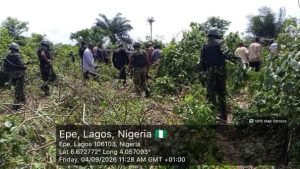
Troops of the Nigerian Army’s 65 Battalion, in a coordinated operation with the Nigeria Police Force and local vigilantes, have rescued two kidnap victims following their abduction at a farm in Igbonla, Epe Local Government Area of Lagos State.

The victims, identified as Mr Kelvin Okafor and Mr Alex Anato, were abducted while working on the farm on Friday, September 4, 2026.

The operation was launched following credible intelligence on the abduction. Acting swiftly on the information, the joint security team mobilised to the area and closed in on the kidnappers’ location.

The joint team pursued the fleeing criminals, resulting in the neutralisation of one suspected kidnapper, while two others escaped deeper into the forest.

The two victims were rescued unhurt and subsequently handed over to the Nigeria Police Force for medical assessment, debriefing and further action.

The remains of the neutralised suspect were also handed over to the police for appropriate action.

The Nigerian Army reaffirmed its commitment to protecting lives and property, stating that troops, in collaboration with other security agencies and local stakeholders, would continue to sustain intelligence-led operations to deny criminal elements freedom of action and enhance the safety and security of communities across the country.

On sighting the advancing troops and other security personnel, the kidnappers abandoned their captives and fled into the surrounding forest.