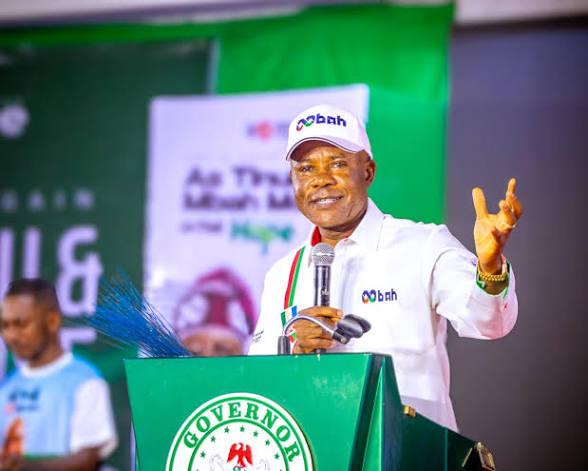
The Deputy Governor of Lagos State and All Progressives Congress (APC) governorship candidate, Dr Obafemi Hamzat, has reaffirmed his commitment to improving the business environment, attracting investment and creating jobs in the State.
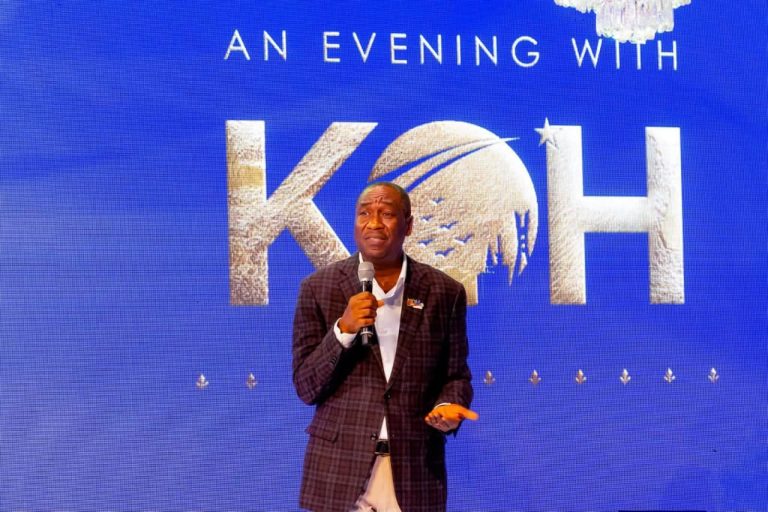
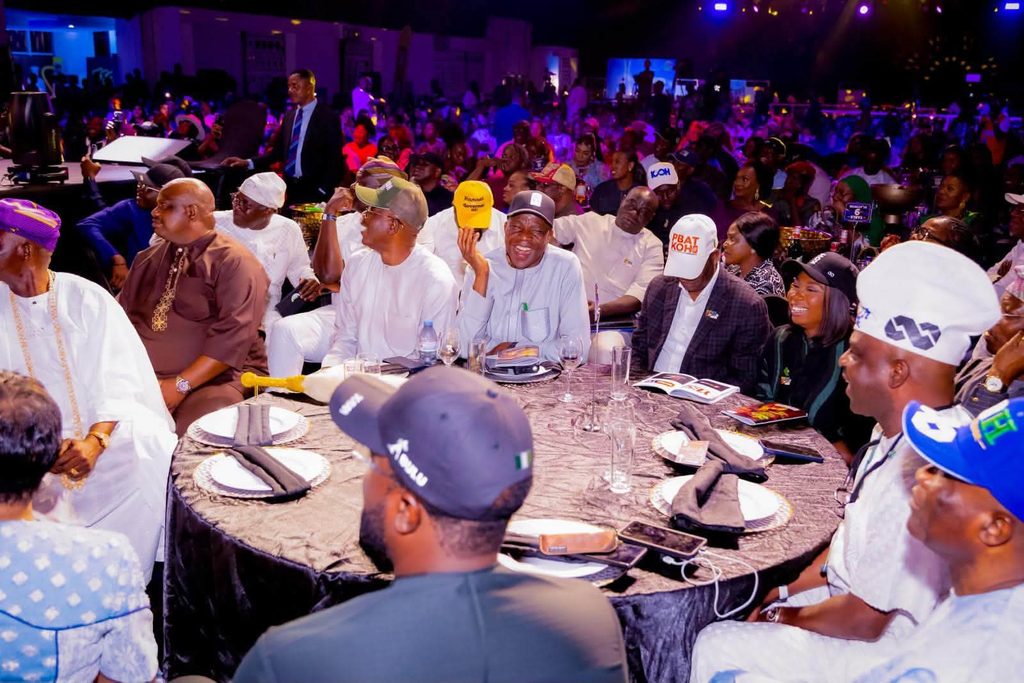
Hamzat stated this after attending an event tagged An Evening with KOH, followed by a private dinner with leaders from various sectors of the private sector, including technology and business.
In a statement, he said the engagements provided an opportunity to discuss issues shaping Lagos and strategies for sustaining the state’s development. He said he shared his priorities on power, infrastructure and improving the ease of doing business in Lagos.
According to him, these priorities form important parts of The Lagos PROMISE, particularly its focus on Renewal, Opportunity and the Machinery of Government.
Hamzat stressed that the government must create the right conditions for businesses to thrive, attract investment and generate employment opportunities.
He added that the government must listen to business owners, investors and other stakeholders to understand and address the challenges they face.
The APC governorship candidate said his vision was to build a Lagos where businesses could succeed and more residents would benefit from the state’s economic growth.
Flooding has displaced more than 2,500 people in Malaysia, with Selangor emerging as the hardest-hit area, Malaysian authorities announced on Monday.
According to the country’s Social Welfare Department, Selangor recorded 1,343 flood evacuees, who were being accommodated in seven flood relief centres as of 1 p.m. local time. Other affected states include Perak, Penang and Sarawak, in northern Borneo.
The Meteorological Department has issued warnings of continued heavy rainfall and strong winds due to the Northeast Monsoon season, which is expected to last until March 2027.
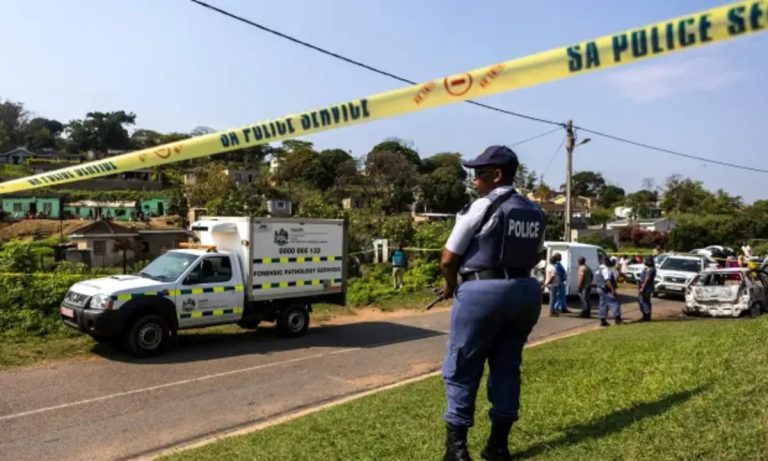
No fewer than 17 people were killed in two separate mass shootings across South Africa on Sunday night, police said on Monday.
Nine people, including six men and three women, were shot dead inside a shack at the Jeffsville informal settlement in Atteridgeville, west of Pretoria.
Police said the identities of the suspects and the motive for the attack remain unknown. In a separate incident on the same night, eight men were shot dead inside a vehicle in a mass shooting in Sweetwaters, a town in KwaZulu-Natal Province.
Police have launched investigations into both incidents and are working to establish the identities of the victims. The two shootings have once again highlighted South Africa’s persistent problem of gun violence, which remains a major contributor to the country’s high murder rate.
According to the latest crime statistics released by the South African Police Service in August, 5,427 people were murdered nationwide between April and June this year, averaging about 60 killings daily.
Although the figure represents a five to nine per cent decrease compared with the same period a year earlier, the overall level of violent crime remains high. Firearms have become an increasingly prominent factor in the country’s killings.
A study published in the South African Medical Journal in 2026 noted that the proportion of murders involving firearms rose from 31 per cent in 2020 to 44 per cent in 2025.
The findings underscore the growing impact of gun violence on public safety in the country.
Cuts to development aid are increasing refugees’ vulnerability to exploitation, abuse and human trafficking, according to studies released on Monday.
The UN Refugee Agency (UNHCR) and the University of Oxford’s Nuffield College reported that detected cases of human trafficking in Cox’s Bazar, Bangladesh, rose by 28 per cent between 2024 and 2025.
The area hosts what the United Nations describes as the world’s largest refugee camp, home to more than one million Rohingya refugees from neighbouring Myanmar. More than 170,000 new refugees arrived in the area between 2024 and 2025, a period during which UNHCR’s operational budget fell by more than eight per cent.
The United States and several other countries have reduced their development aid funding. In Ethiopia, less than a third of UNHCR’s funding requirements for 2025 were met, while only 18 per cent of planned child protection measures could be funded, according to another study conducted by the agency and Oxford University.
Meanwhile, child labour has risen to alarming levels, with more minors found working in agriculture and informal mining, the studies revealed.
Girls also faced increasing risks of sexual exploitation, early marriage and forced labour.
Protection measures include safe accommodation, access to education and psychosocial support. “The situation remains dire in 2026,” the authors said.
“UNHCR’s global child protection programmes are only 25 per cent funded, and efforts to prevent and respond to gender-based violence were just 24 per cent funded as of July 2026.”
Lagos State Governor, Babajide Sanwo-Olu, has rewarded Nigeria’s victorious U-17 women’s national team, the Flamingos, with ₦10 million each, iPhone 17 Pro Max devices and other gifts.
Lere Olayinka, an aide to the Minister of the Federal Capital Territory, Nyesom Wike, has recounted how his first child nearly died after consuming a fake SMA Gold infant formula.
Olayinka, in a post, said he and his wife initially disagreed over the choice of food for their child, with his wife insisting that the baby must consume SMA Gold.
He said he had argued that he was fed Cerelac for only three months as a baby before being introduced to Ogi.
According to him, they noticed the child’s reactions early enough, prompting him to compare the empty cans of the formula consumed by the baby with newly purchased ones. He said the comparison revealed differences in some of the fonts on the cans, raising suspicions that some of the products were fake.
Olayinka said the family subsequently switched the child’s food to a cheaper alternative, which the child consumed exclusively for more than two years without accepting any other cereal.
Reacting to the production of fake drugs, food and drinks, Olayinka condemned the perpetrators, saying they deserved severe punishment.
He said the producers should first ensure that their spouses and children consumed the fake products they manufactured and experienced the consequences before facing punishment. “Fake drugs, food and drinks producers deserve to die by hanging,” he said.
Olayinka also criticised those he accused of justifying the criminal practice on the grounds of business or economic hardship.
He said some people would rationalise the production of fake products by describing it as a business or a means of survival because of the country’s economic situation.
“Na Business, Na Hustle, Na because country hard,” he said, expressing disapproval of such justifications.
The Foundation for Ethical Society and Cultural Awareness (FESCA), in collaboration with the Naija Times Journalism Foundation (NTJF) and the Grassroots Center for Rights and Civil Orientation (GRACO), is set to host a virtual colloquium aimed at examining the critical relationship between national security and Nigeria’s economic growth and development.
The colloquium, themed “Security: The Key to Unlocking Nigeria’s Economy,” will take place on Tuesday, November 17, 2026, at 5:00 p.m. Nigerian time via Zoom.
The event will bring together thought leaders, public affairs analysts, civil society advocates and development experts to examine how Nigeria’s persistent security challenges have affected economic productivity, investment, employment, food security and national development.
With insecurity continuing to threaten agricultural production, disrupt commercial activities, discourage investment and increase the cost of doing business, the organisers believe that addressing the country’s security challenges is fundamental to achieving sustainable economic prosperity.
Across Nigeria, the consequences of insecurity have extended beyond the immediate loss of lives and property. Insurgency, banditry, kidnapping, communal conflicts and other forms of violence have disrupted livelihoods, displaced communities and weakened economic activities in several regions.
The agricultural sector has been particularly vulnerable, as insecurity in food-producing communities has prevented some farmers from accessing their farmlands, disrupted supply chains and contributed to rising food prices.
Similarly, businesses operating in insecure environments have faced increased expenditure on protection, logistics and insurance, while investors have had to factor security risks into decisions about establishing or expanding operations.
The colloquium will therefore explore the proposition that national security is a law enforcement responsibility and an essential foundation for economic transformation.
Discussions are expected to examine the connections between effective security governance, investor confidence, agricultural productivity, job creation, infrastructure development and the broader prospects for economic recovery.
The programme will also consider the importance of institutional accountability, community participation, intelligence gathering, security-sector reforms and coordinated government responses in creating an environment conducive to enterprise and investment.
The colloquium will feature four panelists drawn from civil society, strategic communications, advocacy and leadership development.
Nosa Osaikhiwu, Founder of FESCA, will bring perspectives on ethical leadership, responsible citizenship and the role of societal values in strengthening national security and development.
Kayode Adebiyi, a Global Public Relations Strategist, will contribute insights into public communication, stakeholder engagement and the importance of trust in security governance and economic development.
Armsfree Ajanaku, Founder of GRACO, will examine the relationship between grassroots participation, civic responsibility, community security and sustainable development.
Dr. Charles Omorodion, a Leadership Management Consultant, will provide perspectives on leadership effectiveness, institutional capacity and strategic approaches to addressing security challenges that hinder economic progress.
The discussion will be moderated by Ehi Braimah, Publisher/Editor-in-Chief, Naija Times and Chairman, Naija Times Journalism Foundation. He will guide the conversations towards practical recommendations and actionable solutions.
The organisers intend to stimulate informed public dialogue on the need to place security at the centre of Nigeria’s economic development agenda.
Beyond identifying existing challenges, the colloquium will provide an opportunity for participants to consider how government institutions, private-sector organisations, civil society groups and local communities can collaborate to address insecurity and support economic advancement.
The organisers believe that meaningful economic reforms must be complemented by improvements in security, the rule of law, institutional effectiveness and public confidence.
FESCA, NTJF and GRACO have extended an invitation to policymakers, security professionals, journalists, academics, students, civil society organisations and members of the general public to participate in the virtual discussion.
The event, scheduled for 5:00 p.m. Nigerian time on Tuesday, November 17, 2026, will be accessible through Zoom via the following link:
The organisers encouraged interested participants to join the conversation and contribute to the search for sustainable solutions to Nigeria’s security and economic challenges.
The colloquium is expected to reinforce the message that lasting economic prosperity depends not only on sound fiscal and monetary policies but also on a secure environment where citizens, businesses and communities can thrive.
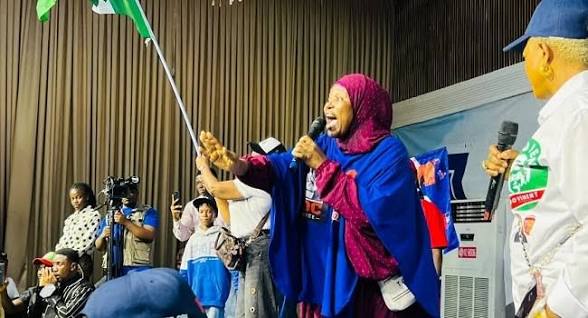
A chieftain of the Nigeria Democratic Congress (NDC), Aisha Yesufu, has declared that members of the party will defend themselves against attacks as political activities intensify ahead of the 2027 general elections.
Yesufu made the statement during an appearance on Channels Television’s Sunday Politics, following an attack on the party’s town hall meeting for its presidential candidate, Peter Obi, in Oregun, Lagos State.
The November 12 incident, allegedly involving suspected political thugs, left several vehicles damaged and some participants injured. However, the identities of those behind the attack and the circumstances surrounding it remained unclear.
Addressing the incident, Yesufu said Nigerians had a fundamental right to protect themselves and warned that political actors could no longer unleash violence against opponents without resistance.
“To defend my life is a fundamental right, is a human right, is a natural right and I will protect myself. That is what all Nigerian citizens have said.
“The time when some people think they have the monopoly of violence and they will unleash their thugs and their thugs will kill, they will maim, they will destroy and they will not say anything, it has passed.
“We will no longer accept that and if Mr Tinubu wants to turn a new leaf fantastic, let him do a family meeting and ensure there is peace,” she said.
When asked whether her position amounted to a threat to retaliate with violence, the NDC chieftain maintained that she was asserting her right to self-defence rather than threatening anyone.
“I am not threatening violence but anybody that comes to attack us will be met with equal force. I am not threatening violence, I am threatening that I am going to defend myself,” Yesufu stated.
Her comments came after President Bola Tinubu condemned violence at political gatherings and directed security agencies to tackle political thuggery and other anti-democratic activities ahead of the 2027 elections.
In a statement on Friday, Tinubu said political campaigns should be centred on ideas and policies that improve public welfare. He also maintained that political parties and candidates should be allowed to campaign across the country without intimidation.
On the forthcoming elections, Yesufu expressed confidence that Nigerians would demand a credible process from the Independent National Electoral Commission (INEC), despite her reservations about the electoral body.
She also said the Peter Obi camp was more optimistic about its chances in 2027 than it was during the 2023 presidential election.
“I will tell you something, this 2027 election, we have more hope than we even did in that 2023 and we will continue to go on that. We are peace loving people, but we are also people that are not going to take nonsense from anybody,” she said.
Yesufu further argued that protecting the votes cast in favour of the party was a greater concern than merely securing victory at the polls.
“Winning is not our problem. The main issue is ensuring that when we win, nobody, born of man or woman, will rig our election,” she said.
Some leaders and supporters of the All Progressives Congress (APC) have stopped wearing party insignia and using branded vehicles in public over fears of attacks ahead of the 2027 general elections, party sources have told Daily Sun.
The sources, who spoke on condition of anonymity because they were not authorised to speak publicly, said concerns about their safety had also disrupted individual and house-to-house campaigns in some areas, forcing members to rely on group outings under security protection.
They identified Nasarawa, Kano, Katsina and Kaduna among the states where members were apprehensive about openly identifying with the ruling party, adding that similar concerns existed in parts of Edo, the South East and the Federal Capital Territory (FCT).
According to the sources, members without security escorts were particularly vulnerable, with some avoiding vehicles bearing photographs of candidates or the party’s colours.
The concerns followed reported attacks at campaign rallies and on supporters travelling to political events.
In Nasarawa State, no fewer than 40 people were reportedly injured, while several others were said to be missing, following violence at an APC presidential campaign rally in Lafia attended by Vice President Kashim Shettima.
Security operatives fired tear gas to disperse agitated youths during the incident.
Days later, APC supporters led by the state chairman, Aliyu Bello, protested in Lafia, demanding an investigation into what they described as an attack on the vice president.
Bello also alleged that an APC supporter was killed in the Tudun Wada area despite the party having obtained permission to hold its event. The APC and the opposition Social Democratic Party (SDP) have traded accusations over the violence, while the state government blamed the SDP governorship candidate and a former governor.
In Katsina State, suspected hoodlums reportedly attacked APC supporters travelling to Governor Dikko Radda’s campaign rally in Faskari, injuring several people and setting a vehicle belonging to the group ablaze.
A witness alleged that two supporters sustained fatal injuries.
In Kano, suspected thugs armed with machetes and knives attacked journalists covering an APC rally and damaged a Radio Nigeria vehicle, despite the presence of policemen on board.
The sources also cited the fatal attack on the convoy of Monday Okpebholo, then the APC governorship candidate in Edo State, during the 2024 election campaign as an incident that continued to heighten concerns among members.
In Abuja, the Presidency disputed claims surrounding President Bola Tinubu’s departure from the Shehu Shagari Central Mosque in Garki after Friday’s Juma’at prayers.
A video circulated by an opposition figure appeared to show youths throwing objects at a convoy said to belong to the President. However, presidential aide, O’tega Ogra, released separate footage showing youths cheering Tinubu as he left the mosque.
Tinubu has directed security agencies to tackle political thuggery following attacks involving supporters of the ruling party and opposition parties.
Opposition parties have also reported attacks on their members, with the Nigeria Democratic Congress (NDC) accusing APC supporters of involvement in incidents in Lagos and Asaba.
Police said one person died and five others were injured in the Asaba incident. The APC denied the allegations against its supporters.
Says subsidy removal, forex reforms restored investor confidence, paved way for shared prosperity Governor Peter Mbah of Enugu State has said Nigeria was on the brink of economic collapse before President Bola Tinubu assumed office in 2023, arguing that the removal of fuel subsidy and unification of the foreign exchange rates were difficult but necessary decisions that saved the country from a looming economic catastrophe.
Mbah said successive administrations had merely postponed the inevitable by sustaining an economically ruinous subsidy regime and a foreign exchange system that encouraged corruption, arbitrage and loss of confidence in the naira, insisting that Tinubu demonstrated uncommon political courage by confronting both challenges at the beginning of his administration.
The governor spoke during the launch of As Tinubu Mbah Moves (ATM), a political support group convened by the Minister of Innovation, Science and Technology, Kingsley Udeh, to mobilise support for the re-election of Tinubu and Mbah in 2027.
Addressing supporters at the event, Mbah said the President could have chosen the politically convenient option of maintaining the status quo but instead embarked on reforms he considered essential to securing Nigeria’s economic future.
“It would have been a lot easier for any leader to just continue with the status quo and carry on on the basis of business as usual. But for Bola Ahmed Tinubu, it was business unusual that led to the bold initiatives.
“As a person who had played very actively in the oil and gas sector, I had written quite a lot of features and articles arguing against the fuel subsidy regime long before now, for it was clear to me, even from the point of a major player in that sector, that the subsidy regime was not sustainable because of the economic devastation it was causing to us as Nigerians. We were just basically postponing the evil day.
“We were just digging our poverty pits continually. We were actually digging deeper into that pit of poverty. And it would have taken a very courageous leader in his first term to say, ‘Look, if we have to build for the future, if we have to think about our children, then we must take out the subsidy and we must also unify the exchange rate regime.’”
Mbah also criticised the foreign exchange system inherited by the Tinubu administration, describing the wide disparity between official and parallel market exchange rates as a major source of corruption that enriched a privileged few at the expense of the wider economy.
According to him, the situation had deteriorated to the point where Nigerians were increasingly unwilling to hold their earnings in naira, a development he said reflected a dangerous erosion of confidence in the national currency.
“We got to a point in this country where even salary earners, once they get paid, would run to the bureau de change to change it rather than hold their salary in naira. Confidence was completely eroded in the naira. Nobody wanted to touch it with the tip of their finger. And that was the recipe for a failed nation.
“If you wanted to do a study or research of any failed nation, it is when the country, the citizens themselves, begin to lose confidence in their currency. And that was the environment that this President inherited.
“It was a major cesspool of corruption. The arbitrage was obvious and people were being taken advantage of. What was happening between the official and the parallel market was terrible. And some people were benefiting from that arbitrage at the expense of the economy. But it took this President’s understanding of the economy to be able to make those bold decisions,” he said.
The governor maintained that the reforms had begun to stabilise Nigeria’s macroeconomic environment, restore investor confidence and attract foreign direct investment, particularly in the oil and gas sector, although he acknowledged that the benefits had yet to translate fully into improved living conditions for ordinary Nigerians.
He explained that sustainable economic growth depended largely on private capital, which could only be attracted through stable policies, improved foreign reserves, a credible foreign exchange system and an investment climate that guaranteed reasonable returns.
“This essentially is something that is largely driven by private capital. But government enables it by policies because I can tell you that private capital does not go to where you do not have stability. “If your macro indicators are under pressure; if you have not addressed your foreign reserve, your foreign exchange regime, your inflationary rates, and all that, you do not have any chance of attracting private capital because private capital is blind. It is not emotional. It goes to where it makes return on investment, where it can be guaranteed some high level of security.
“Because we did not have all those before now, private capital was not coming. So, what the bold policies and initiatives this President took have done is that those macro pressures have largely been eased. And what you are now witnessing in our economy is a growth trajectory.”
Mbah said the renewed investor interest was already translating into concrete investment commitments rather than mere expressions of interest, pointing to final investment decisions involving billions of dollars across several sectors.
“So, private capital is now looking towards our country. You can see quite a number of FDI deals being closed – not MoA (Memorandum of Agreement) or MoU (Memorandum of Understanding). These are final investment decisions being made across different sectors, particularly in the oil and gas sector. You can see billions of dollars coming towards this direction today.
“People who have dollars are now going back to exchange their dollars because that confidence has been restored,” he said.
The governor expressed optimism that the next phase of the administration’s economic programme would deliver shared prosperity through increased household incomes, employment opportunities and improved living standards, as investment-driven growth gradually filtered through to ordinary Nigerians.
“So, now that we have stabilised our macro indicators, we have now started witnessing growth, albeit not to the level we aspire.
“The next thing is going to be shared prosperity because you are going to see that growth cascade. You are going to see it get to the households. You are going to see it create employment. So, our unemployed youths would be gainfully employed. That is the way it works,” he explained.
Citing developments in Enugu State, Mbah also credited Tinubu’s subsidy removal policy with freeing resources that would otherwise have been spent on fuel subsidy, thereby increasing the financial capacity of state governments to undertake infrastructure projects and other development programmes.
He argued that abandoning the reforms midway would undermine the sacrifices already made by Nigerians and jeopardise the prospect of achieving sustainable economic recovery.
“Nations are not built by abandoning challenges halfway through. If we have gone through this whole process of difficult periods when it appeared as if all was doomed to a point where we are beginning to see the light at the end of the tunnel, we cannot abandon what has been started. No great sailor abandons his ship because of a rough sea, mid-sea. You have to sail to get to your destination,” he said.
Mbah consequently urged Nigerians to support Tinubu’s re-election in 2027 to enable him to consolidate the reforms, while charging members of the ATM support group to take the message of the administration’s economic policies and infrastructure interventions, particularly in the South-East, to voters.
Meanwhile, the Minister of Innovation, Science and Technology, Kingsley Udeh, said the support group would concentrate its mobilisation efforts on voters outside the All Progressives Congress (APC), with particular attention to the 4,145 polling units across Enugu State.
Udeh explained that the group would deploy technology to register supporters, track their participation and coordinate mobilisation activities through an online portal as part of preparations for the 2027 general elections.