Home Blog Page 159

Lagos Taskforce Denies Gate-Crashing Allegation During Okada Enforcement in Ojo

0

The Lagos State
Taskforce has dismissed a false and misleading a report by Objectv alleging that its officials gate-crashed into a compound or Okada garage during an enforcement operation at Agric Farm Estate, Agric Bus Stop, Ojo Local Government Area of the State.

The Agency, in a statement signed by its Director of Public Affairs, Gbadeyan Abdulraheem, said the report misrepresented a legitimate enforcement operation and was an attempt to discredit its leadership.

The Taskforce explained that the operation followed a petition from the Community Development Associations (CDAs) of Olugbemi, Habeeb, Aiyedoto and Otubu, who raised concerns about the activities of commercial motorcycle operators, popularly known as Okada, in their communities.

According to the Agency, the CDAs alleged that some operators used the estate and adjoining communities as a base after operating on highways throughout the day.

The communities also complained of indiscriminate defecation around drains and green areas along the Badagry Expressway, environmental pollution, reckless motorcycle riding and obstruction of inner roads.

They further alleged that the activities of some operators had resulted in injuries to residents, pedestrians and schoolchildren.

The Taskforce said the communities had made several attempts to regulate the operators, including introducing estate-branded numbered vests to identify and report erring riders.

However, the CDAs allegedly encountered resistance and, on some occasions, attacks involving dangerous weapons.

It said the communities petitioned the Lagos State Government through the Taskforce on May 23, 2026, and submitted a reminder on July 30, 2026.

The Agency added that it conducted strategic surveillance and assessment of the situation before carrying out the enforcement operation on August 25, 2026.

The Taskforce said the arrest of suspected illegal commercial motorcycle operators and impoundment of motorcycles within Agric Farm Estate formed part of its enforcement activities against Okada operations on highways, bridges and other restricted routes in Lagos.

It added that the operation was carried out within its statutory mandate and in line with existing restrictions on commercial motorcycle operations.

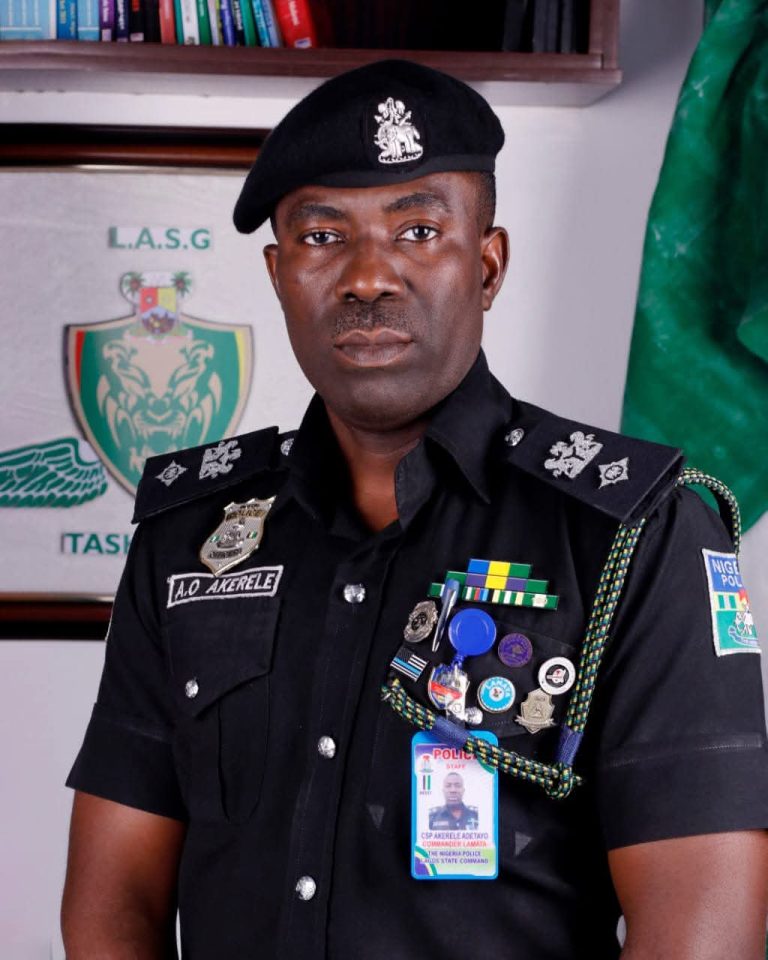
The Agency said its Chairman, CSP Adetayo Akerele, remained focused on his responsibilities and would not be distracted by what it described as personal attacks, sensational reporting or attempts to undermine his credibility.

It said Akerele had consistently supported enforcement initiatives aimed at preventing criminal activities, restoring order and protecting residents.

The Taskforce said it would continue to act on credible complaints, intelligence and petitions concerning activities that threaten public order or violate Lagos State laws.

It acknowledged that enforcement actions could attract criticism, particularly from individuals or groups affected by them, but maintained that such actions remained necessary where violations posed threats to public safety, environmental sanitation and the security of residents.

The Agency urged media platforms and members of the public to verify facts before publishing or disseminating allegations capable of misleading the public or damaging the reputation of individuals and institutions.

While acknowledging the media’s right to scrutinise government agencies, the Taskforce said such scrutiny should be based on facts, fairness and responsible journalism.

It reaffirmed its commitment to enforcing compliance with the law and addressing activities capable of undermining the peace, safety and security of Lagosians.

Priest commends Okpebholo over roads, transformer

0

Parish Administrator of St. James the Greater Catholic Church, Ogbeson, Benin City, Very Rev. Fr. Michael Oyanoafoh, has commended Governor Monday Okpebholo for road projects and the provision of a transformer to the community.

Fr. Michael Oyanoafoh spoke yesterday during the dedication of the church building in Benin by Most Rev, Donatus Ogun, the Apostolic Administrator, Catholic Archdiocese of Benin City.
He said the church had appealed to Governor Okpebholo during its December 2025 harvest over poor electricity supply and the deplorable road leading to the church.

Governor Okpebholo, he said, responded by providing a transformer, which was delivered on Dec. 23, and also commenced work on Electrics Road leading to the church.

The priest also praised the governor’s ongoing road and flyover projects, saying they had eased traffic and improved access to the area.

He said some visitors had previously avoided the church because of the bad road but changed their perception after seeing the completed flyover and ongoing projects.

“We thank him immensely for what is happening on our roads, the flyovers and the first flyover in our state. Another flyover is also coming up on Sapele Road and we are grateful to him”, he said.

Fr. Michael Oyanoafoh also commended Governor Okpebholo for paying the hospital bill of a child who underwent surgery.

On his part, the Apostolic Administrator of the Catholic Archdiocese of Benin City, Most Rev. Donatus Ogun, O.S.A., Bishop of the Catholic Diocese of Uromi, prayed to God for the governor’s protection.

Responding, Governor Okpebholo pledged to sustain work on the ongoing road projects in Ogbeson, saying residents would see more progress before the end of the year.

“By the grace of God, between now and December, you will see work going on,” he said.

Injured Osimhen won’t take risks with UCL

0

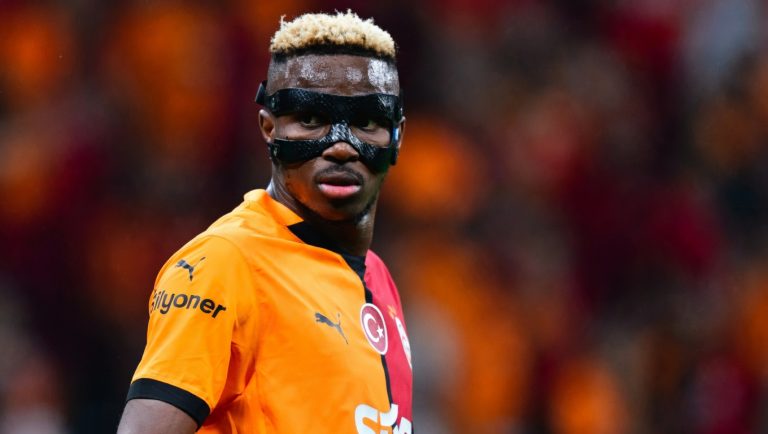
Nigeria international Victor Osimhen is targeting a return to action when Galatasaray face Sporting Lisbon in the UEFA Champions League next week while hinting he won’t risk playing after picking up an injury in his last outing, BSNSports.com.ng reports. ‎ ‎ ‎ ‎

Osimhen picked up an injury during Galatasaray’s 3-2 away victory over Istanbul Başakşehir on Friday, forcing him to leave the pitch in the first half. ‎ ‎Despite the setback, the Super Eagles forward is hopeful of recovering in time for the club’s Champions League encounter with Sporting Lisbon. ‎ ‎

‎“I have nothing, I didn’t want to risk myself. If our coach deems it appropriate for the Sporting Lisbon match, I want to be on the field,” Osimhen said. ‎ ‎ ‎


Galatasaray have confirmed that the striker has undergone advanced examinations, including an MRI scan, to determine the extent of the injury and assess the risks surrounding his potential return. ‎ ‎ ‎

The Turkish champions are expected to carefully monitor Osimhen’s recovery before making a final decision on his availability for the Champions League fixture. ‎ ‎

‎Osimhen has been an important attacking figure for Galatasaray since joining the club permanently, and his availability would provide a major boost as the Turkish side continues its European campaign.

Amusan misses Diamond League crown as Russell wins in Brussels

0

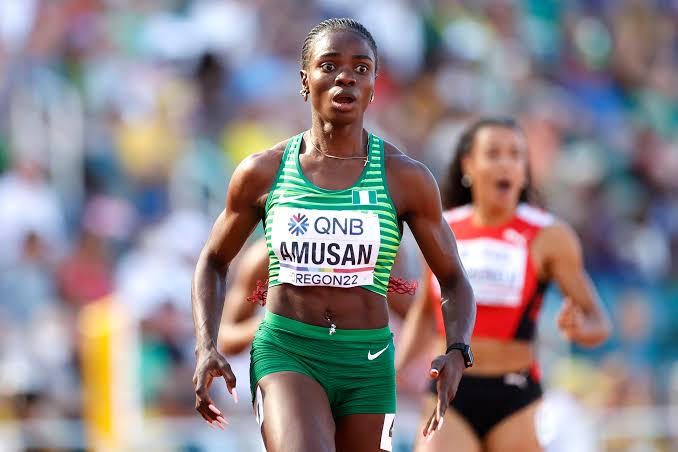
Nigeria’s Tobi Amusan missed out on the women’s 100m hurdles Diamond League title after finishing fourth in the Brussels final on Saturday.

American Masai Russell claimed the crown in a meet-record 12.20 seconds, while Bahamas’ Devynne Charlton finished second in 12.33 seconds after setting a new national record. Jamaica’s Megan Simmonds took third in a season’s best 12.43 seconds, leaving Amusan fourth in 12.54 seconds.

The Brussels final was particularly significant for Amusan after Russell recently broke the Nigerian’s four-year-old world record. Russell clocked 12.09 seconds in Zurich to lower Amusan’s 12.12-second mark by three-hundredths of a second.
Amusan had entered the final in strong form after winning the Grand Prix Brescia in Italy on August 31. She ran 12.56 seconds despite a stiff headwind, finishing ahead of American Alaysha Johnson and Jamaica’s Ackera Nugent.

The Nigerian had also finished second behind Russell in Zurich, posting a season’s best 12.23 seconds. That result had set up another highly anticipated meeting between the two hurdlers in Brussels.

Amusan remains a three-time Diamond League champion, having won the title in 2021, 2022 and 2023. She became the first Nigerian to hold the women’s 100m hurdles world record when she ran 12.12 seconds in the semi-finals of the 2022 World Championships in Eugene, Oregon.

She later won the world title in Eugene in 12.06 seconds, although the performance could not count as a world record because of an excessive following wind.

2027: Opposition coalition faces single candidate dilemma

0

Stakeholders say coalition has few weeks to decide or hand victory to Tinubu


As the general election approaches, Nigeria’s anti-incumbent bloc faces an agonising choice between personal ambition, regional balancing, and collective political survival.

On Tuesday, the opposition coalition attempted another comeback, but its path to 2027 remains highly volatile and uncertain. Driven by an urgent desire to challenge the All Progressives Congress’s (APC) hold on power, leading political figures have repeatedly tried, and failed, to form a single, formidable electoral bloc capable of staging a winning campaign.

The cycle is exhausting for political observers and citizens alike: brief, carefully orchestrated displays of public solidarity quickly yield to intense internal infighting.

Caught in a delicate balance between collective political survival and unyielding individual ambition, every fresh attempt to bridge the divide seems to only deepen the ensuing crisis of confidence among the political class and the electorate.​


Barely months away from the polls, the coalition finds itself right back at the drawing board.

The urgency is real: the Independent National Electoral Commission (INEC) has officially lifted the ban on political campaign activities, and presidential hopefuls have already established their individual campaign machinery across the six geopolitical zones.

For millions of Nigerians frustrated by mounting economic hardship, soaring food prices, escalating fuel costs, and widespread insecurity, a unified coalition represents the most viable alternative to the ruling party.

Yet, if the opposition fails to resolve its internal contradictions and enters the upcoming race fragmented, it will inevitably repeat its painful 2023 missteps.​

Elusive search for unity​
The push for a united opposition front is not new; it began almost immediately after post-election litigation concluded in late 2023.

The first major bid came in May 2026, when Peoples Democratic Party (PDP) governors, Labour Party (LP) chieftains, and African Democratic Congress (ADC) leaders met in Abuja under the banner of the National Salvation Front.

Their communiqué unveiled an ambitious 10-point agreement to forge a single presidential ticket and present a unified economic blueprint to the electorate.

Within two weeks, the deal unravelled over a familiar sticking point: who gets the presidential ticket.

The PDP insisted the ticket must return to the North to balance regional power dynamics, while LP leaders argued their impressive 2023 electoral performance and passionate youth base earned them the top spot on the ballot.

By June, joint statements ceased entirely amid mutual accusations of secret talks with the ruling APC.​

In July 2026, the ADC made a bold move by opening its platform for a full merger, inviting aggrieved PDP and LP members to integrate into its structures.

Several governors, senators, and prominent political heavyweights attended the grand unveiling in Lagos, offering a brief 72-hour glimpse of a potential political breakthrough.

However, the battle over party structure quickly erupted, focusing on control of the National Executive Committee and state-level candidate selections.

PDP stakeholders walked out in protest, accusing the ADC of attempting to absorb them rather than execute a genuine, equal merger.

Meanwhile, the LP fractured further—one faction backed the ADC alignment, while another vowed to rebuild independently from within. The merger agreement was never signed.​

With time running out, coalition leaders established a 15-man Technical Committee in early August to harmonise manifestos and zoning formulas.

Designed to buy valuable time and project unity to an increasingly sceptical public, the committee instead exposed deeper internal fractures.

Two members granted separate media interviews in the same week directly contradicting each other on zoning rules, while another was accused of accepting consultancy fees from a prominent 2027 presidential aspirant.

By late August, the committee had failed to convene, prompting a senior member to privately concede that they were simply managing egos rather than building a functional political movement.​

Why alliances collapse​
​These alliances collapse repeatedly because the political incentives driving party leaders directly oppose the compromises required for a stable mega-coalition.

At the core of the friction is the structural nature of executive power in Nigeria, where the presidency concentrates immense resources, appointments, and financial patronage.

Former Governor of Cross River State and presidential candidate of the PRP, Donald Duke, underscored the asymmetric advantage of the ruling party, noting: “Everything is skewed in favour of the incumbent. The only way you can seriously charge, tackle the incumbent is to come together to tackle him, otherwise we will factionalise.

“We need to come together if we really want to take him out. Bola Tinubu is not the average politician. He is not the run-of-the-mill politician.”

Reconciling North-South rotation principles adds another layer of complexity, as Southern demands for regional equity directly clash with Northern claims based on numerical voter strength and demographic advantage.​

Furthermore, Nigerian political parties function primarily as electoral vehicles rather than ideological movements, meaning alliances lack structural glue and easily fracture over patronage or ticket allocations.

Sometimes, opposition often accuse the ruling APC of exploiting these dynamics using state machinery, legal challenges, patronage, and targeted litigation to widen existing fault lines within their ranks.

Joining the discourse from the ruling party’s perspective, former Minister of Works, Senator Adeseye Ogunlewe, in a brief remark in a telephone chat with Sunday Sun, unequivocally declared that the APC will win.

“I am an APC; how do you think I will wish our opposition well? No matter what they do, APC will ultimately win this election.”

Unlike the historic 2013 merger that created the APC through complete structural dissolution of its founding parties, contemporary efforts rely on loose memorandums of understanding that leave individual leaders with easy exit routes back to their original platforms whenever negotiations turn sour.​

Analysing the structural flaw on a television programme, public affairs analyst Muyiwa Akintunde observed that the coalition is essentially doing the right thing at the wrong time.

“The promoters of this coalition have not done the right thing. They thought it was the right thing, but not at the right time.

“In the sense that if we go back in time, recent time even, the coalition that brought in APC in 2015 was formed well about three years before the election.

“Actually, it was formed in February 2013. We have an opposition now that doesn’t have more than two states. And they have just a couple of months to the election.”​

Akintunde added that conflicting personal ambitions heavily compound this timing deficit.

“What is going to be a major problem for them is who is going to be the presidential candidate of this coalition because all of them have ambition.

“Atiku has his ambition, Peter Obi has his ambition, even the one that might not likely make it to the last three, all of them, each of them has ambition. They have to bear, but the time is very short for them.”​

​History of broken alliances​
​This impasse is not an anomaly, but the continuation of a decades-long historical pattern in Nigerian party politics.

As far back as 1983, the Progressive Parties Alliance collapsed because neither Obafemi Awolowo nor Nnamdi Azikiwe would step aside for the other, allowing the National Party of Nigeria (NPN) to retain power effortlessly.

Decades later, during the lead-up to the 2011 general elections, merger talks between Bola Tinubu’s Action Congress of Nigeria (ACN) and Muhammadu Buhari’s Congress for Progressive Change (CPC) broke down over power-sharing ratios, cabinet allocations, and running-mate slots, splitting the anti-incumbent vote and handing the PDP an easy victory.​

By 2019, the PDP led over 30 parties under the Coalition of United Political Parties (CUPP) umbrella, but key members refused to dissolve their regional structures or step down for unified legislative candidates, rendering the alliance ineffective against the incumbent APC election machine.

Most recently in 2023, high-stakes third-force talks between Peter Obi of the Labour Party and Rabiu Kwankwaso of the New Nigeria Peoples Party (NNPP) stalled over who would take the vice-presidential slot.

The resulting three-way opposition split fragmented millions of votes and handed the APC victory on a minority share of the total vote cast.​

​The structural trap facing 2027​
​The latest summit convened by the G-100—bringing together parties like the ADC, Social Democratic Party (SDP), Peoples Redemption Party (PRP), Allied Peoples Movement (APM), and PDP—reflects this ongoing tension between personal ambition and collective survival.

To avoid past traps where negotiations dragged on endlessly, the summit set a strict four-week target to establish a legally binding framework.

The strategy hinges on specialised working groups focusing on key initiatives, including a single-term transition charter proposing a four-year Government of National Competence designed explicitly to reduce friction over long-term power retention among member parties.​
​

However, critics remain profoundly sceptical about the enforceability of such arrangements.

Secretary of the Ijaw Elders Forum, Efiye Bribena, highlighted the legal reality behind this strategy.

​“The idea of a single tenure is not enforceable. It can only be a gentleman’s agreement. And it will depend on the integrity of the individual involved.

“You cannot enforce it because it is a constitutional right. You cannot stop the person from contesting. There is no legal obligation.”

Reinforcing this initiative, the Taminu Turaki-led faction of the PDP indicated its interest to adopt the opposition’s proposal to field a single presidential candidate.

Turaki noted that the group believes a transparent process of opposition collaboration could produce a credible leadership for Nigerians, adding that the initiative was consistent with the faction’s earlier position of building working relationships with like-minded political parties and organisations.​

​In a statement issued on Tuesday by its National Publicity Secretary, Ini Ememobong, the faction emphasised that presenting a single candidate against President Bola Tinubu of the All Progressives Congress (APC) is necessary to defeat the ruling party in the forthcoming election.

The decision, as detailed in the statement, was informed by “the wailings of Nigerians groaning under the repressive Bola Tinubu APC-led federal government, and the compelling need to join forces with other credible political forces in search of the country’s redemption.”
​

Turaki elaborated on the conditions: “Our participation is anchored on the promise that the process will be hinged on the philosophical underpinnings of transparency, equality, data-driven decisions and egalitarianism.

Any result birthed by a process midwifed by these virtues will certainly offer Nigerians a credible leadership capable of alleviating the skyrocketing poverty and rising insecurity in the country.”​
​

Conversely, former Senate Minority Leader, Senator Abiodun Olujimi, who represented Ekiti South Senatorial District in the 8th National Assembly on the platform of the PDP, dismissed outright as an effort in futility the proposal to field a single presidential candidate.

She said in a telephone conversation with Sunday Sun: ​“It cannot work. It cannot work because those of us in the opposition have tried it before, and it has never succeeded.

“It fails because each candidate firmly believes they have the individual capacity to win. They assume they can simply take their past voting numbers, add a little extra, and secure a victory.

“But reality does not work that way; it is an illusion, as those numbers are simply not there for anyone to claim. In the end, they will only wind up in disarray.

“Weaponising poverty is not what the people want to hear at this time. What they want is an alternative policy that genuinely improves their lives—something the opposition lacks.

​“The absence of Atiku Abubakar and Peter Obi is even a big minus to the coalition summit. At least, their presence would have given it some level of assurance and credibility.

“The promise to restore the fuel subsidy may sound appealing to those hoping to benefit from it, but it represents a policy somersault that would drag us back to where we started.

“Having served in government, we all know the toll that system took on the country.

“Some of us in the opposition aligned with President Tinubu because he is always ready to make course corrections whenever necessary—a true hallmark of good leadership.

“The hardship associated with current policies may stem from factors overlooked during their initial design, but he remains willing to adjust.

“Making thoughtful adjustments is far better than executing a complete policy somersault. A policy somersault will lead us nowhere.”

However, the ultimate success of this ambitious initiative rests on key political heavyweights who command vast followings.

Atiku Abubakar controls established party machinery across the North along with significant campaign financing, making his willingness—or unwillingness—to step into a supporting or advisory role a decisive factor for any Southern-led ticket.

Conversely, Peter Obi commands the formidable “Obidient” movement and holds a massive, highly energised base in parts of the country, leading his supporters to insist that his voter engagement makes him the non-negotiable anchor for the top spot.

Efiye Bribena expressed optimism that the coalition is workable if the parties involved address these dynamics with sincerity of purpose: ​

“The coalition is workable. But it depends on how they want it. If you recall the last time I spoke with you, I said there was a possibility of the coalition presenting a single candidate.

“So, I am not surprised that the summit has come up with the proposal. How it is going to happen, I don’t know.

“Even though Atiku and Obi were not present at the summit, I think both of them are weighing their options.

​“Everybody is tired of the Bola Tinubu government. If there is a free and fair election, Obi will likely win. He will floor both Tinubu and Atiku.

But the fact is that it is not a free and fair election that determines who becomes president. If the coalition is going to pick the best candidate, they will pick Obi. But if they are looking at their political interests, which is typical of politicians, they will not pick Obi.

​“I believe the coalition will end up producing one candidate if it is Obi. But if it is not Obi, they will end up presenting two candidates.

​“If both Atiku and Obi decide to put their interests aside and look at the national interest, it can work. And one of the ways it can work is to have a compromise candidate instead of either of them.

​“I don’t foresee any of them stepping down for the other. It is not likely that Atiku will step down. Obi is also not likely to say, ‘I’m no longer contesting.’ But they may likely rally their supporters to work for one of them.

​“If both of them decide to go for a compromise candidate, I will bet on Adebayo because Adebayo is sound. He’s the only person I would put next to Obi.

​“If both of them realise that the best option is to throw their weight behind somebody else as a compromise, I would place my bet on Adebayo.”

​Meanwhile, middle-tier figures like Duke and Adewole Adebayo bring technocratic credibility, with Duke’s explicit willingness to step aside offering a rare model of subordinating personal ambition for the broader platform.​

​Raging debate over way forward
​The window to build a viable front is closing rapidly, leaving opposition leaders with two practical options to consider before time expires.

According to some analysts, the first option is a full merger under a single existing platform, which demands immediate and painful concessions on leadership structures and candidacy rights before election deadlines pass.

The second is an electoral alliance where parties retain their distinct party identities but formally commit to a single presidential candidate while strategically coordinating legislative and governorship tickets across states to prevent vote-splitting.

What cannot work is repeating the recent cycle of hosting summits, issuing joint communiqués, and returning to isolated corners without a unified strategy.​

​Inflation, high fuel costs, and widespread economic insecurity have made daily survival the primary central issue for the Nigerian electorate.

The opposition possesses the necessary arguments and public frustration required to challenge the ruling party, but it currently lacks a unified vehicle to translate that widespread discontent into victory.

Ultimately, 2027 will be decided not just by who is on the ballot, but by who turns out to vote on election day.

A united opposition can drive voter enthusiasm and turnout, whereas a fractured one guarantees low participation and an easy path to re-election for the incumbent.

The opposition has one final window to convert months of failed negotiations into a genuine, binding alliance.

If it misses this opportunity, history will record that it did not lose to the APC; it lost to itself.

Sun

2027: South-West politicians roll out grassroots war chests

0

• APC defends turf, ADC, NDC, PDP sharpen attacks

With presidential and National Assembly elections scheduled for January 16, 2027, followed by the governorship and state assembly polls on February 6, 2027, political analysts anticipate a fiercely contested race driven by massive electorate.

According to the Independent National Electoral Commission (INEC) timetable, campaigns for the presidential and National Assembly elections kicked off on August 19, 2026, while campaigns for the governorship and State House of Assembly elections are slated to begin on September 9, 2026.

Political parties declare readiness to participate and emerge victorious, banking on issue-based campaigns, potential capacity, record and achievements of their candidates.

Osun: Parties vow to rely on issue-based campaigns, mobilization in 2027

The African Democratic Congress (ADC) in Osun State has declared that the outcome of the recent governorship election will not dictate the results of the 2027 general elections, assuring the public that the party is re-strategising to secure victory in the state.

Speaking through the State Spokesperson, Hon. Nurain Adebisi, the party maintained its readiness to contest all elective positions regardless of the outcome of the August 15 gubernatorial poll.

“As a party with candidates for all elective offices, we are ready notwithstanding the outcome of the just-concluded gubernatorial election.

“Winning in Osun is not a big deal for us, as the indices that determined the governorship election will not be the same for federal elections. Why? People are not pleased with the performance of the APC-led federal government under President Bola Tinubu,” Adebisi said.

Adebisi criticised the current economic hardship in the country, alleging that widespread poverty is being weaponised by the ruling party to manipulate voters through vote-buying, a tactic he claimed was deployed in off-cycle elections in Anambra, Edo, Ondo, and recently in Osun. However, he insisted that such strategies are bound to fail in 2027.

“The Osun governorship election result is a reflection of the poverty situation in the country, which by extension is a failure of President Tinubu’s economic agenda,” he added.

According to Adebisi, the party is currently reviewing the outcome of the recent Osun election and will implement necessary adjustments ahead of the upcoming national polls.

He also assured voters that the ADC’s upcoming campaign will be strictly issue-based, driven by a commitment to offering viable solutions for Nigeria and Nigerians.

The Chairman of the Nigeria Democratic Congress (NDC) in Osun State, Dr. Charles Omidiji, has declared that the party is fully prepared for the upcoming general elections, expressing strong confidence that its candidates will emerge victorious.

Speaking in an interview with our correspondent, Omidiji contrasted the party’s current standing with previous election cycles, noting a marked improvement in structural readiness.

“Unlike before, we are now fully prepared. Previously, we did not field a governorship candidate, but this time we have candidates across all positions, from the presidency and Senate to the House of Representatives and the State House of Assembly. We are ever ready,” Omidiji stated.

He attributed his optimism to aggressive grassroots mobilisation, which has brought various women’s and youth associations, as well as critical support groups, into the party’s fold.

“By the special grace of God, we are going to win the elections come 2027 because we have already mobilised numerous tendencies and support groups, including various women and youth associations. We are definitely winning,” he added.

According to Omidiji, the party’s campaign strategy centers on substantive issues rather than conventional rhetoric. He highlighted the presidential agenda of Peter Obi, describing it as a comprehensive 10-point plan designed to address critical national challenges.

Reflecting on previous electoral outcomes in Osun State, the chairman commended the introduction of the INEC Result Viewing (IReV) portal, noting that technology-driven transparency plays a crucial role in safeguarding the integrity of the ballot.

“The outcome in Osun teaches us that if we truly mobilise our people, ensure our candidates are on the ground, and leverage the IReV portal effectively, we can definitely win or rather, the best candidate will win. I really appreciate the IReV system. If it is fully optimised for the presidential and general elections, we are confident of victory by the grace of God,” he noted.

Addressing concerns over electoral malpractices, Omidiji maintained that the NDC lacks the financial capacity for vote-buying. Instead, the party will rely on issue-driven mobilisation and other strategic initiatives to secure victory at the polls.

The Coordinator of Renewed Hope Ambassador in Osun, Sunday Akere promised to get back and has since refused to answer calls.

The Peoples Democratic Party (PDP) I Chairman in Osun, Sunday Bisi, collapsed structure with Governor Ademola Adeleke of Accord during the August 15 governorship election and the governor has promised to work for emergence of President Bola Tinubu.

The spokesperson of Accord, Oladele Bamiji, has refused to react to message on the chance of the party in the national and state assembly elections.

Ekiti: Issue-based campaigns, electoral tech dominate parties’ strategies as Ekiti parties gear up for 2027 elections

Ekiti State political parties are ramping up preparations for the upcoming general elections, with leaders emphasising issue-based campaigns, grassroots mobilisation, and the evolving role of electoral technology.

Speaking on the state’s readiness, the Special Adviser to the Ekiti State Governor on Political Matters and Inter-Party Relations, Chief Jide Awe, declared that the All Progressives Congress (APC) is fully prepared for the polls. Awe stated that the party would leverage the achievements of President Bola Tinubu to secure victory, maintaining that the APC remains the only credible party with a credible candidate.

Addressing concerns over electoral technology, Awe defended the use of the INEC Result Viewing (IReV) portal.

“Technology, to a very large extent, has improved the attitude of voters. So, if we have introduced some elements of technology to make elections faster and easier, that does not mean we should view it negatively,” he said.

From the opposition, Chief Sanya Atofarati, the House of Representatives candidate for Ekiti South Federal Constituency under the Allied Peoples Movement (APM), stressed that his party has focused on building political relationships and studying the terrain. Atofarati argued that democracy must not become the exclusive property of political elites.

“Our argument is that democracy must not become the exclusive property of political elites. Political power belongs to the people. We are asking Ekiti people to join a national movement to reclaim democratic power and return government to the people,” Atofarati stated.

He added that Governor Seyi Makinde’s vision centers on solutions, competence, and national reset.

On the IReV portal, Atofarati described Osun State election as an important lesson, noting that INEC’s uploading of over 98 percent of polling-unit results proved that the people’s will can prevail when transparency is upheld.

However, he cautioned that technology alone is not a guarantee. “What ultimately matters is the combination of technology, vigilant citizens, credible electoral officials, responsible security agencies, and political parties that are prepared to defend every legitimate vote through lawful means,” he noted.

Similarly, the Chairman of the African Democratic Congress (ADC) in Ekiti, Hon. Dele Ekunola, affirmed that his party is fully prepared for the polls and anticipates forming strategic collaborations with other political groups.

Echoing sentiments on transparency, Ekunola expressed confidence that INEC will continue to build on the progress made during the Osun election as the ADC rolls out vibrant, issue-based campaign strategies.

In the same vein, Ayodele Adesua, the House of Representatives candidate for Ekiti North Federal Constituency 1 under the Nigeria Democratic Congress (NDC), disclosed that the party has activated its structures down to the ward and unit levels across Ikole and Oye Local Government Areas. The party has launched door-to-door campaigns led by respected local figures.

Adesua expressed optimism about the NDC’s electoral prospects, stating that voters are tired of unfulfilled promises and are looking for tangible democratic dividends rather than excuses.

Highlighting the impact of the IReV and BVAS technologies in the Osun polls, Adesua said, “With IReV and BVAS, rigging has become much harder. You can no longer rig your way to Abuja. You must convince the people at the polling unit, and the party that does the real grassroots work and earns the people’s trust will carry the day.”

Lagos: APC banks on infrastructure as opposition parties vow to break ruling party’s dominance

Lagos State chapters of the All Progressives Congress (APC), the African Democratic Congress (ADC), the Nigeria Democratic Congress (NDC), and other political actors have declared their full readiness for the 2027 general elections as grassroots mobilisation intensifies across the state.

This heightened political activity follows the official commencement of the 2027 electioneering season.

To maintain its stronghold, the Lagos APC has decentralised its campaign strategy, placing heavy emphasis on wards and local government areas.

In a statement signed by Ayaba Omobola Nowoola-Akingbehin, Senior Special Assistant on Media and Publicity to Lagos State APC Chairman Hon. Cornelius Ojelabi, the party noted that its grassroots machinery has been reinforced through stakeholder engagements across the state’s 20 Local Government Areas and 37 Local Council Development Areas.

Outreach efforts have actively targeted women’s groups, youth organisations, market associations, community leaders, and artisans.

“Lagos stands ready and well-equipped for the task of providing the necessary grassroots mobilisation and electoral strength for the victory of the party in the elections,” the statement read, adding that every polling unit will be directly engaged.

For its campaign narrative, the Lagos APC is pointing to state-level infrastructure projects, such as the operational Blue Line and Red Line rail systems, extensive road rehabilitations, and urban renewal initiatives, alongside federal policies under the Tinubu administration, including foreign exchange reforms, fiscal restructuring, and major transportation projects like the Lagos–Calabar Coastal Highway.

Meanwhile, opposition parties are seeking to disrupt the political status quo. The Lagos State Chairman of the ADC, George Ashiru, recently declared his party’s readiness to end the APC’s long-standing dominance in the state, asserting that the ADC stands a strong chance of ousting the ruling party at both the state and federal levels.

Similarly, despite internal party challenges, chieftains of the NDC in Lagos have affirmed their readiness for the polls, aiming to expand their presence and challenge the major political blocs.

Ogun: Major parties finalise strategy, keep campaign councils under wraps

In Ogun State, the ruling All Progressives Congress (APC) and the main opposition Peoples Democratic Party (PDP) are actively engaging key stakeholders ahead of the official campaign flag-off for the 2027 general elections.

However, both parties have yet to publicly unveil their full campaign councils, making it difficult to get spokesperson for the general elections.

During the PDP’s Presidential and National Assembly campaign flag-off held at the Ake Pavilion inside the Alake’s Palace in Abeokuta on August 26, the event compere introduced the party’s governorship candidate, Oladipupo Adebutu, as the chairman of the presidential campaign council.

When contacted via WhatsApp for clarification on the complete structure of the campaign council, Ogun PDP Chairman, Hon. Abayomi Tella, initially declined to comment.

Speaking with our correspondent, Tella confirmed Adebutu’s appointment as the head of the presidential campaign team.

He added that the party is currently perfecting the lineup for the governorship and state assembly campaign council, which will be formally announced through a press release soon.

Similarly, the APC has kept its campaign organization closely guarded. Responding briefly to inquiries, the Ogun APC State Publicity Secretary, Olufemi Nuberu, stated: “The necessary preparations are on course steadily. Thanks.”

In a follow-up statement, Nuberu clarified that the party is putting the finishing touches on its campaign structure. He assured that members of the press will soon be invited to the official unveiling of the APC governorship and state assembly campaign councils.

Ondo: APC moves to quell factional crisis as ADC gains momentum ahead of polls

Major political parties in Ondo State have intensified preparations for the forthcoming 2027 general elections, launching early grassroots campaigns to win over the electorate.

Ahead of the polls, the ruling All Progressives Congress (APC) has stepped up efforts to reconcile aggrieved members following contentious party primaries.

The internal rift escalated after key party leaders alleged that the Minister of Interior, Dr. Olubunmi Tunji-Ojo, who is rumored to harbor gubernatorial ambitions, influenced the nomination of candidates for the Senate, House of Representatives, and State House of Assembly to favor his faction.

However, Ondo State Governor and party leader, Hon. Lucky Aiyedatiwa, dismissed rumors of division, maintaining that the APC remains united.

Addressing party members, Aiyedatiwa declared that the state chapter has resolved to work together for a total victory across all elections, including delivering at least one million votes for President Bola Ahmed Tinubu.

Unveiling the party’s strategic mobilisation plan, Governor Aiyedatiwa announced the activation of mobilization councils across all 18 Local Government Areas (LGAs) and warned against internal factionalisation.

“APC is one. There are no two APCs in Ondo State. We do not want to leave anyone out. Even those attempting to create factions are being engaged to ensure the party remains undivided,” Aiyedatiwa stated.

He added that party elders across the 18 LGAs are working tirelessly to secure victory for all APC candidates, reiterating that the success of his administration and the state’s development are tied to the party’s electoral triumph.

Meanwhile, the African Democratic Congress (ADC) is positioning itself as a strong challenger following the high-profile defection of Eyitayo Jegede, SAN.

The former Attorney General, Commissioner for Justice, and PDP governorship candidate recently joined the ADC alongside thousands of his supporters nationwide.

The party is now relying heavily on Jegede’s political clout and statewide popularity to drive its 2027 campaign strategy.

Oyo: ADC, NDC, PDP lock horns in high-stakes opposition battle

The 2027 general election is shaping up to be a fierce contest in Oyo State as the African Democratic Congress (ADC), Nigeria Democratic Congress (NDC), and Peoples Democratic Party (PDP) step up efforts to build party structures capable of securing victory across all levels, from the presidency to the state house of assembly.

All three parties outlined their preparedness, strategic approaches, and key takeaways from the recent Osun governorship election during discussions on their electoral chances.

ADC chieftain, Adekola Adeoye, stated that his party is deeply entrenched at the grassroots, with active structures across all 33 local government areas.

Moving away from seasonal political campaigns, Adeoye noted that the party is focused on establishing permanent machinery to mobilise voters and protect its electoral mandate.

He expressed confidence that electorate preferences are shifting from political personalities toward critical issues such as competence, security, job creation, infrastructure, and the cost of living.

Adeoye added that the nomination of Oloye Taofeeq Adegoke, as the ADC governorship candidate has bolstered the party’s prospects.

Beyond running an issue-based campaign centered on agriculture, education, healthcare, and industrialisation, the party plans to deploy trained agents to monitor and safeguard every vote.

The NDC expressed equal confidence in its trajectory. Oyo State Chairperson Oyerinke Akinlolu disclosed that the party established nearly 80 percent of its state structure in under six months.

Citing the growing influence of its legislative representatives and gubernatorial candidate, Akinlolu insisted that the NDC is fully prepared to compete across every elective position.

Meanwhile, PDP Chairman, Prof. Rahman Akinoso, relied on his party’s political history in the state.

Highlighting functional structures across state, local government, and ward levels, Akinoso noted that the PDP completed its primaries strictly in compliance with INEC guidelines.

He emphasised that the PDP is not treating the 2027 election as an experiment, leveraging its past executive performance and established platform to mount a formidable challenge.

Despite their differing strategies, all three parties agreed on a critical lesson from the Osun election: raw election manipulation is becoming increasingly difficult.

For the ADC, the response lies in agent training and vote-monitoring mechanisms; for the NDC, it highlights an electorate determined to defend its vote; and for the PDP, it proves that executive performance ultimately dictates how voters reward or punish political parties.

Sun
UTME: JAMB releases underage candidates’ results

0

• Awaits NECO results for final assessment

The Joint Admissions and Matriculation Board (JAMB), has released the 2026 Unified Tertiary Matriculation Examination (UTME) results of all underage candidates who participated in the exercise for viewing.

JAMB, however, stressed that the release does not automatically qualify them for admission into tertiary institutions, and also warned parents and guardians to be wary of individuals claiming to have the capacity to secure admission for underage candidates outside the officially prescribed process.
The Board stressed that participation in the UTME and the release of a candidate’s result does not guarantee admission, particularly for candidates who had not attained the prescribed admission age. The Board, in a statement signed by its Acting Director, Public Affairs and Protocols, Fabian Benjamin, explained that an underage candidate for the 2026 admission exercise is any candidate who will be below 16 years of age as of September 30, 2026.

JAMB said the results were released primarily to enable underage candidates, their parents and guardians to know their performance in the examination.

It, however, informed that the results could not be used for admission or any other official purpose, except by candidates who satisfy the stringent conditions prescribed for exceptionally performing underage candidates.

JAMB said candidates wishing to check their results are required to send RESULT to 55019 or 66019, using the same SIM card with which they registered for the UTME.

According to the Board, only underage candidates who demonstrated exceptional academic ability and maturity will be considered for admission.

Among the requirements is a minimum UTME score of 320, as well as at least 80 per cent in relevant subjects in the Senior Secondary School Certificate Examination (SSCE), where applicable. “Such candidates must also satisfy the Post-UTME requirements of their chosen institutions and undergo a final assessment by experts as prescribed by the Board,” it said. JAMB said the rigorous process was designed to distinguish candidates who are genuinely exceptional from those who may have simply performed well in the UTME.

The Board further disclosed that the admission process for exceptionally performing underage candidates was still ongoing, noting that all stages of assessment and verification had not been concluded. It explained that the process could not be concluded until candidates awaiting their National Examinations Council (NECO) results were given the opportunity to present their results for verification. “The NECO results are yet to be released, and the Board would therefore await their release before proceeding to the final stage of the assessment process.

“The Board would announce a date for the final assessment as soon as the NECO results were released.”

JAMB thus cautioned underage candidates who do not meet the requirements for exceptional consideration against presenting their UTME results to institutions or individuals in an attempt to secure admission.

JAMB assured the public that the exceptional admission process would remain transparent, rigorous and merit-based, in line with its commitment to protecting the integrity of the nation’s tertiary admission system.

Sun

2027 presidency: APM unveils campaign plans for Makinde

0

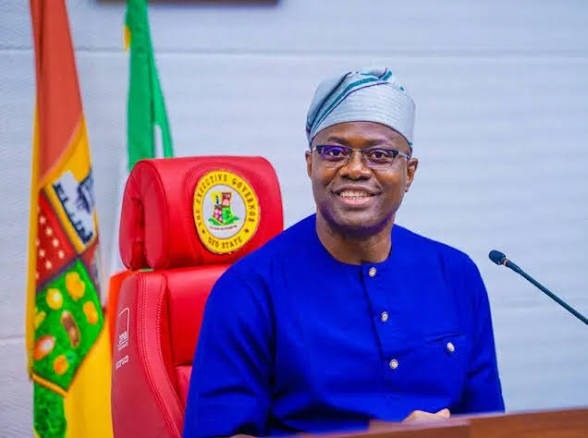
The Allied Peoples Movement (APM) has rolled out its campaign strategy for the 2027 presidential election as the party begins efforts to build nationwide support for its candidate, Seyi Makinde.

The party has established a presidential campaign office in Abuja to coordinate its activities ahead of the election, with the Makinde-Daura ticket at the centre of its mobilisation efforts.

APM said its campaign would be driven by issues affecting Nigerians and would present practical solutions to the country’s economic and social challenges.


The party is banking on Makinde’s experience in public administration and his record in Oyo State as part of its argument for giving the ticket national support.

Makinde has said the central objective of his presidential bid is to put citizens at the heart of governance and restructure the country in a way that creates opportunities for more Nigerians.

“For me, this campaign will be about putting Nigerians first. Our central message to Nigerians is that we have to reset our country so that it works for all Nigerians not just a select few,” he said.

The governor has indicated that his campaign will take him across the six geopolitical zones, with engagements involving different groups and stakeholders as the 2027 election approaches.

His proposed policy direction includes measures around economic growth, employment, agriculture, healthcare and national security, alongside calls for greater devolution of powers to the states.

The APM’s presidential ticket was completed when the party selected former Director-General of the Department of State Services, Lawal Daura, as Makinde’s running mate.

Daura’s selection gives the ticket a security-focused dimension, with the party presenting the combination of Makinde’s governance experience and Daura’s background in national security as part of its appeal to voters.

The party has also said it intends to strengthen its structures at the grassroots while expanding its political alliances ahead of the election.

Sun

2027: Why Tinubu will defeat Kwankwaso in Kano –Rabiu Suleiman Bichi

0


Rabiu Suleiman Bichi, current Managing Director, Hadejia Jamarre River Basin Development Authority (HJRBDA), was the Kano State Campaign Director of the Tinubu- Shettima Campaign Organisation in 2023 . A former Secretary to the Kano State Government and a one-time Chairman of Kano PDP, he spoke to Sunday Sun in Kano on sundry political issues bordering on the chances of the President Bola Ahmed Tinubu in the forth coming general elections, insisting that Tinubu would certainly overwhelm his rivals in addition to the fact that he would sweep the votes in Kano.

With the recent flag-off of political activities in Nigeria, what are the chances of your party, the APC, in Kano State and in Northern Nigeria?

Thank you very much. APC, as you know, is very. very strong in Kano State and in the whole of the North. In Kano State, I want you to take note of the fact that we have an overwhelming support of the people of the state. Look at it this way. During the 2023 general elections when I was the Director- General of the Tinubu-Shettima- Gawuna- Garo Campaign organisation, APC scored almost 980,000 votes while the NNPP scored almost a million votes. But now the majority of all of us (in these two parties) are now together in the same party. There was no serious movement from the APC to any other party since the alignment of both groups. If at all there had been any defection out of the APC since then, it is just one or two people. But in reverse, all the political heavyweights of Kano State, from all divides, just name any, they are all now in APC and they are currently working very hard to ensure that APC overwhelmingly wins the next general elections.

Let me give you a practical example of the APC surge from my own local government for instance. In Bichi Local Government Area of Kano State, because of the activities of APC, especially the activities of our House of Representatives member, whatever we do we do according to the polling unit, a lot of people have rushed to get their PVCs so that whatever we do, they can be getting these empowerment programmes executed by the APC. Now, we have a list of over 370, 000 registered voters in Bichi Local Government Area. And it is the same thing all over the state. The second factor driving this new push into the APC in the state is that APC under President Bola Ahmed TInubu has done a lot for Kano. I must admit that no President in Nigeria has done what Tinubu has done for Kano State, so many things at a time and within a single tenure- a span of three years. The President is doing his work. He is developing national infrastructure and I think that Kano, we are the darling of this government. I will give you a few examples. When he took over, there was a lot of complaints regarding Kano-Abuja Road. Everyone knows that. People normally spend the night on the road because of lack of good road, but now that project is almost completed. The Kaduna-Abuja end is already completed. Secondly, the road project from Maiduguri–to Kano, which has been going for the last 20 years, it was actually started in 2006, it is almost completed. New projects were started in Kano……

There is the general belief that Dr Rabiu Musa Kwankwaso is in full control of Kano politics. Do you think that if we go for an election in the coming months, Tinubu will be able match Kwankwaso?

Where did you get that your “general belief” from? Where did you get it please?

I said that people assume out there…

(Cuts in sharply) …Then, honestly, then these people are assuming wrongly. Let me tell you something…In the last election, the governor of Kano State, Abba Kabir Yusuf was part of the then NNPP and was working with Kwankwaso. Today, the governor has decamped from the NNPP and decamped with all the members of the government – that is his cabinet and all the chairmen of the local government and they were in NNPP before. So my big question to you is, who is left in there with him (Kwankwaso) ? Secondly, APC did not perform woefully against Kwankwaso in the last election. APC was equally strong against him. If you could recall, we went to the tribunal and we got judgment in our favour. And we got the same judgment at the Appeal Court. And when we went to the Supreme Court – you know that the judgement of the Supreme Court, sometimes it is political, sometimes it has to do with general security. You remember that time, the people were brandishing weapons on us, saying they would murder, they would kill, they would torture the judges. It was everywhere. All these voting strength are now in one party. Like I said all the political heavyweights in the state are in one place. And you must also not forget that Rabiu Musa Kwankwaso is now a Vice Presidential candidate of another party under Obi and you know that Kano people with an Obi is a no- go area. This is known. There is no point hiding it. Everybody knows that Kano is not for Obi. So against these backgrounds, how can a Kwankwaso and his party stand a minute chance against Tinubu in Kano State? How can that happen? I think that APC apart from doing well, is also a party that is on ground and APC has done a lot for Kano and I am sure that Kano people are going to reward the President with their votes when the time comes.

If you are asked to project the forthcoming elections in the state, what percentage would you give to Tinubu and APC, and to Kwankwaso?

Going by the trend, I forecast that currently, we expect to get nothing less than 70 per cent of the votes of those who would come out to vote on that day. Let me remind you. I was the Collation Officer of the APC in the 2023 Presidential election in Kano State. President Tinubu, across states in Nigeria, got the highest APC votes from Kano. Bichi Local Government Area produced the highest votes for the President Tinubu in Kano State and in the country- apart from President Tinubu’s Local Government Area in Lagos State. We scored 567,000 votes for the President, more than 25 per cent of the vote cast. That alone gave a 380,000 votes difference in favour of APC, which helped wiped out all the votes that PDP gathered in other states where they were stronger than Tinubu. Now with what we have seen , with what Mr President has done for Kano State, I think that we are going to get more than 70 per cent of votes cast in Kano State.

But I want us to interrogate your predictions against certain obvious indexes. At the moment, the APC in Kano State is nothing but a rainbow coalition of different politicians forged together by President Tinubu for his own sake. Observers also insist that they are yet to have a seamless integration. Together, the public think that this might have some negative consequences on the ambition of the party during the elections.

You see these people don’t understand politics very well. You see the rainbow coalition that you are talking about and the lack of seamless integration often happens before party primaries. But whenever the primaries are concluded and we have clear candidates for the contest, it is expected that every member of the party is working to ensure that APC wins the elections irrespective of whatever had happened before. For example, if we take a look at the legacy members of APC, that is the members of the party before the defection of the governor- which of them will say he will not work for the APC? Who among us will say that he does want APC to win? Nobody will do that. And also, the governor who has more stake in the party because he is the governor and all those who came with him to the APC, none of them will say APC will not win. So, you see we are working hard, we are working harder and we are all working together and all of us are ambitious for APC to win Kano State.
But we as reporters, many of us still get the signal that there are quarrels and differences within Kano APC. We hear about their quarrels, we hear of their silent misgivings, we hear about quite a number of these negatives and they certainly do not tally with your submission.

You must know something that with democracy, there is nowhere where you can say there are no differences or that all is too calm and peaceful. Even in the United States of America, there are differences. Everywhere there is popular democracy, it is like that. But when it comes to elections, everybody will want his party to win. This is because if you don’t do that, you will be embarking on anti-party activities. And there is a penalty for that.

Two years back, the people of Kano came out in large numbers to say they don’t like the Tinubu administration and what was happening. How does this represent or support you claim that Kano State is favourably disposed to or is politically in favour of Tinubu?

You said two years ago. Two years ago! But you must realise that that time, there was a difference between us, the APC and the government at the state level. That was the reason the demonstration was escalated in Kano. That was because there was APC and the NNPP and the NNPP government was trying to show that it was the government. That was why the situation got that high. But now, we are in the same political party and everybody is working hard and fighting hard for APC to win the elections. So if you try to judge what happened two or three years back and try to use it as basis of your analysis today, then you are wrong. The situation has drastically changed today. Every member of the party is working hard for the party. We are all together with the governor. But two years ago, he was fighting us and we were fighting him. Now, we are together. In fact, if you remember, during the demonstration, the governor clearly encouraged people to come and demonstrate! He called them out to the Government House and collected their letter to take it to Mr. President. But now, will that happen? Those who demonstrated and went to the government were his people. But now we are all together. The parameters have changed completely. We have the government.. We have the APC and let me tell you, the governor and ourselves, we came from the same background. We were all in Kwankwasiyya Movement. But a majority of the Kwankwasiyya Movement, almost 80 per cent of them are now in APC – all their leaders, their followers, almost everybody. We are all in APC.

But why do you think these leaders left Rabiu Musa Kwankwaso who was the leader of the Movement?

You see, that is a long history. But I can tell you something. It is just like a Danfo commercial bus. Everybody eventually drops at some point or somewhere. Everybody understands that that movement is failing. Those who saw it earlier had dropped. And over time, it has been dropping everybody at different stops to the point that there is no passenger in the bus except the driver and his conductor. Let me enlighten you more. Politics is about leadership. These chieftains of APC that you are talking about, every of them is leading a lot of people and all of these people that are leaders of these groups are now in APC. Everybody is trying his best to ensure that his group or tendency votes for the APC. And so the leadership of Kwankwasiyya Movement, most of their leaders, are now in APC. I came with my group, Ganduje came with some, the governor came with his people. People don’t know of this fact, that those that created Kwankwasiyya Movement, I don’t think that there is anybody there left. They have all left except for their gubernatorial candidate. And even their gubernatorial candidate was not a member of the Kwankwasiyya Movement until he was appointed a commissioner. Up to the time we went to the elections in 2010 or 2011, the current gubernatorial candidate of NDC was not a member of the Kwankwasiyya. So, we looked at him as a stranger to us, a stranger to those who created the movement. He did not participate in the creation of Kwankwasiyya. But you can say that he is as old as those that participated in the creation of Kwankwasiyya. Those of us who created Kwankwasiya are all in APC and we are all working hard to win the elections. That perception that you have of Rabiu Musa Kwankwaso as a popular candidate in Kano politics has changed with time.

You talked so well about President Tinubu. But out there, Nigerians say that there’s hunger, hardship, and fuel price, electricity rates are above them. How can you say Nigerians are happy with the president?

Naturally, this temporary hardship emerged as a result of government policies- because as I always say, President Tinubu is a statesman who is thinking of the next generation and not a politician who is thinking of the next elections. And any statesman would look at his country and his people and see what is best for the people and the country. Naturally, is this the first time Nigerians are complaining that they are hungry? No! If you go by history, Nigerians have made similar complaints in the past. Anytime an election is approaching, the hunger claim becomes a popular slogan. You are a journalist; I want you to do a research across time.

Check the time of your Drum Newspaper, your Concord Newspaper and others. Every time there was an election, people would complain. Do you remember the time of Umaru Dikko, when he said that Nigerians were not hungry because they were not eating from the dustbins? This recent claim is a continuation of the gimmick from the opposition. They tell you that you are hungry and you believe that you are hungry. After Tinubu won the election, the opposition went to court and were beating their chest that they would remove him. They went up to the Supreme Court. But when they failed to defeat him at the court, what did they do? They went and bought all the foodstuff and horded it. I am talking about Kano – which is a practical example. The foodstuff were hoarded in warehouses. You know that Kano is dotted with warehouses. And we have the largest grains market. And people started crying that we were hungry and we were dying. This people wanted to bring down the government even before the administration had started. But Tinubu decided to send foodstuff to all the states and you remember that in Kano State, the Chief of Staff to the Governor was caught diverting the foodstuff and those bags had the picture of Mr. President. A whole Chief Staff doing that, diverting these foodstuffs! And another member of the government was also caught. We were not in the same government with Governor Abba at that time. And when the governor saw it and distanced himself from his staff that have diverted the items, he also directed the then Chairman of Anti-Corruption Agency, Muhyi to go and break those warehouses and bring out the food items and sell to the people. And when the President saw what was happening, he decided to send foodstuff to the states and the prices of foodstuff began to come down. Up till today, the prices of maize is N36,000. But when he was sworn-in, they just hijacked it to about N200, 000 per bag. You remember. The same thing with the price of rice. It was N120,000 but rice is now N53,000. So, it is affordable for people to buy. Those who cannot afford to buy, I can’t say anything about that. But those who are saying it is too high… maybe some of them are just playing politics. It is understandable like that when there are changes that affect the micro-economy- that is, the removal of fuel subsidy and the unification of the exchange rate, there should be some dislocations. This is because some of the people who have been enjoying the old order would come back and fight and this is what they are doing.

The Presidential candidate of the ADC, Atiku Abubakar recently said he was going to bring back the subsidy. How do see his declaration?

Atiku is just trying to play with the intelligence of Nigerians. That is a fact. During the 2023 general elections, he insisted fervently that he was going to remove the fuel subsidy. Peter Obi also said that he would remove subsidy. Tinubu also said that he would remove subsidy. Mohammadu Sanusi has been advocating the removal of subsidy. Okonji Iwaela has been advocating the removal of subsidy in the last 15 years because it had been hijacked by the cabals at the expense of Nigerians. It was that bad that by the time this government came to power, there was even no money to pay for the subsidy. The country was economically collapsing and being the President, he said that I looked for this job and I worked hard to be elected the President and so I would not complain. Don’t even pity me, that was what he said. And he would not blame any previous administration for our situation, but he would do what is best for the country. That was what Tinubu said. And the best for the country is what these people have been saying all along, which is to remove the subsidy and then channel the subsidy to where it should be. Take for example, all the state government now, they are getting 10 times what we got when we were in government in 2011. And we can see it in Kano here. Look at what Governor Abba is doing. Every aspect of governance is improving. See the number of roads that are being constructed all over the place. Health. Education. In fact in Nigeria today, his government has dedicated more budget to education more than any other government in Nigeria. He has surpassed the UNESCO benchmark. Where did he get the money from? It is from the subsidy removal. And a lot of empowerment programme is taking place everywhere in Nigeria since President Tinubu came into office. Without the subsidy removal, there is no way they can do all these. Again, you cannot blame a President for things or projects that a councillor, a local government chairman or a governor should do. He is doing what he is supposed to do from what he is getting from subsidy. Go to Kano, Panshekara. This rail that started from the North up to Maradi is on-going, go to Dawanau now, when you reach the Murtala Mohammed Roundabout, there is a diversion because they are constructing the project. That is what the President is doing with the subsidy removal. And look at the Sokoto – Badagry Super Highway, the same thing with the Coastal Highway. And from Lagos to Calabar is also on-going. This is what a country should be doing. By investing in massive infrastructural projects, you are kick starting the economy through engaging labour and this labour will now transform into all kind of auxiliary services to the benefit of the economy. So people that are working now will get money and those who are complaining will complain. Just last week, I heard of this report. I heard it on Arewa Radio and other news outlets that Nigeria, between March to date got up to 8000 new billionaires. This people they would not to talk to you, but they would look at what you put in the bank. That means that the economy is improving. But our opponents would continue to hammer on what has happened yesterday and they want us to go back…I am not saying that there is no hardship. There is. But that is temporary and definitely every country that has developed had passed through this temporary challenges.

I know that Kano doesn’t have serious security challenge. But do you in all fairness think that we have done so well in that regard nationally?

Yes, I think so. In fact, if we did not say that Nigeria has done well in the area of security, then we will be ungrateful to God. Let me tell you something, before APC took over- and that was the reason people voted for APC. You remember President Buhari directed the IGP to go Maiduguri. He went there several times. Before, everyday these insurgents will kill and maim the whole town, the whole villages and set these places on fire. Everywhere bombs were being planted on a daily basis. In fact, it went to the level that people were annoyed with President Jonathan at that time. But when Buhari took over, things changed. I recall that from thus my house here, you will get several checkpoints by the military. From here to Abuja, there are uncountable numbers of roadblocks. The issue of banditry which came up much later….. Every day they were striking. Do you report these bombs the way you were reporting it before? There are a lot that has changed and a lot is being done. President Tinubu has spent more than any other Nigeria President on security and it is showing. You see the security challenge we are dealing with is not the normal security issue. If it were the normal security issue where you have the opponent or the enemy over there, it would have been crushed by now. But you are fighting with an invincible enemy and despite that, this government is doing a lot in that respect.

Sun

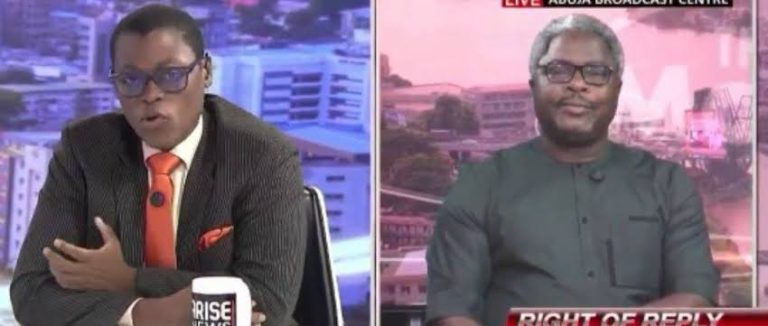
Adversarial journalism: Rufai Oseni versus Lere Olayinka on Arise News

0


By Ehi Braimah

​


The dramatic encounter between Lere Olayinka, senior special assistant on public communication and social media to the Minister of the Federal Capital Territory, Nyesom Wike, and Arise News anchor Rufai Oseni on The Morning Show last Friday has generated considerable debate about journalism, the conduct of public officials and their spokespersons, and the boundaries of adversarial journalism. It was an unnecessary spectacle.


Lere Olayinka was invited to appear on the programme anchored by Dr Reuben Abati, Ayo Mairo-Ese and Rufai Oseni. Lere knew, or ought to have known, that all three anchors were part of the programme. He accepted the invitation and entered the Arise News Abuja studio. He answered questions from Abati and Ayo. But when it became Rufai’s turn, Lere declared that he would not answer his questions because he regarded Rufai as an “enemy” and wanted to engage only with “reasonable human beings.” That was provocative and unacceptable.


A spokesperson for a public official does not have the luxury of selecting which journalist is sufficiently “reasonable” to ask questions. Once a government spokesperson voluntarily accepts an invitation to a major television programme, he should expect difficult questions, including questions he may consider uncomfortable, hostile or unfair.


The proper response is to answer, challenge the premise of the question, correct the interviewer, or decline to answer a particular question for a legitimate reason. What he should not do is attempt to determine which of the programme’s anchors is entitled to interview him.


Ayo Mairo-Ese was therefore right to intervene and terminate the interview. Her point was simple: Since you are aware there are three anchors on the programme and accept the invitation, you cannot subsequently decide that one of them is an “enemy”and therefore unworthy of your answers.


That episode should not, however, be used as an excuse to ignore the bigger issue raised by Rufai Oseni’s interviewing style.


What exactly is adversarial journalism?


Journalism is not public relations. A journalist is not expected to make a government official, politician or corporate executive comfortable. Journalism’s fundamental responsibility is to seek the truth; interrogate power and provide citizens with information they need to make informed decisions. This is where adversarial journalism has an important role.


Adversarial journalism is essentially a style of reporting and interviewing that subjects people in positions of power to rigorous scrutiny. It challenges claims, tests evidence, exposes contradictions and refuses to accept official explanations at face value. In a democracy, that is necessary.


Indeed, some of the most memorable television interviews around the world have been produced by journalists who refused to allow powerful guests to evade difficult questions.They include Christianne Amanpour, Pierce Morgan, Jerry Paxman, James O’Brien, Andrew Neil, Kay Burnley, Megyn Kelly, Mehdi Hassan, Chris Wallace and Billy O’Reilly. Rufai Oseni belongs to that tradition. He is fearless and asks questions many journalists would hesitate to ask.


Rufai frequently challenges government officials and politicians on their claims, policies and records. His preparation is obvious;his knowledge is substantial and his ability to connect seemingly unrelated issues can make for compelling viewing, thereby giving The Morning Show significant ranking. That explains his enormous fans and admirers.

.

But it also explains why he has become controversial. There is a thin but important line between aggressive journalism and combative journalism; between robust questioning and confrontation, and between holding power to account and becoming part of the story. That line must not be crossed.


Rufai’s greatest strength can also become his weakness


Rufai has developed a distinctive television personality. He is passionate, energetic, intellectually confident and unwilling to be intimidated. Those qualities are assets, but television magnifies personality, and what works brilliantly on one occasion can become irritating when repeated too frequently.


The journalist must remain in control of the interview without appearing to be in a contest with the guest. This is particularly important when interviewing government officials. A tough interviewer should not necessarily be an angry interviewer. In addition, a difficult question does not have to be delivered aggressively and using the cross-examination technique can be devastatingly effective when conducted calmly.


Sometimes, the most powerful television question is asked quietly. The objective is not to defeat the guest, but to extract information, expose contradictions and enable viewers to make their own judgments. When the interviewer becomes visibly embroiled in an argument with the guest, the focus can shift from the substance of the interview to the personalities involved. That is dangerous. When the journalist becomes the news, there is a problem.


Lere was wrong — but Rufai should listen


It is important to separate the two issues. Lere Olayinka’s behaviour should be condemned.

His refusal to answer Rufai because he considers him an “enemy” was unprofessional. His subsequent decision to continue the confrontation on social media after leaving the studio only prolonged an unnecessary controversy. It was clearly an act of bad faith.


There is also no justification for repeatedly questioning Rufai’s professional competence because he studied Animal Science.What is wrong with studying Animal Science, or History, Mathematics, Biochemistry, Psychology, Architecture, or Law? These are examples of courses offered in Nigerian universities and other places.


Journalism is a profession in which people acquire expertise through formal education, professional training and experience. A person’s first degree does not, by itself, determine whether he can become a competent journalist.


Rufai has clearly acquired considerable experience in broadcasting and journalism. But Lere’s provocation does not mean Rufai should ignore legitimate criticism of his style. In fact, because Rufai has become such an influential media personality, he should welcome constructive criticism.


He has built something remarkable on The Morning Show. Alongside Reuben Abati, Ayo Mairo-Ese, Adefemi Akinsanya, Vimbai Muthihirin-Ekpenyong and Ojy Okpe, he has helped create a programme with a substantial audience and a loyal following. The anchors bring different personalities, rich perspectives, nuamces and strengths to the programme. That diversity is part of its attraction to the station’s global audience, but influence comes with responsibility.


The danger of overreach


Rufai’s admirers appreciate his fearlessness, but his critics accuse him of overreach, excessive aggression and combativeness. In truth, both perceptions can coexist. The fact that millions enjoy his style does not automatically make every aspect of it desirable. Equally, the fact that some viewers find him abrasive does not mean he should abandon his robust approach. The answer is moderation.


Rufai does not need to become a different journalist; he simply needs to refine the journalist he already is. He should retain the probing questions, painstaking research, exceptional courage and intellectual rigour. But he can reduce the volume, the interruptions and the personal confrontations.


He can challenge without appearing hostile; disagree without appearing offended, and cross-examine his guests without turning the interview into a courtroom battle. And he can allow a guest to finish speaking even when he knows the answer is evasive. That may actually make his questions more powerful.


There is a lesson here for public officials, too


Government spokespersons and politicians must also understand that the media environment has changed and should stop feeling entitled. They cannot expect sympathetic interviews simply because they are government representatives. A journalist’s job is not to protect a government official from difficult and probing questions. Public office is held in trust for the people, and those who communicate on behalf of public officials should expect scrutiny.


If a spokesperson believes an interviewer is biased, the appropriate response is to make that case publicly and professionally. If a question is inaccurate, correct it, and if it is malicious, say so. But refusing to answer because the journalist is considered an “enemy” creates precisely the impression that the spokesperson has something to hide. It also denies viewers the opportunity to hear the government’s side of the argument.


The media must remain bigger than the personalities


The Lere-Rufai confrontation provides an important lesson for Nigerian journalism. Television news is not theatre, even though television is undoubtedly a performance medium. The personalities of anchors matter, but journalism matters more.


The Morning Show has become influential because it combines news, analysis, debate, interviews and entertainment. Its anchors have built a community of viewers and, in some respects, a movement. That influence should be protected.


Rufai should therefore not interpret calls for moderation as an attempt to silence him. On the contrary, the most influential journalists constantly evolve and adapt to the ever-changing media landscape. There is nothing wrong with being adversarial. Democracy needs journalists who will challenge power, but adversarial journalism should be evidence-driven, persistent and fearless – not needlessly antagonistic.


The best interviewer is not necessarily the one who talks the loudest or wins the argument – it is the one who asks the question that the guest cannot escape. That is the Rufai Oseni I would like to see more often. Keep the courage, ask the difficult questions, blend facts and commentary, and continue to press for specifics.


Rufai should keep holding power to account, but at the same time moderate his style. That is precisely what your friends – not your enemies – should constantly tell you. As for Lere Olayinka, he should remember an equally important principle: if you accept the microphone, you must also accept the questions. Public communication is not a menu from which you select only the questions you like.


Both journalism and public service demand accountability, and the media must hold power accountable. Journalists must also be accountable for how they exercise their power.

Braimah is a PR specialist, marketing strategist, and publisher/editor-in-chief of Naija Times (www.ntm.ng) and Lagos Post (www.lagospost.ng). He is a strong advocate for African prosperity and can be reached through:ehi.braimah@neomedia.com.ng