Home Blog Page 155

VIDEO: Italian Catholic priest resigns to marry Kenyan woman

0


Sandro Ferretto, an Italian-born Catholic priest, has left the priesthood and married Sharon Jepng’ok, a Tugen woman from Baringo South in Kenya.

Ferretto, 55, who spent 12 years serving communities in Baringo county, held his traditional wedding ceremony with Jepng’ok on September 6 at Seretion village in Kasiela, where he had previously served as a parish priest, The Kenyan Timesreports.

credit: thecable

BREAKING NEWS: Nomy has been disqualified from the Big Brother Naija Show Ya Sef house following repeated defiance of Big Brother’s instructions.

0


While serving as this week’s bench warmer, Nomy left her assigned bench and vest behind. Big Brother addressed the infringement and her repeated defiance before revoking her privilege to participate in the game.

Nomy was given 30 minutes to gather her belongings and leave the Big Brother house.

#BBNaija

VIDEO: Italian Catholic priest resigns to marry Kenyan woman

0


Sandro Ferretto, an Italian-born Catholic priest, has left the priesthood and married Sharon Jepng’ok, a Tugen woman from Baringo South in Kenya.

Ferretto, 55, who spent 12 years serving communities in Baringo county, held his traditional wedding ceremony with Jepng’ok on September 6 at Seretion village in Kasiela, where he had previously served as a parish priest, The Kenyan Timesreports.

credit: thecable

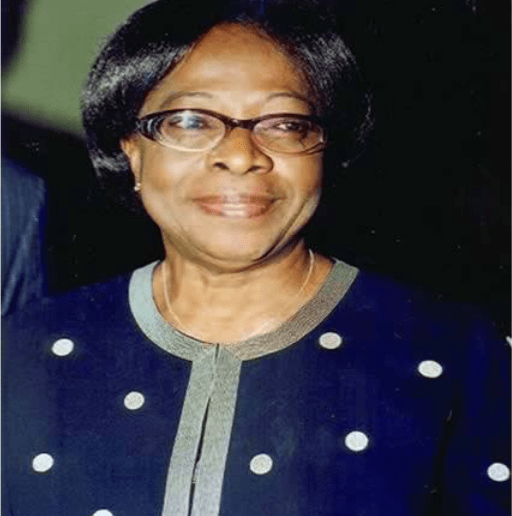
When Trouble Starts, You Are Alone’: The LASU Vice-Chancellor Who Stood Firm Against ASUU, Student Unrest

0


By Taiwo Ogunmola-Omilani

When Professor Jadesola Akande accepted the offer to become the second Vice-Chancellor of Lagos State University (LASU), she knew she was taking on a responsibility that would test more than her academic credentials.
The mantle, she later recalled, looked very heavy.

But what followed was a tenure in which the pursuit of fairness, academic discipline and institutional order would place her at the centre of tensions with staff unions and students.

Her experience offers a revealing glimpse into the challenges of leadership at a university where the Vice-Chancellor must balance academic standards, staff interests and student expectations.
Akande, widely regarded as Nigeria’s first female professor of Law, had already established herself as a formidable academic before taking over the leadership of LASU in 1989.

With donated books, voluntary lectures and a small team of academics, she helped lay the foundation for a faculty that would become prominent nationally and internationally.
Her approach was uncompromising. She enforced strict academic and disciplinary standards, including a formal dress code, zero tolerance for cultism and unrest, and merit-based admission.
That same philosophy would later shape her administration as Vice-Chancellor.

A Leadership Style That Challenged the Status Quo

Akande’s tenure was marked by efforts to maintain academic standards and enforce discipline, but her approach did not sit comfortably with everyone.
Reflecting on the challenges she faced, she identified two major sources of resistance: the Academic Staff Union of Universities, LASU Chapter, and some students who were unhappy with her insistence on discipline.

“My problem with the Academic Staff Union of Universities (ASUU), LASU Chapter, was that I did not allow any type of behaviour that was not fair to others.”

“People resisted the changes I had set in motion. I realised that when one assumes a position of authority and trouble starts, one is alone.”

‘I Was on My Own’

The tensions reached a point where Akande found herself confronting student unrest in circumstances she described as deeply unsettling.
“When the students started their riot, I was on my own, except my driver and personal assistant, who stood by me.”
In another incident, she recalled being trapped in her office by students carrying guns.
“There was a time I was locked up in my office by gun-toting students. I could not step out of the office because they were out there in huge number waiting to pounce on me.”
She said she remained in the office with her personal assistant until about 2 a.m., when a police officer, Mrs Gladys Dipeolu, helped secure her release through another avenue.

Akande said she simply smiled and reserved her comments.
Her response reflected a broader understanding of leadership: that authority often requires standing firm even when decisions are unpopular.

For her, the responsibility of a Vice-Chancellor was not merely to maintain peace, but to ensure that the university remained faithful to its academic mission.
That conviction had guided her from the Faculty of Law, where she had insisted on standards, to the Vice-Chancellorship, where she faced resistance to those same principles.

Leaving When the Ovation Was Loudest
Despite the challenges, Akande completed her tenure at LASU.
She recalled that Governor Michael Otedola wanted her to serve another term, but she declined, insisting that others should be given an opportunity.“Apart from this, one should leave when the ovation is loudest.”
She left office on March 31, 1993, after serving one term.

At her send-off party, she said she had no regrets because she had achieved what she set out to accomplish.

“The highest point of my profession was when I became a professor. Being a Vice-Chancellor was the icing on the cake.”
Her story remains one of the defining accounts of the early years of LASU leadership: a period when building a university meant not only establishing faculties and academic programmes, but also confronting the difficult realities of discipline, institutional reform and the limits of authority.


Read more in Chapter Two of Fortitude: An Insider’s Account of the Emergence of Professor Ibiyemi Olatunji-Bello as LASU’s Ninth Vice-Chancellor and the Events that Shaped her Administration.

EFCC Arraigns One for  N700m Fraud in Lagos

0


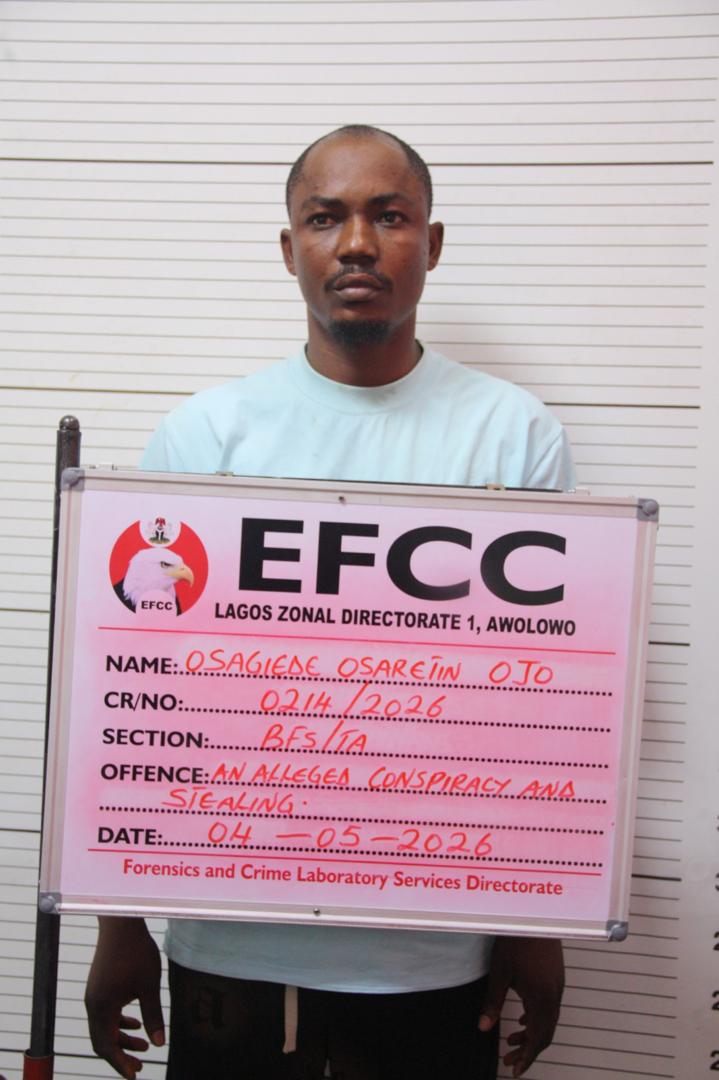
The Lagos Zonal Directorate 1 of the Economic and Financial Crimes Commission, EFCC, on Friday, September 4, 2026, arraigned Osaretin Osagiede before Justice Olukayode Ogunjobi of the Lagos State High Court sitting in Ikeja,  over an alleged N700 million fraud.

Osagiede is standing trial on a three-count charge bordering on unauthorised access to computer material and receiving stolen property to the tune of N700 million.

Count one reads: “That you Osaretin Osagiede and Zacharia Lorshe (at large), between March, 2025 and January 2026, in Lagos, within the jurisdiction of this Honourable Court, intentionally caused the Ravenpay user accounts’ two-factor authentication (2FA) method to be bypassed, with the intent to secure unauthorised access to the bank’s data and committed an offence contrary to Section 387 of the Criminal Law of Lagos State 2011.

Another counts reads: “That you Osaretin Osagiede and Zacharia Lorshe (at large), between March 2025 and January 2026 in Lagos, within the jurisdiction of this Honourable Court, dishonestly received the stolen sum of N700,000,000.00 (Seven Hundred Million Naira), property of Best Start Micro Finance Bank, whilst having reason to believe the same to be stolen property and committed an offence contrary to Section 411 and 328(1) of the Criminal Law of Lagos State 2011.”

The defendant pleaded “not guilty” to the charge.

In view of his plea, prosecution counsel, H.U. Kofarnaisa, requested a trial date and urged the court to remand the defendant in a Correctional facility pending the hearing of his bail application.

Justice Ogunjobi adjourned the matter to September 16, 2026, for hearing of the bail application and ordered that Osagiede be remanded in a Correctional facility.

2027: INEC Chairman Directs Administrative Secretaries to Eliminate Operational Gaps

0


The Independent National Electoral Commission (INEC) has directed its Administrative Secretaries across the 36 states and the Federal Capital Territory to strengthen coordination, eliminate administrative ambiguity and ensure that no operational gap undermines the delivery of the 2027 General Election.

INEC Chairman, Professor Joash O. Amupitan, SAN, gave the directive on Monday, in Lagos, while opening a two-day Strategic Operational Workshop for Administrative Secretaries. Describing the exercise as a specialised, election-focused “operational boot camp,” Amupitan said the Commission could no longer afford fragmented interpretations of administrative responsibilities or divergent operational practices across the country.

He said lessons from recent off-cycle elections, particularly the Osun State Governorship Election, must be converted into national operational standards capable of supporting the larger and more complex 2027 polls.

The Chairman said timely logistics, functional technology and administrative discipline had contributed to transparent and credible outcomes in recent elections. However, he cautioned that the controlled environment of a single-state election differed from a nationwide general election, making it necessary to replicate successful operational models across all 36 states and the FCT.

He described Administrative Secretaries as the Commission’s chief technical, operational and administrative anchors at state level, responsible for maintaining administrative continuity and overseeing the daily processes that determine whether polling units open on time.

Amupitan said the workshop would stress-test INEC’s procedures in five critical areas: Continuous Voter Registration and Permanent Voter’s Card distribution; logistics and election-material management; mastery of electoral technologies, including BVAS, IReV, eEC&A, EMSC, CROMS, IOMIS and PFRAS; human-resource and ad-hoc staff optimisation; and general administration and financial compliance.

He said the focus would be on ensuring a clean voter register, efficient PVC collection, secure handling of election materials, competent personnel and adherence to procurement and financial regulations.

The Chairman also announced the proposed Administrative Secretary Master Operational Tracker, a standardised Excel-based system to be linked to the Commission’s EMSC dashboard and Election Project Plan.

He said the tracker would provide Headquarters, RECs and Supervising National Commissioners with a real-time picture of readiness in the states, covering areas such as election-material distribution, ad-hoc staff training and state-level preparedness. Amupitan said the system would replace reactive “panic” with proactive management and serve as a permanent onboarding blueprint for future cohorts of Administrative Secretaries.

Robbers raid Edo ADC chairman’s Benin residence, cart away two SUVs, cash, phones

0


Suspected robbers have raided the residence of the Edo State factional chairman of the African Democratic Congress (ADC), Hon. Kennedy Odion, in Benin City, making away with two Toyota Highlander SUVs, N500,000 in cash, four mobile phones and other valuables.

The hoodlums reportedly invaded Odion’s residence off Winners Road, Uhie, Benin City, at about 3:00 a.m. on Sunday before fleeing with the stolen items.

The incident was confirmed in a statement issued late Sunday by the Edo State Police Command’s Public Relations Officer, ASP Eno Ikoedem.

According to Ikoedem, the Commissioner of Police, CP Patrick Daaor, visited the scene and ordered a comprehensive investigation aimed at identifying and apprehending those behind the robbery.

She added that the case had been taken over by the command’s Violent Crime Response Unit (VCRU), while detectives had processed the scene and commenced investigations.

The police assured that efforts were underway to track down the perpetrators and recover the stolen property.

Speaking with Mr Odion over the phone, he described the incident as deeply traumatic.

He expressed concern about how his young children would cope with the experience and whether they would ever be able to erase such a painful incident from their memories.

Sun

CCT decries 1,037 unresolved cases, blames CCB, underfunding

0


The Code of Conduct Tribunal (CCT) says it is being weighed down by 1,037 cases that have remained unresolved for between five and 10 years, citing poor funding, an erratic flow of cases from the Code of Conduct Bureau (CCB) and a lack of operational facilities.

The CCT, one of Nigeria’s key anti-corruption agencies, disclosed this through its Acting Director of Litigation, Yahaya Laraski, while responding to questions from this newspaper on the tribunal’s operations over the last six months.

Laraski said the tribunal’s caseload is entirely dependent on the CCB, since it can only adjudicate matters referred to it. He said only six cases were filed by the CCB between December 2025 and May 2026.

On funding, he said: “There is gross inadequacy of funding because we hardly get the N2 billion budget funded by the government. We don’t have even housing and motor vehicle for our chairman, talk less of many directors that do not have official vehicles.”

He called on the government to provide furniture, ICT equipment and capacity-building support for staff.

Despite the constraints, Laraski said reforms introduced by the new CCT chairman, Mainasara Kogo, have cleared the tribunal’s backlog of CCB-referred cases. He said the tribunal has granted orders freezing accounts and temporarily forfeiting assets belonging to individuals and companies under a new fast-track approach, where cases are now heard within a week of filing.


“As of July 10, 2026, when the tribunal embarked on annual vacation, there is no unattended case pending from the bureau in the record of the tribunal,” he said.

He explained that the 1,037-case backlog was inherited by the current leadership from previous administrations, having gone unresolved for five to 10 years “for lack of adjudication.”

Laraski also disclosed that the CCT chairman is working with the National Assembly, the Attorney-General of the Federation and the Secretary to the Government of the Federation on an Executive Bill to transform the tribunal into a “National Anti-Corruption Court”, a full-fledged court with seven judicial divisions across the country to try all corruption-related cases.

“The new leadership has repositioned the status of the Chairman to that of the Chief Judge of the Federal High Court and that of members to judges of the Federal High Court,” he said.

He added that seven new departments have been created in addition to the existing three, all pending staff promotions have been effected and 13 new allowances introduced.

Sun

Schools advised to embrace NECO after WASSCE fallout

0


Following the fallout between the West African Examinations Council (WAEC) and some schools over the results of the school examination, stakeholders have taken a major position on the patronage of examinations conducted by the National Examinations Council (NECO).

At a meeting with the Minister of Education, Dr Olatunji Alausa, over a petition by the National Association of Proprietors of Private Schools (NAPPS) concerning the results of the 2026 Computer-Based West African Senior School Certificate Examination (WASSCE), far-reaching decisions were taken for schools to patronise NECO.

In a statement signed by NAPPS National President, Dr Samira Jibir, and the National Secretary, Dr Kayode Adeyemi, the association said the meeting was based on concerns raised by NAPPS over the conduct of WASSCE and that the council’s response was not satisfactory.


One of the issues noted was that the Minister of Education has limited direct control over WAEC, which is a regional examination body.

The statement noted that stakeholders agreed that greater attention should be given to strengthening NECO, a national examination body over which the Federal Government has more direct oversight.

“Public and private schools in Nigeria were encouraged to embrace NECO examinations more widely as a credible alternative examination pathway,” the stakeholders advised.

The association stated that NECO was also challenged to increase its engagement with relevant stakeholders, strengthen its rebranding and public communication, improve the confidence of schools, parents and candidates in its examinations, and promote broader acceptance of its examinations.

Another major decision reached at the meeting was the need for WAEC to improve its technology and strengthen its digital systems to enhance the efficiency, security and credibility of its examinations and result-management processes.

“Private schools were advised to establish effective arrangements for collecting school fees and reducing outstanding debts, rather than relying on withholding candidates’ WASSCE results as a means of recovering such debts.”

On the demand to remark the answer scripts of some schools, the Minister of Education stated that the ongoing exercise requested by the schools would be conducted by WAEC on a pro bono basis, without additional cost to the schools concerned.

NAPPS stated that the remarking exercise had so far been completed for 28 schools, with no changes recorded in the results of 25 schools, while only marginal changes were recorded for the remaining three schools.

Comparative performance data for the 2025 and 2026 WASSCE were submitted to the Minister of Education, showing an improvement in candidates’ overall performance at the credit-pass level this year.

It noted: “This appeared inconsistent with the pattern of results released by WAEC and the widespread failure reportedly recorded among candidates who sat the CBE. However, significant declines of over 30 per cent in Igbo Language and 19 per cent in Physics were observed. These disparities were duly noted for further consideration.”

At the meeting, WAEC was advised to organise a broader engagement with private schools and other relevant stakeholders after the remarking and review processes have been concluded.

“At the engagement, WAEC is expected to present a more detailed statistical report on candidates’ performance in the 2026 WASSCE and respond to the concerns raised by stakeholders,” NAPPS added.

The engagement agreed that the Minister of Education would decide on NAPPS’ request for the establishment of an investigative committee after the ongoing engagements, reviews and related exercises have been concluded.

On examination fraud, the meeting backed credible efforts to dismantle the examination malpractice ecosystem, which cuts across schools, parents, students and compromised officials within examination bodies.

While WAEC maintained that the poor performance recorded in the school examination results was largely due to the introduction of stringent measures to curb examination malpractice, including the serialisation of examination questions.

According to NAPPS, the council’s position remained a bitter pill for many stakeholders to swallow, stressing that the collective responsibility to confront and eliminate examination malpractice must not be overlooked.

The meeting challenged WAEC to provide clear and convincing statistical evidence demonstrating the relationship between the anti-malpractice measures introduced and the pattern of results recorded.

During the engagement, a committee was established to harmonise the timetables of the different examination bodies, ensure that examination results are released early enough to support tertiary institution admission processes, and review the logistical and financial pressures placed on school examination officers by examination and registration processes.

NAPPS disclosed that the meeting acknowledged the challenges associated with some 2026 WASSCE results, while the JAMB CAPS admission period has been extended to allow candidates sufficient time to present their NECO results to address any gaps in their WAEC results.

The association clarified that it was the 2025/2026 admission exercise that closed on August 31st, 2026, not the 2026/2027 admission session.

Sun

Sanwo-Olu Receives South-West Arewa Community, Pledges More Opportunities for Lagos Residents

0


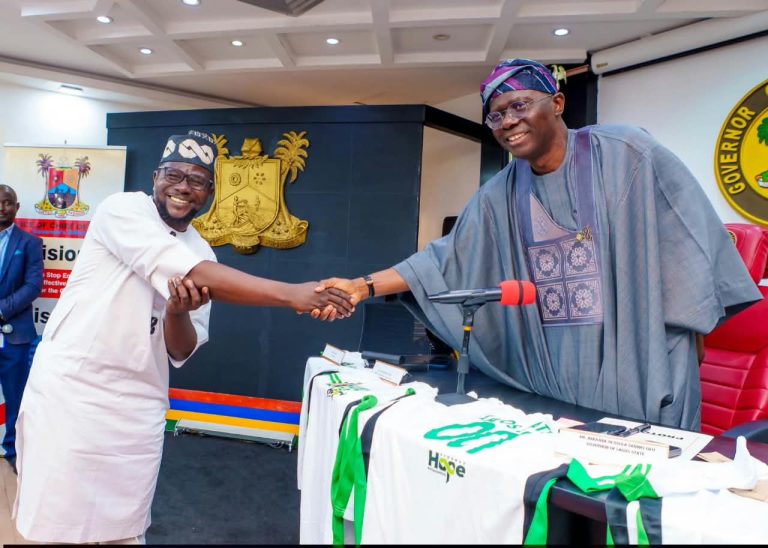
Lagos State Governor, Babajide Sanwo-Olu, has received the South-West Arewa Community for the Renewed Hope Agenda, led by its Director-General, Shehu Usman Jibrin, at Lagos House, Ikeja.

Sanwo-Olu, who disclosed this in a statement, said discussions focused on the progress of the state and ways to continue creating opportunities for residents across Lagos.

The governor described the Arewa community as an important part of Lagos’ history, noting that sustained communication would help ensure collective progress.

He also appreciated the community for its strong grassroots support, saying it had consistently brought people together around a shared vision.

According to him, the community has remained firmly behind President Bola Ahmed Tinubu, Deputy Governor Dr. Kadri Obafemi Hamzat and his administration.