Home Blog Page 151

Dangote: Refinery IPO for Nigerians, simplifies share purchase process

0


President and Chief Executive Officer of Dangote Industries Limited, Aliko Dangote, has said the planned Initial Public Offering (IPO) of Dangote Petroleum Refinery is aimed at giving ordinary Nigerians the opportunity to own a stake in the country’s biggest private industrial project.

Dangote said the IPO was deliberately designed to be accessible to Nigerians across different income groups, with the share purchase process being simplified to make it easier for both experienced and first-time investors.

He described the offer as being “for the people”, saying its objective goes beyond raising funds to promote wider ownership and allow Nigerians to share in the refinery’s growth.

“This refinery belongs to Nigerians and Africans. It was built to transform our economy, create prosperity, and secure our energy future. We want the people to share in that success. That is why we are making the IPO process simple, transparent, and accessible. Anyone with a Bank Verification Number (BVN) will be able to invest and become a co-owner of this world-class refinery,” Dangote said.

He said technology-driven subscription channels would be deployed to remove unnecessary bureaucracy and make it easier for Nigerians to participate in the offer.

According to him, the simplified process would allow civil servants, artisans, traders, professionals, young entrepreneurs, cooperative societies, pension contributors and Nigerians in the diaspora to subscribe to the shares.

“Historically, wealth has often been concentrated in the hands of a few. Our objective is different. We want to create opportunities for millions of Nigerians to benefit from the value being created by this refinery.

This IPO represents a unique opportunity for people to own part of an enterprise that is already transforming Africa’s refining industry,” he said.

Dangote said broad-based ownership would also help deepen the Nigerian capital market and promote inclusive economic growth.

He recalled that previous public offerings by companies within the Dangote Group had created investment opportunities for thousands of Nigerians through dividends and capital appreciation.

He expressed confidence that the refinery’s long-term growth would similarly create value for its shareholders.

The billionaire businessman said allowing retail investors to participate in the refinery’s ownership was consistent with his belief that Nigerians should have a direct stake in major economic projects.

“People should not only benefit as consumers of refined petroleum products; they should also benefit as owners. We are creating a pathway through which everyday Nigerians can participate directly in the growth story of this refinery,” he added.

The planned IPO is expected to be one of the major transactions in Nigeria’s capital market, given the size and strategic importance of the refinery to the country’s energy sector.

The Dangote Petroleum Refinery has a processing capacity of 650,000 barrels per day and has emerged as a major source of refined petroleum products for Nigeria and export markets.

The refinery is expected to play a major role in reducing Nigeria’s dependence on imported petroleum products, strengthening energy security and supporting foreign exchange earnings through exports.

Dangote also stressed the importance of transparency and corporate governance as the company prepares for the public offering.

He said further details on the offer structure, subscription channels and participation requirements would be communicated through the appropriate regulatory and market channels.

“The refinery is more than an industrial project. It is a symbol of what Nigerians can achieve. We are now opening the doors for millions of people to become part of that journey,” he said.

Sun

World Bank: Nigerian SMEs struggle to get bank loans

0

World Bank building
…Calls for stronger projects to unlock $100bn infrastructure funding
Nigeria’s small and medium-sized enterprises, the engine room of job creation, remain largely shut out of formal bank financing, even as the country’s banking system grows stronger and macroeconomic stability improves, the World Bank warned on Tuesday

Delivering a keynote address at the Chartered Institute of Bankers of Nigeria’s 19th Banking and Finance Conference themed; Building a resilient economy in an era of disruptions: Strategic imperatives for banks and the financial services industry in Abuja, World Bank Country Director for Nigeria, Matthew Verghis, said fewer than one in 20 MSMEs can access bank credit, with about nine in 10 operating informally.

He described this “missing middle” as firms too big for microfinance tickets and too small for commercial banks’ risk appetite, as a critical bottleneck to job-rich growth.

“Credit is bypassing the job creators,” Verghis said, noting that domestic credit to the private sector stands at only about 13 per cent of GDP, among the lowest for comparable economies. Agriculture, a major employer, receives just around 6 per cent of total credit, while MSMEs account for roughly 1 per cent.

The comments come as recent Central Bank of Nigeria (CBN) data show private sector credit rising to N83.43 trillion in July 2026, up from N80.59 trillion in April. Yet analysts say much of this lending remains concentrated in trade, finance and government securities, with limited penetration into productive, employment-generating sectors.

Verghis argued that the challenge is not a shortage of capital. Nigeria’s banking system holds about $160 billion in assets, bolstered by $3.4 billion of fresh capital from recapitalisation. According to him, pension and insurance assets add another $26.5 billion, while a global pool of roughly $110 trillion in institutional capital is searching for yield, tenor and scale.

The question is allocation,” he said. “Balance sheets are strong. The issue is where the money is going.”

Beyond firms, Verghis pointed to Nigeria’s massive infrastructure financing need as another area where credit must flow. Citing government analysis, he said about $100 billion a year is required to close the infrastructure gap, with energy and transport alone capable of absorbing almost 60 per cent of that requirement.

Engineers and planners have repeatedly flagged the same figure, warning that rapid urbanisation and climate risks are compounding the deficit. The National Integrated Infrastructure Master Plan estimates total investment needs at $2.3 trillion over the long term.

He added that Nigeria needs to turn this latent demand into a bankable pipeline that can pull in private capital. That, according to him, means better project preparation, stronger corporate governance, and investment-grade structures that pension funds, insurers and other institutional investors can underwrite.

While applauding the banking sector’s strengthened capital buffers and Nigeria’s exit from the FATF grey list, Verghis cautioned that new risks are building beneath the surface.

He noted that as the exchange rate stabilises, the naira has held around the N1,300/$1 mark with a narrowed parallel-market gap, banks may be tempted to take on more currency risk, allowing vulnerabilities to accumulate “in the calm”.

At the same time, with inflation easing from 33 per cent to about 16 per cent and the policy rate expected to gradually decline from its peak, wide net interest margins and rich yields on government securities that have boosted profitability are likely to compress.

“Banks can no longer rely solely on government securities for yields. You have to start redirecting that capital towards job-creating growth”, Verghis said.

To bridge the financing gap, the World Bank called on Nigeria’s development finance institutions and sovereign wealth fund to deploy blended-finance instruments at scale. These include partial credit guarantees, first-loss positions and risk-sharing facilities that can protect senior commercial lenders and mobilise pension and insurance capital into productive sectors.

The Bank’s $500 million FINCLUDE programme, approved in December 2025, is already designed to expand access to finance for MSMEs, but Verghis stressed that such interventions must be catalytic, crowding in multiples of private capital rather than substituting for it.

“Scarce public capital must be used catalytically. Every public dollar should be structured to crowd in multiples of commercial and institutional capital”, he said.

Verghis acknowledged that Nigeria’s macroeconomic reforms, the petrol subsidy removal, foreign-exchange unification and new tax laws, were painful but necessary.

The gains, he said, are now visible: GDP growth around 4 per cent, inflation down to 16 per cent, rising external reserves and a current account surplus of roughly 5 per cent of GDP.

“Stability was the platform we had to aspire to. Jobs are the destination.

The next phase of the reform agenda will be judged not by balance-sheet metrics alone, but by how effectively financial intermediation translates into employment, enterprise growth and inclusive prosperity”, Verghis concluded.

Sun

FG, NYSC move to link education records to tackle certificate fraud

0

The Federal Government is working with the National Youth Service Corps (NYSC) to digitally connect education records as part of efforts to expose fake academic credentials, speed up certificate verification and protect genuine graduates from being wrongly excluded from national service and employment opportunities.

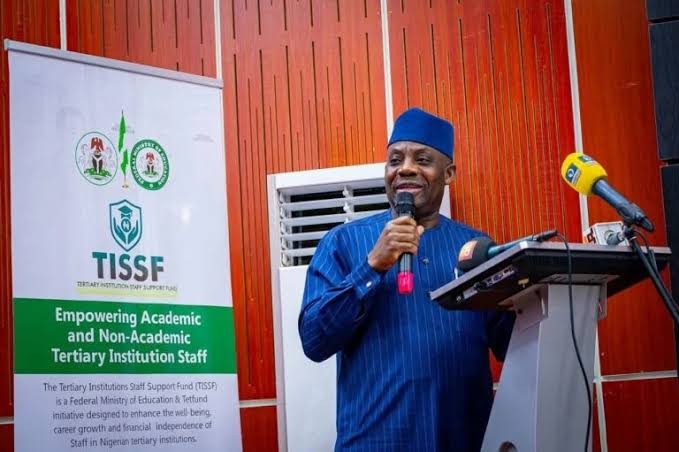
The Minister of Education, Dr Tunji Alausa, disclosed this on Tuesday in Abuja when the NYSC Director-General, Brig Gen Olakunle Nafiu, led a delegation of the Corps on a visit to the ministry.

Alausa said the initiative formed part of the digital reforms being implemented under President Bola Tinubu’s Renewed Hope Agenda to improve the management of academic records and close gaps that allow fraudulent qualifications to go undetected.
“The digital transformation of Nigeria’s education system under President Bola Tinubu’s Renewed Hope Agenda is strengthening the integrity of academic qualifications, tackling certificate racketeering and ensuring that genuine students and graduates are not disadvantaged,” he said.

The minister said the Nigerian Education Repository Data Bank (NERD) was being used to collect and verify university certificates, monitor learners across different levels of education and provide support to tertiary institutions through designated help-desk officers.

He added that the Nigerian Education Data Infrastructure would connect information generated at different points of a learner’s educational journey, creating a more reliable record of academic progression.

According to Alausa, the ministry has also digitised its Education Support Services from end to end, covering certificate verification and processes involving foreign applicants.

“Discussions were ongoing with the NYSC on an application programming interface that would facilitate faster verification and seamless exchange of relevant data between both institutions,” he said.

The minister said closer integration between the ministry and NYSC would help resolve administrative and data-related problems that have prevented some qualified graduates from participating fully in the national service programme and accessing employment opportunities.

He listed discrepancies in names, challenges involving graduates of part-time National Diploma programmes and the admission of National Certificate in Education holders into Higher National Diploma programmes among the issues requiring attention.

Alausa said the ministry would work with the National Board for Technical Education, Joint Admissions and Matriculation Board, National Identity Management Commission and other relevant agencies to establish permanent solutions to the problems.

One of the proposed measures is the introduction of a national Learner Identification Number, alongside a uniform system for capturing and sequencing names across education and identity databases.

The minister explained that the system would establish accurate identity information from the beginning of a learner’s academic journey and minimise discrepancies that could later affect certification, mobilisation for national service or employment.

Alausa also said the government had intensified its fight against examination malpractice, including the leakage of examination questions, adding that the progress achieved so far must be sustained and extended to tertiary institutions.

The latest initiative builds on the Federal Government’s broader efforts to strengthen the authentication of academic credentials used for employment and NYSC mobilisation.

In September 2025, the government directed Ministries, Departments and Agencies to begin using the National Credential Verification Service to authenticate academic certificates presented by existing staff and new employees, with implementation scheduled for October that year.

The government later moved to incorporate NERD authentication into the NYSC mobilisation process.

In March 2026, Alausa announced that prospective corps members would be required to present NERD certificates confirming their academic qualifications before registering for the compulsory national service.

The NYSC subsequently announced in June 2026 that it would strictly enforce the requirement as part of measures to prevent fraudulent and unqualified graduates from gaining entry into the scheme.

Concerns over fake credentials have also emerged in recent investigations.

In November 2025, former JAMB Registrar, Prof Is-haq Oloyede, disclosed that about 15,000 candidates had allegedly forged admission letters in attempts to qualify for NYSC mobilisation.

Similarly, a Federal Government investigation into the academic credentials of former Minister of Innovation, Science and Technology, Uche Nnaji, found in March 2026 that his University of Nigeria, Nsukka degree certificate was forged. The investigation also raised questions surrounding an NYSC certificate.

Speaking during the meeting, Nafiu commended the ministry’s digital reforms and assured the government of the NYSC’s continued cooperation in transforming the education sector.

He said the Corps had been pursuing digitalisation since 2014 and had developed systems designed to provide reliable information on corps members and support their deployment.

Nafiu said the NYSC had complied with the Federal Executive Council’s directive on collaboration with the Nigerian Education Repository Data Bank and was prepared to deepen its partnership with the Education Ministry.

According to him, technology has significantly improved the integrity of NYSC operations, particularly through the introduction of QR codes, which he said had “virtually eliminated document cloning” within the Corps.

Sun

Haaland double powers Man City past Porto in Champions League opener

0

Erling Haaland scored twice as Manchester City opened their UEFA Champions League campaign with a convincing 2-0 victory over Porto at the Estádio do Dragão on Tuesday night.

Haaland broke the deadlock two minutes after half-time, rising to meet Enzo Fernández’s cross with a powerful header that left Porto goalkeeper Diogo Costa with no chance. The Norwegian striker completed his brace in stoppage time, calmly rolling the ball into the net after Rayan Aït-Nouri set him up.

The goals continued Haaland’s impressive start to the season. His second strike took his Champions League tally for Manchester City to 36 goals in 40 appearances, while he has now scored five goals for the club this season.

City had already threatened to take control before the break, with Costa producing two important saves to deny Haaland. The goalkeeper also kept out attempts from Antoine Semenyo and Phil Foden as City controlled much of the possession and territory.

Porto, who had won all five of their league matches this season, struggled to create opportunities against the English champions. The Portuguese side failed to register a shot in the first half and could not force City goalkeeper Gianluigi Donnarumma into a save during the match.

Alan Varela came closest to pulling one back after Haaland’s opener, curling an effort narrowly wide, while William Gomes also failed to hit the target. City remained disciplined and eventually sealed the victory when Aït-Nouri found Haaland in stoppage time.

Ayyoub Bouaddi also impressed on his first start for City. The 18-year-old midfielder delivered a composed performance.

The victory gives City a strong start to their Champions League campaign as they look to challenge for the European title again. Porto, meanwhile, will have to improve significantly after a home defeat in which they struggled to match City’s quality and attacking threat.

Sun

Outrage grows over blockade of Obi’s convoy in Benue

0


Anger and outrage mounted yesterday over the blockade of the convoy of Nigeria Democratic Congress (NDC) presidential candidate, Peter Obi, in Benue State, with his party, the Northern States Christian Elders Forum (NOSCEF), his running mate, Rabiu Musa Kwankwaso, and African Action Congress (AAC) presidential candidate, Omoyele Sowore, condemning the incident and warning against political intimidation ahead of the 2027 general elections.
While the NDC demanded an investigation and prosecution of those responsible, NOSCEF urged President Bola Tinubu to call Governor Hyacinth Alia to order, declaring that “democracy is not madness and politics is not war.” Kwankwaso warned that attempts to restrict the movement of opposition figures could push the country towards anarchy, while Sowore condemned violence, intimidation and political thuggery.

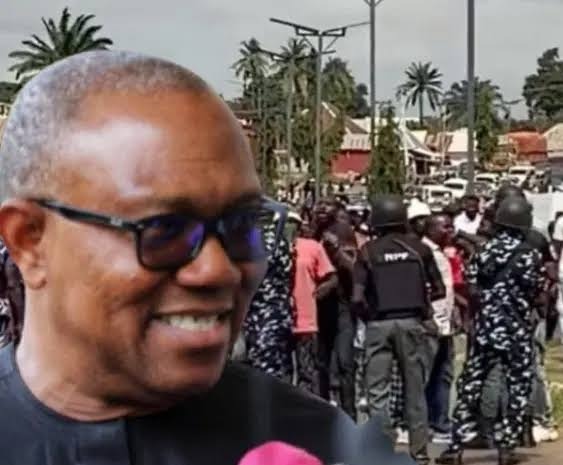
Obi, who was travelling from Makurdi to Yelwata in Guma Local Government Area to sympathise with survivors and families of victims of the June 2025 massacre, abandoned the journey after youths barricaded the road and prevented his convoy from proceeding.

The confrontation was the second controversy in about 17 months over Obi’s attempt to undertake a humanitarian visit to Benue. In April 2025, the former Anambra State governor accused the state government of frustrating his planned visit to internally displaced persons and a nursing school, triggering a public disagreement between him and the government over access and prior notification.

The state government, however, denied any involvement in the latest incident and accused Obi of making false allegations against Alia’s administration, while the state Police Command confirmed that it had prior information about the visit and had provided security for the NDC presidential candidate.

Videos of the confrontation showed youths barricading the road along Gboko Road shortly after Obi left the airport. Some were seen wielding sticks and moving towards the vehicles as the convoy retreated.

Reacting to the incident, Obi expressed shock that what he described as a purely humanitarian mission could be obstructed.

“I’m in the state to visit where people have been killed. Over 200 people lost their lives. So I decided to come and condole them and now youths, I was told, led by SA to the Governor have decided to block the road and make sure that I don’t go there,” he said.

Obi did not identify the government aide he alleged was involved, and the allegation has not been independently established.

“I have been standing here for a while now, thinking they would come to their senses, but it is not happening. We cannot have a country like this. It doesn’t make sense to me.

“The rascality they are bringing into this country is totally unacceptable. We must have a country where people can live in peace and security,” he said.

Obi lamented that residents of Benue were already contending with killings and displacement and should not be denied solidarity from other Nigerians.

“People are being killed every day in Benue. People want to show their solidarity and comfort. People want to condole with them. People want to show that they are with them.

“I came here all the way this morning, a long distance from here, only to be told what you are seeing here. We cannot build a nation like this.”

He vowed that the blockade would not deter him from travelling around the country.

“I am going to go around Nigeria. I am committed to this country, and nothing will stop me from going around because only by going around will I be able to see what is happening and engage with Nigerians directly,” Obi said.

•NDC demands probe, prosecution

The NDC described the obstruction of its presidential candidate as “shameful” and “condemnable,” insisting that Obi’s mission to Yelwata was humanitarian rather than political.

In a statement by its National Publicity Secretary, Osa Director, the party alleged that suspected thugs, reportedly led by an aide to Alia, blocked Obi’s convoy and prevented him from entering Yelwata, where it said more than 270 people were killed in the June 2025 attack.

The allegation linking a government aide to the incident has not been independently established, while the state government has denied any involvement.

The NDC said Obi arrived in Benue at about 9 a.m. intending to visit survivors and families affected by the killings.

“I came to Benue not for politics but to mourn with our people, to listen to families who have lost loved ones, and to offer our solidarity during a moment of unimaginable pain,” the party quoted Obi as saying.

It said the obstruction was particularly troubling given the security challenges confronting Benue, maintaining that Nigerians should be able to live, travel and farm without fear.

“We call on the Benue State Government and relevant security agencies to immediately investigate this incident, bring the perpetrators to justice, and guarantee the safety of all citizens and leaders who seek to show solidarity in times of grief.”

The party vowed that the incident would not deter it from speaking out on insecurity and the protection of lives.

“We will not be deterred. The NDC will persist until we restore the fundamental responsibility of government: the protection of every Nigerian’s life,” it said.

•NOSCEF: Democracy not madness

NOSCEF described the blockade as “highly disturbing” and a dangerous signal ahead of the 2027 elections.

In a statement by its Chairman, Elder Sunday Oibe, the Christian elders said they were “deeply troubled and concerned” by reports surrounding the incident.

“Democracy is not madness and politics is not a war,” the elders declared.

“The 2027 elections must be an opportunity for Nigerians to freely choose their leaders, not a period of fear, intimidation and suppression.”

NOSCEF said if allegations that the obstruction was carried out on the instructions of Alia were eventually established, it would amount to an unacceptable assault on democratic values.

“Nigeria is a civilized and democratic nation, and the people of Benue State are traditionally known as peaceful, hospitable and welcoming people,” Oibe said.

The group expressed particular concern over the alleged deployment of thugs or unofficial forces to prevent a political figure from moving freely.

“The alleged deployment of thugs or other unofficial forces to obstruct a political figure from moving freely within the country is frightening and sends a dangerous signal ahead of the 2027 general elections,” it said.

According to the elders, political intolerance could create an atmosphere in which opposition politicians and their supporters felt threatened or unsafe.

“Democracy thrives on the freedom to move, associate, campaign, express opinions and visit communities without intimidation or obstruction,” Oibe said.

NOSCEF called on Tinubu to intervene, citing his historical involvement in Nigeria’s struggle for democratic governance.

“NOSCEF therefore calls on President Bola Ahmed Tinubu, who has himself played a historic role in Nigeria’s struggle for democracy and civilian rule, to urgently intervene and call the Benue State Government to order,” Oibe said.

The group also urged the Federal Government to ensure that such incidents did not become a pattern as the elections approached.

NOSCEF said the development also reinforced concerns over the proposed establishment of state police, particularly the possibility that security structures under the control of political actors could be deployed against opponents.

“A security architecture that can be manipulated against political opponents would be a nightmare for democracy and a serious threat to peaceful political competition,” the group warned.

It distanced northern Christians from the alleged conduct and apologised to Obi and his team.

“As elders and custodians of our collective moral values and humanity, we sincerely apologize to Mr. Peter Obi, his team and other Nigerians who may have witnessed what appears to have been a shameful and undemocratic episode.”

Oibe said the conduct being attributed to Alia and those allegedly acting on his behalf did not represent the character of the northern people NOSCEF represented.

The elders also appealed to youths in Benue not to allow themselves to be used for political intimidation or violence.

“Politicians will eventually leave office, but the consequences of actions taken in their name can remain with individuals and communities for generations. No political ambition is worth destroying the good name and reputation of Benue State,” the group said.

NOSCEF commended Obi and his team for maintaining restraint rather than responding confrontationally.

Taking particular exception to the allegations involving the administration of a governor who is a Catholic priest, the elders asked: “Where is the character of Jesus Christ in all of this?”

They said Christian leadership should be defined by “love, tolerance, humility, reconciliation and respect for human dignity, not intimidation, hostility or political exclusion.”

•Police: We knew of visit, provided security

Meanwhile, the state Police Command confirmed that it had advance information about Obi’s visit and provided security for his movement.

Commissioner of Police, Cletus Nwadiogbu, said the command received information about Obi’s planned visit the previous night and consequently made security arrangements, including directing the Assistant Commissioner of Police in charge of Operations to personally lead the security team.

“Yesterday night, we got information that His Excellency, former Governor of Anambra State, Peter Obi will be coming, not for campaign but just to visit Yelwata. I said okay, everybody has freedom of movement in Nigeria. So I provided security.

“I also asked the Assistant Commissioner (AC) Operations to personally lead the men but unfortunately, on his arrival, we heard that the youths blocked the road that they don’t want to see him. That is the reason we are going in to find out why such conduct, why the youths behaved that way,” Nwadiogbu said.

The police commissioner said the immediate situation had been tactically managed but vowed that the command would investigate the circumstances surrounding the blockade.

“We have tactically managed the situation for now but we are not letting it go. We must get to the bottom to know why the youths said somebody cannot move,” he said.

Referring to Obi, Nwadiogbu added: “He is a very responsible man. He heard that the youths blocked the road and I learned he went back and left.”

The police confirmation that it had advance information about Obi’s visit and provided security presented a counterpoint to the state government’s contention that he arrived without formally notifying it.

•Kwankwaso: Incident could lead to anarchy

Reacting at a summit organised by OKAY A New Nigeria in Abuja, Kwankwaso said no government had the right to prevent Obi or any other Nigerian from moving freely around the country.

He expressed disappointment with the Benue State Government and Federal Government over the development, warning that political intolerance could have dangerous consequences.

“I am very disappointed with the government of Benue State and, of course, disappointed with the Federal Government itself for starting this action, which I believe if not arrested would lead us to anarchy.”

Kwankwaso said Nigerians, particularly senior citizens and opposition leaders of Obi’s standing, must be allowed to move freely. “What we are seeing today is a desperation, which many people were expecting.”

Kwankwaso accused some governors of banking on federal might rather than performance to secure victory in 2027.

He warned governors who believed they could prevent opposition candidates from entering their states that they were making “a big mistake.”

Rather than resort to intimidation, he said, the APC-led governments should use the remaining period before the elections to improve their performance and convince voters.

•Aondoakaa, Sowore condemn blockade

Former Attorney-General of the Federation and PDP governorship candidate in Benue, Chief Michael Aondoakaa, described the blockade as a “disgraceful assault on democracy” and an affront to the constitutional rights of Nigerians.

He said freedom of movement, association and political participation were constitutionally guaranteed and could not be denied on the basis of political affiliation.

“The attack on Mr. Peter Obi is therefore inconsistent with the true identity of our people and should be condemned by all lovers of democracy irrespective of political affiliation.” Aondoakaa called on security agencies to conduct a thorough and impartial investigation and ensure that everyone found responsible was brought to justice, regardless of status or political connections.

Sowore similarly condemned the blockade, warning against violence, intimidation and political thuggery.

He maintained that no candidate should be prevented through violence or intimidation from moving or campaigning freely anywhere in Nigeria.

NDC governorship candidate in Benue, Prof. Terhemba Shija, who was with Obi during the confrontation, also condemned the incident and vowed that it would not deter the party.

“We are going to launch our campaign in a week’s time, and nobody will stop us. This is our state. This state has suffered a lot,” Shija said.

•Obi must stop lies against Alia

The Benue State Government, however, strongly rejected Obi’s allegations, insisting that neither Alia nor his administration had anything to do with the youths who blocked the convoy.

Chief Press Secretary to the governor, Tersoo Kula, said: “Mr. Peter Obi must stop lies against Governor Alia and Benue State Government.”

Kula described the allegations as “unfounded and a desperate attempt to drag Governor Hyacinth Alia and the Benue people into what may be an internal political matter within the NDC.”

“We wish to emphatically deny that the government of Rev. Fr. Hyacinth Alia has an idea of what Mr. Obi is talking about,” he said.

Kula maintained that Obi posed no threat to Alia and that the government had no reason to mobilise thugs against him.

“Let it be known that Mr. Peter Obi is not a threat to Governor Alia in any way. Even if he actually visited the state, and we realised that he is a threat to anyone, the security agencies are there to handle the issue, not thugs.” He suggested that Obi might have encountered disagreements within his political party, insisting that Benue remained open to legitimate visitors, political actors and Nigerians who came in peace.

Commissioner for Information, Culture and Orientation, Chief Solomon Iorpev, separately said the incident could have been avoided if Obi had formally notified the state government ahead of his arrival.

“A high profile person who has been former Governor of a state is coming into the state, he should have written a letter to the State Government.

“We are supposed to guarantee his safety and protection but an instance where no letter was written, we could not guarantee his safety. This is not the first time he is doing this. He is just looking for our trouble. We are peace loving and hospitable people.”

Iorpev, however, denied knowing the youths who blocked the convoy.

•Obi continues mission in Plateau

Despite abandoning the Yelwata trip, Obi continued his humanitarian engagements, proceeding to neighbouring Plateau State, where he arrived at the Yakubu Gowon Airport, Haipang.

He was received by state party executives, party chieftains, supporters and other stakeholders led by Alfred Dapal Damiyal before proceeding to Mangu Local Government Area, where a recent attack left several residents dead and houses destroyed.

According to Dapal, the visit was aimed at expressing solidarity with the affected community and supporting families impacted by the attack.

The visit also afforded Obi an opportunity to engage local leaders, residents and victims over the security challenges confronting communities in the area and hear firsthand accounts from survivors.

The Mangu visit came immediately after the blockade prevented him from undertaking a similar humanitarian mission to Yelwata and gave practical expression to his declaration that the incident would not deter him from travelling around the country to engage directly with Nigerians.

Sun

Sanwo-Olu, AFRIMA Founder, California Gov, Afretrade CEO, Others to Speak at California–Lagos Business Summit

0

… AFRIMA, California–Lagos Summit forge strategic partnership


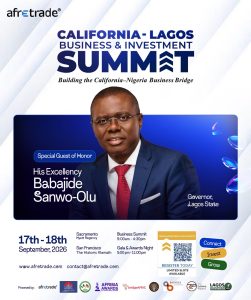
A new economic and cultural bridge between Africa and the United States is set to take shape in California, United States as Lagos State Governor Babajide Sanwo-Olu, Founder and President of the All Africa Music Awards (AFRIMA), Mike Dada, Governor of California, Gavin Newsom, Afretrade Chief Executive Officer, Lekan Salaam, and other prominent government, business and creative industry leaders are expected to headline the California–Lagos Business & Investment Summit, scheduled for September 17–18, 2026, in Sacramento and San Francisco, California.


The high-powered two-day gathering, themed “Building the California–Nigeria Business Bridge,” is expected to bring together influential business leaders, investors, entrepreneurs, policymakers, professionals and members of the African diaspora to explore new opportunities for trade, investment and cross-border collaboration.


The summit is a private sector-led initiative powered by Afretrade, the US Diaspora United Chamber of Commerce, NIED Group and the Office of Diaspora Affairs of Lagos State, and is being curated to celebrate a landmark milestone in the growing economic relationship between California and Lagos.


As part of the programme, AFRIMA President Mike Dada will speak on “From Culture to Capital: Unlocking the California–Lagos Creative Economy.” His presentation, subtitled “Investing in Music, Film, Intellectual Property and the Future of Africa–America Cultural Commerce,” will focus on the enormous economic opportunities within Africa’s creative sector and the need to develop stronger investment, intellectual property and commercial structures around the continent’s creative assets.


The presentation is expected to examine how music, film, entertainment and intellectual property can serve as major drivers of economic growth while creating new channels for investment and business partnerships between Africa and the United States.


“Africa is no longer simply a source of creative content for the global market; Africa is a market, a talent hub and an investment destination. The real opportunity before us is to build structures that allow African creators to retain value from their intellectual property while attracting the capital, technology and global partnerships required to scale their businesses.


“AFRIMA has been at the vanguard of Africa’s music business and economic renaissance for the past 15 years, helping to build bridges between African creativity, enterprise and global markets. AFRIMA perfectly aligns with the California Business and Investment Summit as both platforms share a common vision of positioning African businesses, talents and intellectual property for global trade competitiveness,” Dada said.


Other speakers and participants at the summit are expected to include Dr Charly Lemassi, Dr Badewa Adejugbe-Williams, Dr Jameine Sanwo-Olu, Victoria Remi Nkong, President, bridgeAfric, and Rory Douglas, CEO, Aqua Financial, and among other business and industry leaders.


The summit will bring together CEOs, entrepreneurs, investors, capital providers, Nigerian professionals and business owners in the United States, members of the African diaspora, and trade and development stakeholders.


Discussions will focus on sectors including technology and fintech, trade and logistics, transportation, entertainment, agriculture, renewable energy, real estate and access to capital for small and medium-sized enterprises.


The main business programme will run from 9:00am to 5:00pm and feature keynote addresses, high-level discussions, panel sessions, capital-raising opportunities and business matchmaking.


An official celebration will follow at the historic Stanford Mansion, while the Gala and Award Night will hold at the Hyatt Regency Sacramento.

The programme will continue on Friday, September 18, with a high-level diplomatic and business networking reception in San Francisco.


In a related development, AFRIMA has entered into a strategic partnership with the California–Lagos Business & Investment Summit, strengthening the focus on the creative economy as an important component of the emerging California–Nigeria business relationship.


Speaking on the partnership, AFRIMA Regional Director Central Africa, Nde Ndifonka, said music business development was central to AFRIMA’s mission.


“Music business advancement is one of the core seven pillars of AFRIMA, and that is why the AFRIMA Music Business Summit is an integral part of the main activities of the AFRIMA Awards. Our responsibility goes beyond celebrating artistes. We must also help build an ecosystem where African creativity can attract investment, create sustainable businesses and generate greater economic value.


“The California–Lagos Business & Investment Summit provides an important platform for that objective. California is a global centre of technology, capital and entertainment, while Lagos is one of Africa’s leading hubs for creativity, entrepreneurship and innovation. Connecting these ecosystems can create opportunities across music, film, intellectual property, technology and cultural commerce. AFRIMA is therefore pleased to partner with the Summit as we continue to build bridges between African creative talent and the global marketplace.”


Established in 2011 by the International Executive Committee of AFRIMA in partnership with the African Union, with the first edition holding in 2014, AFRIMA is the longest-running and the continent’s most prestigious music award platform. The 10th edition is scheduled for 2027, with build-up events labelled RoadTo10thAFRIMA already held in Dar es Salaam, Tanzania; Abidjan, Cote d’Ivoire; and Casablanca and Rabat, Morocco.


The awards have been hosted in major African cities, including Lagos, Accra and Dakar, and are broadcast live in more than 84 countries, reaching millions of viewers worldwide.


The AFRIMA Music Business Summit, which brings together music executives, artistes, policymakers, investors and other industry stakeholders to address the commercial development of Africa’s music industry is one of the Seven Pillars of AFRIMA.


Others Music Awards, which recognise Africa’s finest musical talents; Music Festivals, which celebrate the continent’s cultural diversity through live performances; AFRIMA Kreative Academy (TAKA), which develops young creative professionals through training and mentorship; Talent Discovery and Promotion, which identifies and supports emerging artists; Advisory and Policy Debates, which engage stakeholders on copyright, regulation and creative-industry policies; and Advocacy, which uses music to promote peace, social responsibility and the growth of Africa’s creative economy.

4 banks invests N120 bn in infrastructure, tech in Q1 –Banks CEOs

0


Officers (CEOs) says four financial institutions invested N120 billion on infrastructure and technology development in the first quarter of 2026.

Mr Oliver Alawuba, the Chairman, Body of Banks CEOs, said this at the 19th Chartered Institute of Bankers of Nigeria (CIBN) Annual Banking and Finance Conference in Abuja on Tuesday.

Alawuba said the move was to improve resilience and support the real sector.

He said the banks were working to convert the investments into affordable credit for Micro Small and Medium-scale Enterprises (MSMEs).

He said that a resilient economy was one that designed to adapt to shocks without transferring them to vulnerable citizens.

Alawuba commended the Federal Government and the Central Bank of Nigeria (CBN) for their commitment toward the stability of the economy.

He said the banking sector recapitalisation had better strengthened the capacity of banks to support growth in the country economy.

The Chairman called for fiscal and monetary synergy to unlock productivity in the industry.

WHO: Smoking Raises infertility risk

0

​‌‌‍​‍‍⁠⁠‌‍‍‌⁠​‌‍‌‌​


The World Health Organisation (WHO) has warned that tobacco use can undermine fertility in both women and men.

WHO gave the warning in a new publication issued on Tuesday, noting that “smoking very likely makes it harder to have a baby”.
The UN health agency said women who smoke have a 40 per cent higher risk of infertility than non smokers.
“For all people who plan pregnancies, our message is, ‘Stop smoking, improve your health, improve your reproductive health as well,’” said Dr Kerstin Schotte, Medical Officer, WHO Tobacco Free Initiative.
WHO defines infertility as the inability to achieve pregnancy after 12 months or more of regular unprotected sexual intercourse.
It said infertility affects about one in six people globally, across all regions and income levels.

“Many causes are outside our control, but tobacco smoking is one that isn’t,” WHO said.
The agency said decades of evidence had established a link between tobacco smoking and infertility in women.

It also warned that smoking could harm sperm quality and sexual function in men.
According to WHO, second hand smoke exposure may also affect fertility, exposing non smokers to possible reproductive risks.

The publication explained that quitting smoking could reduce the risk of infertility, with former smokers having a 25 per cent lower risk than those who continue to smoke.

WHO stressed that infertility was not solely a women’s issue, citing a review of 44 studies involving more than 60,000 men.

It said the review linked smoking to reproductive dysfunction, including semen abnormalities and sexual dysfunction.
The agency said men who smoke were more likely to experience erectile dysfunction, ejaculation problems, absence of sperm in semen, poor sperm motility and abnormal sperm shape.

WHO further warned that smoking could reduce the success of fertility treatment.
It cited earlier research involving 21 studies which linked cigarette smoking to fewer pregnancies and live births following assisted reproduction, including in vitro fertilisation (IVF).
The findings suggested that smoking could reduce the chances of successful fertility treatment outcomes by roughly half.

WHO also identified possible reproductive risks associated with waterpipe smoking, commonly known as hookah or shisha, particularly among men.
However, it said evidence on e-cigarettes, waterpipes, smokeless tobacco and other emerging nicotine products was still developing.

WHO said the available evidence suggested that other tobacco and nicotine products could also pose reproductive risks, but called for further research.
The agency also warned that exposure to second hand smoke could increase infertility risk among women by reducing the likelihood of conceiving each month.
WHO recommended that healthcare providers discuss the reproductive risks of tobacco use with individuals and couples planning pregnancy.

It also called for evidence based support to help tobacco users quit, including routine brief cessation advice in all healthcare settings.

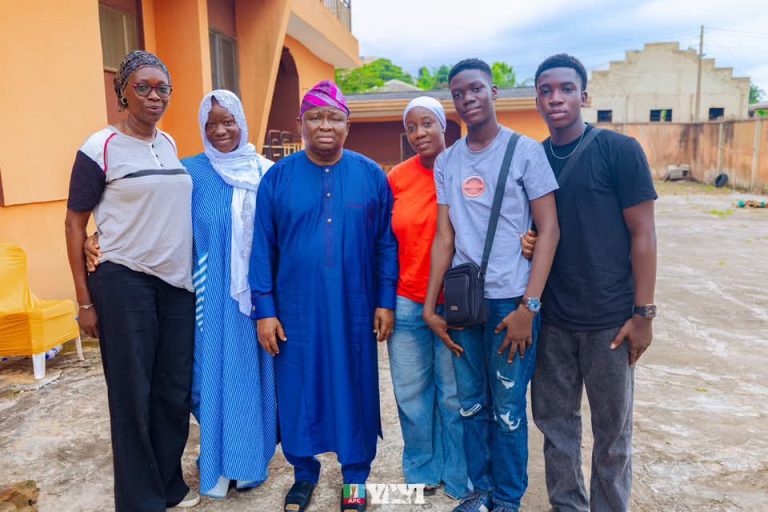
Yayi Promises to Appoint Late Actor Ogogo as Special Adviser on Culture, Tourism

0


The APC Governorship Candidate of Ogun State, Senator Olamilekan Adeola popularly known as YAYI, has said he planned to appoint the late Nollywood actor, Alhaji Taiwo Babatunde Hassan, popularly known as Ogogo, as his Special Adviser on Culture and Tourism if he becomes governor in 2027.

Yayi stated this during a condolence visit to the family of the late actor in Ilaro.

He said, “We had planned to appoint late Ogogo as my Special Adviser on Culture & Tourism if God grants me the privilege of becoming the next Governor of Ogun State come 2027.”

Dangote Refinery Records ₦19.13 trillion in Revenue and $1.82 billion in Profit for H1 2026.

0


According to financial data released by Dangote Petroleum Refinery ahead of its initial public offering, the company recorded revenue of ₦19.13 trillion ($13.91 billion) in the six months ended 30 June 2026.

That compared with ₦8.638 trillion in the first half of 2025, an increase of 121.46 percent.

The company reported after-tax profit of $1.82 billion for the period, equivalent to about ₦2.5 trillion at the exchange rate used in the disclosures. That compared with a $476 million loss for the full year 2025. Earnings before interest, tax, depreciation and amortisation (EBITDA) were given as $2.60 billion. Gross profit was stated as ₦3.432 trillion, against ₦225.195 billion in H1 2025.

The company attributed the higher revenue to increased throughput after it moved to more stable production across processing units from March 2026, and to performance testing of up to 700,000 barrels per day in June 2026. Sales volumes and average realised prices for petrol, diesel and jet fuel were also higher than in the corresponding period of 2025.

Company figures showed:
Petrol (PMS) sales of about 6.06 million metric tonnes, from 3.09 million tonnes, with average realised prices of about $975 per tonne, from $723.

Diesel (AGO) sales of about 2.86 million tonnes, from 1.76 million tonnes, with average realised prices of about $1,225 per tonne, from $688.

Jet fuel sales of about 3.02 million tonnes, from 2.06 million tonnes, with average realised prices of about $1,092 per tonne, from $663.