Home Blog Page 147

FG to scrap criminal penalty for suicide attempts

0

The Federal Government said it has commenced moves to scrap the criminal penalty for attempted suicide, following the approval of its position on decriminalisation by the Federal Executive Council (FEC).

The decision, described by stakeholders as a major shift from punishment to care, is expected to pave the way for amendments to the relevant provisions of the Penal Code and Criminal Code when the proposal is transmitted to the National Assembly.


The development was announced yesterday at an event organised by the Federal Ministry of Health and Social Welfare to mark the 2026 World Suicide Prevention Day in Abuja.

Minister of State for Health, Dr. Iziaq Salako, in a speech delivered by the Permanent Secretary, Federal Ministry of Health and Social Welfare, Daju Kachollom, said the Federal Executive Council’s (FEC) approval of decriminalisation of suicide attempts followed the work of the National Task Force on Decriminalisation of Attempted Suicide, which has undertaken stakeholders’ consultations, policy engagements and advocacy involving government institutions, legal experts, mental health professionals, civil society organisations, development partners and people with lived experience.

He said the decriminalisation is more than a legal reform, but a public health and human rights imperative. “People experiencing mental health crises should be provided with care, support and appropriate intervention rather than punishment,” he suggested.

He expressed optimism that the legislative process at the National Assembly would be concluded without unnecessary delay and disclosed that efforts were underway to integrate mental health services into other areas of the healthcare system.

The minister’s representative said Standard Operating Procedures (SOPs) for integrating mental health into HIV care were being developed, with the process expected to be concluded shortly.

He further disclosed that the National Coordinator of the National Mental Health Programme had been directed to prepare a memorandum for consideration by the National Council on Health on integrating mental health into primary healthcare.

The move, he said, was necessary to ensure that mental health services were taken closer to Nigerians, particularly those who may not have access to specialised psychiatric facilities.

Stakeholders at the event, however, warned that removing criminal sanctions would not on itself solve Nigeria’s suicide crisis.

A representative of the Nigeria Suicide Prevention Advocacy Working Group, Prof. Taiwo Lateef Sheik, said criminalisation was only one part of the problem, stressing the need for a comprehensive national response.

He said the group was advocating for improved suicide and suicidal data, crisis intervention services, dedicated funding, specialised training for healthcare workers and first responders, as well as full implementation of the National Mental Health Act 2021.

He said the country had set a target of reducing suicide deaths and attempts by 50 percent by 2030, warning that legislative reform alone could not achieve the objective.

The representative put annual suicide deaths in Nigeria at about 16,000, describing the situation as a public health crisis.

President, Association of Psychiatrists in Nigeria, Dr. Veronica Oluyemisi Nyamali, in her remarks also warned that the country’s mental health workforce was inadequate and shrinking, with professionals leaving the country and some medical residents abandoning psychiatric training.

She said decriminalisation would make it easier for people in distress to seek help without fear of prosecution, but urged the government to ensure that the necessary mental health services were available.

Official of the International Committee of the Red Cross (ICRC), Juan Carlos, in his submissions, called for greater attention to people affected by conflict and violence, noting that distance, insecurity and cost often prevent vulnerable people from accessing mental healthcare.

Similarly, civil society organisations urged the government to look beyond treatment and address the social and economic factors that predispose people to suicidal behaviour.

Speaking on behalf of people living with HIV in Nigeria, Isah Takuma, said mental health interventions must become a core component of HIV services rather than being treated as an optional or secondary intervention.

He urged the government to ensure that mental health services were integrated into HIV programmes as Nigeria moves towards greater integration of healthcare delivery.

The ministry said its suicide prevention efforts were anchored on the National Mental Health Act 2021, National Mental Health Policy 2023 and National Suicide Prevention Strategic Framework 2023–2030.

The 2026 World Suicide Prevention Day, with the theme, “Changing the Narrative on Suicide” and call to action, “Start the Conversation,” seeks to move public discourse away from stigma, fear and misinformation towards compassion, understanding and timely support.

The ministry said the ultimate goal was to create a society where people experiencing emotional or psychological distress could seek help without fear of criminal sanctions, discrimination or stigma.

Sun

Oil price surges above $100 as Middle East tensions threaten global supplies

0


Global crude oil prices have climbed above $100 per barrel, reaching their highest level since July, as escalating military tensions in the Middle East raise fresh fears of disruptions to crude production and international oil shipments.

Brent crude, the global benchmark against which Nigeria’s crude is priced, rose 2.8 per cent on Wednesday to break above the $100 per barrel mark, while US West Texas Intermediate (WTI) gained 2.9 per cent to $95.70 per barrel.

The latest rally has pushed both benchmarks more than 60 per cent higher than their levels at the beginning of the year, increasing concerns that a prolonged energy shock could drive up the cost of petrol, diesel, aviation fuel, electricity generation, transportation and manufactured goods across the world.

The surge was triggered by a fresh escalation in the Middle East, following reports of strikes involving Iranian oil tankers in the Gulf of Oman and another vessel near Kharg Island, one of Iran’s major oil export centres.

The development came amid reports of attempted missile attacks on a US Navy warship, raising concerns that the conflict could widen and threaten key oil-producing and shipping areas.

Tensions have also heightened following reported attacks by Iran-backed Houthi forces on Saudi Arabian oil and energy infrastructure.

The developments have put the global oil market on high alert because of the strategic importance of the Middle East to world energy supplies.

At the centre of the latest concerns is the Strait of Hormuz, a narrow waterway between Iran and Oman through which a significant share of the world’s seaborne oil trade passes.

Any prolonged disruption to shipping through the strait could have a major impact on global crude supplies because oil producers in the Persian Gulf depend heavily on the waterway to reach international markets.

The strait is particularly important to major producers such as Saudi Arabia, Iraq, the United Arab Emirates, Kuwait and Qatar. Any threat to tanker movements could therefore quickly translate into higher crude prices, freight rates and insurance costs.

Market participants are already monitoring tanker movements in the region closely, amid growing uncertainty over the safety and cost of transporting crude and petroleum products.

The concern is not only about an actual halt in oil production. Even the threat of disruption can push prices higher as traders factor in the possibility of shortages and begin paying more for available barrels.

That is what makes geopolitical tensions particularly powerful in the oil market.

Crude oil remains one of the most important inputs into the global economy. It is used directly to produce petrol, diesel, jet fuel and other petroleum products, while its derivatives and related energy costs affect manufacturing, agriculture, transportation and logistics.

A sustained increase in crude prices can therefore spread through virtually every part of the economy.

For motorists, the immediate impact is usually seen at petrol and diesel stations. Higher diesel prices are particularly important because trucks, factories, construction equipment and generators depend heavily on the fuel.

Higher jet fuel prices can also raise airline operating costs and ultimately push up airfares.

Manufacturers face increased energy and transportation expenses, while farmers may have to contend with higher costs of mechanised farming, transportation and distribution.

The effect can eventually feed into food prices as producers and distributors pass higher operating costs to consumers.

In the United States, the pressure is already becoming visible.

Average petrol prices rose by 7.3 cents per gallon on Wednesday to $4.22, according to AAA data, representing the biggest single-day increase since May.

Average diesel prices also climbed to a record $5.94 per gallon.

Ole Hansen, head of commodity strategy at Saxo Bank, warned that the combination of high energy costs was becoming increasingly painful for consumers.

“The combination of expensive diesel, jet fuel, bunker fuel and natural gas is particularly uncomfortable for consumers around the world, who see their disposable income shrinking,” he said.

The latest oil price surge presents a mixed picture for Nigeria, an oil-producing country that depends heavily on crude exports for foreign exchange earnings and government revenue.

Higher crude prices could increase Nigeria’s export earnings and strengthen government revenue, provided the country is able to maintain or increase crude production and benefit from the higher international prices.

The development could also provide additional support for Nigeria’s external reserves and the naira by increasing the value of foreign exchange generated from crude exports.

However, the benefits are not automatic.

Nigeria’s ability to take full advantage of higher oil prices depends largely on crude production volumes, export levels, international oil market conditions and the amount of crude available for sale after accounting for operational constraints and other obligations.

Nigeria has spent years struggling with oil production losses caused by crude theft, pipeline vandalism, ageing infrastructure, technical challenges and disruptions in some producing areas.

Higher global prices can cushion the impact of lower production, but they cannot completely compensate for a significant decline in the volume of crude exported.

The situation also presents a complicated picture for the domestic petroleum market.

Nigeria is now operating in a market where petrol supply and pricing are increasingly influenced by international crude prices, refined-product prices, exchange rates, logistics and local market conditions.

A sustained rise in international energy prices could therefore increase the cost of imported petroleum products and put pressure on domestic fuel prices where local supply is insufficient.

At the same time, higher crude prices could improve the economics of domestic refining, particularly for large-scale refineries capable of supplying significant volumes of petrol, diesel and aviation fuel.

For the Nigerian government, the ideal scenario would be to combine higher crude earnings with increased domestic production and refining capacity, allowing the country to earn more from exports while reducing dependence on imported petroleum products.

The renewed oil rally is also creating concerns for the global fight against inflation.

Central banks have spent the past few years trying to bring inflation down through higher interest rates and other monetary policy measures.

A fresh and sustained energy shock could complicate that effort.

When crude oil becomes more expensive, the effect is transmitted through fuel, transportation, electricity, manufacturing and other costs. Businesses may then increase prices to protect their profit margins, potentially slowing the decline in inflation.

This creates a difficult situation for central banks. If inflation rises again, monetary authorities may be forced to keep interest rates higher for longer or delay planned rate cuts.

Financial markets are already reacting to the possibility.

The S&P 500 fell 0.3 per cent on Wednesday as investors assessed the potential economic consequences of a prolonged energy shock, while US government bond yields moved higher amid concerns that sustained increases in energy prices could reignite inflation.

Oil traders are now closely watching developments around the Strait of Hormuz and other strategic energy facilities in the Middle East.

The direction of crude prices in the coming days will depend heavily on whether the conflict escalates or shipping activity remains largely uninterrupted.

A significant disruption to oil production or tanker traffic could send prices sharply higher because markets would have to price in the possibility of a physical shortage.

On the other hand, a reduction in military tensions, restoration of normal shipping activity or credible measures to protect oil infrastructure could ease some of the risk premium currently built into crude prices.

The latest rally nevertheless demonstrates the vulnerability of the global economy to developments in major oil-producing regions.

With Brent now above $100 per barrel, governments, businesses, central banks and consumers face renewed uncertainty over the cost of energy.

For oil-producing countries such as Nigeria, the immediate challenge is to maximise the benefits of stronger crude prices while increasing production, protecting export infrastructure and expanding domestic refining.

Sun

US delivers equipment to NAF for counter-terrorism operations

0

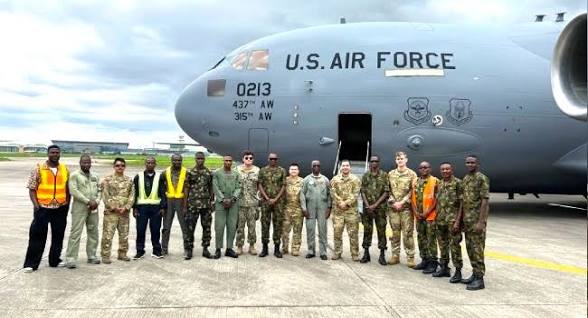
The United States has delivered military equipment to the Nigerian Air Force (NAF) as part of ongoing efforts to strengthen Nigeria’s capacity to combat terrorism and other security threats in the region.

The United States Africa Command (AFRICOM) disclosed this in a statement posted on its X handle on Thursday.

According to AFRICOM, the equipment was transported to Nigeria aboard a United States Air Force C-17 aircraft over the weekend under a Foreign Military Sales agreement between the two countries.


The command said the delivery was aimed at further strengthening the security partnership between the United States and Nigeria, while supporting the country’s counter-terrorism operations.

“Partnership in action: A US Air Force C-17 delivers equipment to the Nigerian Air Force this weekend.

“The equipment is part of a Foreign Military Sales agreement that furthers the US-Nigerian partnership and will aid in Nigeria’s efforts to counter terrorism in the region,” AFRICOM stated.


The latest delivery comes amid intensified efforts by the Nigerian Armed Forces to tackle terrorism, insurgency, banditry and other security threats across the country.

Nigeria has continued to rely on international defence partnerships to strengthen the operational capabilities of its armed forces through the acquisition of military equipment, training, intelligence sharing and technical support.

The United States has, in recent years, maintained military cooperation with Nigeria, particularly in the areas of counter-terrorism, professional military education, intelligence cooperation and defence capacity building.

The latest equipment delivery is expected to further enhance the Nigerian Air Force’s operational capabilities as the country sustains its campaign against terrorist groups and other armed security threats.

The development also underscores the growing emphasis on bilateral defence cooperation between Washington and Abuja in addressing security challenges affecting Nigeria and the wider West African region.

Sun

NASS suspends South Africa visits over renewed xenophobic attacks

0

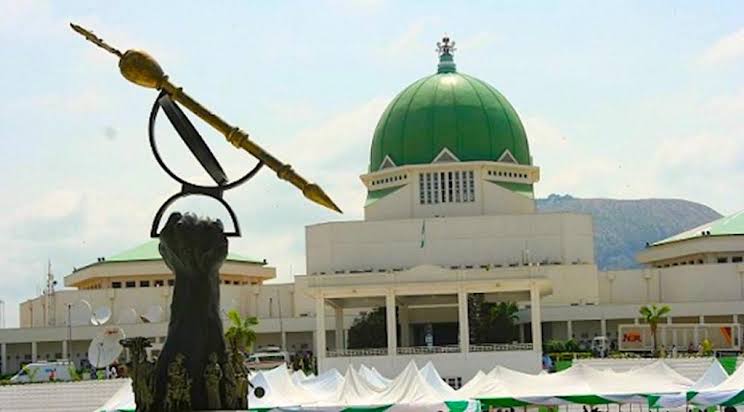
The National Assembly has suspended all official legislative visits to South Africa and directed lawmakers to boycott South African-hosted or organised legislative activities over renewed xenophobic attacks and growing threats against Nigerians and other African nationals in the country.

The decision followed the latest wave of violence, intimidation and attacks on foreign nationals, coming after anti-immigrant protests in South Africa demanded that migrants leave the country.

In a statement signed by the Clerk to the National Assembly, Kamoru Ogunlana, on Thursday, September 10, the joint leadership of the Senate and House said the suspension covered “all official visits” to South Africa and the boycott of “South African-hosted or South African-organised legislative activities and engagements” until further notice.

The National Assembly said the action reflected its “grave concern for the safety, dignity and welfare of Nigerian citizens abroad.”

It called on the South African government to take urgent and concrete measures to protect Nigerians and other African nationals, investigate reported attacks, arrest suspected perpetrators and prosecute those found culpable.

The suspension and boycott, according to the statement, will remain in force until further notice, subject to review by the leadership of the National Assembly as circumstances warrant.


About 1,490 citizens have been repatriated by the government amid the unrest, while reports indicated that some Nigerians faced attacks, property losses and difficulties with their residency status.

Nigerians were among those affected by major outbreaks in 2008, 2015 and 2019, with attacks on Nigerian-owned businesses and repeated deaths and injuries. Nigerian officials said at least 98 Nigerians had been killed in xenophobic attacks since 2022.

The Federal Government had responded to the latest crisis by condemning the attacks, initiating the evacuation of Nigerians and summoning South African officials for discussions. During bilateral talks in Abuja in July, the government demanded stronger protection for its citizens, while South Africa pledged to prosecute perpetrators and maintained that the violence was not state-sponsored.

In both chambers of the National Assembly, the Senate condemned the renewed attacks and called for stronger measures to protect Nigerians, including written safety guarantees and justice for victims, while the House of Representatives called for an investigation into the attacks and losses suffered by Nigerians in South Africa.

Sun

Court Jails Fake Spiritualist for Sextortion in Abuja

0


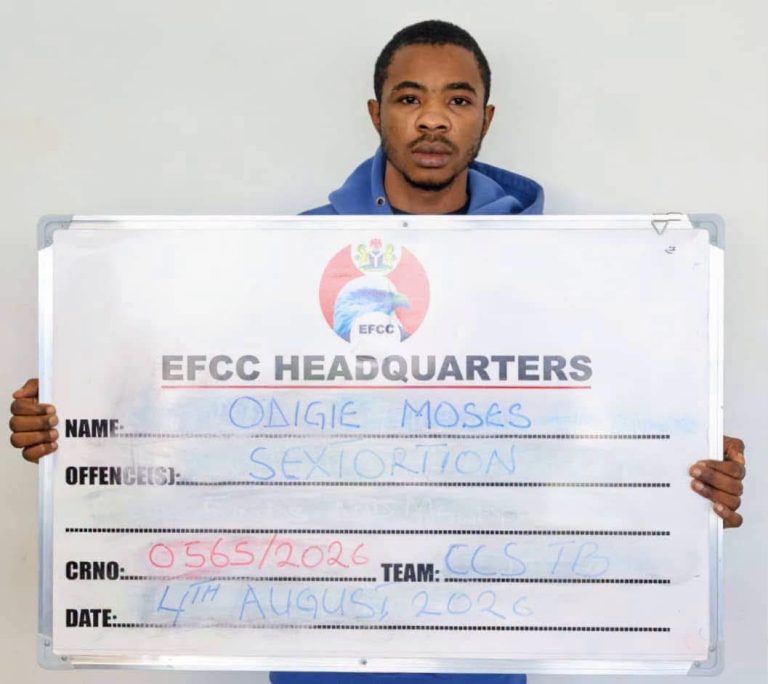
Justice C.N. Nwabulu of the Federal High Court, Abuja, on Tuesday, September 8, 2026, convicted and sentenced a fake spiritualist, Solomon Odigie Moses, to one year imprisonment.

Moses was arraigned on one-count charge bordering on cheating and posing as a spiritualist, thereby defrauding and obtaining the sum of $1,100(One Thousand, One Hundred United States Dollars) from an Indian lady seeking spiritual healing.

Moses, who was arrested in Ekpoma, Edo state, received and laundered the $1100, via his Zelle payment platform, and the Naira equivalent was paid into his local bank account.

The convict subsequently deceived her into taking a naked spiritual bath, which he recorded live without her permission, and thereafter blackmailed her to send him money, else he would make the video public.

Investigation by the EFCC revealed that the victim had to pay the sum of $1,100 to the suspect in order to prevail on him not to release her nudity to the public.

The charge against him read: “That you Solomon Odigie Moses(A.K.A DR SOLOMON) sometimes in 2026 in Abuja, within the jurisdiction of this Honourable Court did fraudulently impersonate a spiritual leader named Dr. Solomon on a fictitious Tiktok account and obtained the sum of $1100(One Thousand One Hundred Dollars) from an Indian lady by name Sharon Kaur, for the purpose of spiritual prayer and assistance, thereby committing an offence contrary to Section 321 of the Penal Code Act(Abuja)LLFN, 1990 and punishable under Section 322 of the same Act.”

He pleaded “guilty”, following which the prosecution counsel, Maryam Hayatudeen, urged the court to convict and sentence him accordingly.

In his ruling, Justice Nwabulu convicted and sentenced Moses to one year imprisonment with an option of fine of N300,000(Three Hundred Thousand Naira).

The judge further directed that the $1,100 proceeds of crime be forfeited to the victim through EFCC.

Tony Elumelu’s Seplat stake jumps ₦163 billion in one day, now worth $1.36 billion

0


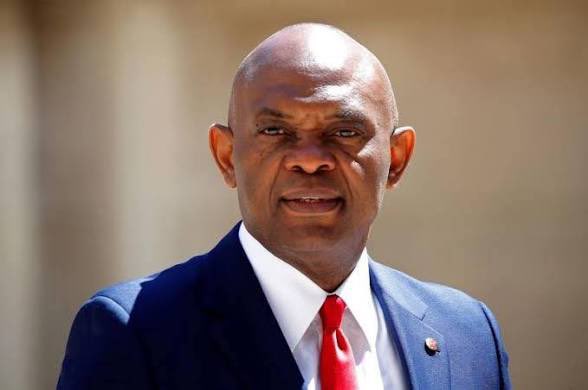
The founder of UBA, Tony Elumelu’s indirect holding in Seplat Energy, is now worth about $1.36 billion (₦1.80 trillion) after the stock closed 10 percent higher on Thursday at ₦14,907.80.

Heirs Energies and Heirs Holdings own 120.4 million shares, or 20.07 per cent of Seplat, making Elumelu the largest disclosed shareholder. He is due to become chairman on 1 January 2027.

Thursday’s jump added ₦163 billion to the holding in one session. The same block was worth ₦1.63 trillion on Wednesday and ₦1.48 trillion on 1 September. From 30 June, when it was marked at ₦1.37 trillion, the stake is up about ₦427 billion.

Heirs bought the 20.07 per cent from Maurel & Prom on 31 December 2025 for about $500 million. Eight months later the same 120.4 million shares are marked at ₦1.80 trillion.

Ogun 2027: A Political Blockbuster in the Making

0


Permit me to dabble briefly in a matter that does not directly concern me: the coming governorship election in Ogun State.

By every indication, it promises to be one of the most fascinating contests of the 2027 general election. Why? Because it is shaping up to be a battle between two immensely popular and formidable personalities.

Money? Both are loaded. One accumulated his wealth through public service—please, do not ask me how. The other was born into wealth and has successfully built upon the family fortune.

But the most intriguing and unpredictable question is this: where will Abuja’s support eventually go?

If you think the answer is obvious, then you are neither a student of history nor of contemporary politics—if, indeed, there is such a discipline.

Both men wield considerable influence in Abuja. One is a protégé of the man who currently holds ultimate power. The other is the son of a man who is both a friend and business associate of the same ultimate power.

So, get your popcorn—the largest size available—buy yourself a gallon of soda, sit back and join me as we watch what may become the political blockbuster of the 2027 election season.

I am from Ekiti and have no connection whatsoever with Ogun State, apart from my friendship with Wale Adedayo and Bamidele Johnson, who people sometimes assume is from Ekiti but busy establishing his Ogun State bona fides.

– Babafemi Ojudu loruko mi.

CSO Again Protests at Lagos Assembly Over Alleged Interference in 27.65-Hectare Land Dispute

0


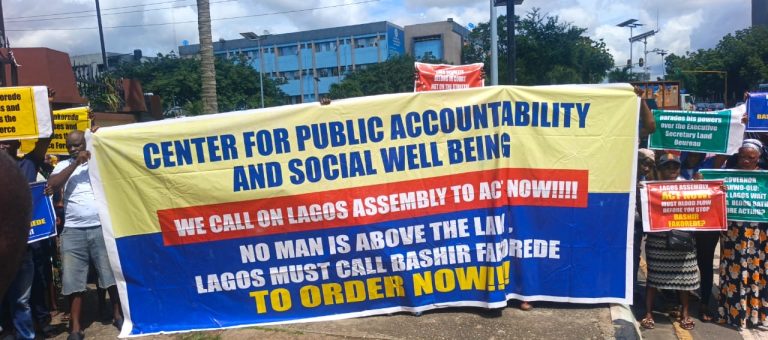
The Center for Public Accountability and Social Well-being (CPASW) on Thursday, September 10, 2026, protested at the Lagos State House of Assembly, urging lawmakers to investigate alleged interference, intimidation and harassment linked to a disputed 27.65-hectare parcel of government-allocated land in the Lekki sub-region.

The organisation’s protest followed a petition it submitted to the House on August 23, seeking legislative intervention in the lingering dispute involving the Ojaekomo family, the Ojomu Chieftaincy Family and Bashiru Fakorede over land at Sapata Village, Ajiran, Eti-Osa Local Government Area.

The Lagos State House of Assembly, in a letter dated September 7 and signed by the Clerk of the House, A.A. Oshinowo, invited the Director-General of the Centre, Shola Omolola, to appear before its Committee on Rules and Business on Thursday, September 10, alongside his clients and relevant documents.

Following the invitation, the Ojaekomo family and the CSO was present at the Committee’s meeting but Fakorede was absent. And his lawyer told the Committee that his client would be available on Monday, September 14. As a result of his absence, the Committee adjourned till Monday.

In its petition, the Centre said the dispute dates back several decades and concerns 60 hectares of wetland which the Ojaekomo family claimed had been excised to it by the Lagos State Government.

According to the organisation, the government granted the Ojaekomo family an excision covering 60 hectares on November 13, 2015, under Survey Plan No. LS/D/LA/3834.

It alleged that the situation later became contentious after members of the Ojomu family allegedly interfered with reclamation and development activities being undertaken by the Ojaekomo family and its contractor, Shaffykay & Co. Property Limited.

The Centre further stated that while litigation over the land was pending, the Ojomu family obtained Certificate of Occupancy No. 99/99/2022E in 2022 over the same 60-hectare wetland.

The Ojaekomo family subsequently petitioned the House of Assembly, leading to legislative consideration of the matter in 2023.

The Centre said the House, after considering the dispute, adopted a resolution dated August 3, 2023, dividing the 60 hectares between the two families.

Under the resolution, 32.42 hectares, representing 54 per cent, was allocated to the Ojomu Chieftaincy/Royal Family, while 27.65 hectares, representing 46 per cent, was allocated to the Ojaekomo family.

It said the House specifically directed that the portion allocated to the Ojaekomo family be distinctly carved out and surveyed in its name to prevent further disputes.

The organisation further claimed that the Lagos State Government subsequently revoked the earlier Certificate of Occupancy issued to the Ojomu family and took steps to implement the House resolution.

It cited an October 29, 2025 letter from the Office of the Lagos State Attorney-General and Commissioner for Justice as confirming the implementation of the legislative resolution.

The Centre also said the Office of the Surveyor-General prepared two survey plans — LS/D/LA8451/A covering 32.42 hectares for the Ojomu Chieftaincy Family and LS/D/LA8451/B covering 27.65 hectares for the Ojaekomo family.

However, the organisation alleged that despite the government’s intervention, the dispute had continued, with members of the Ojaekomo family and their workers allegedly subjected to intimidation, harassment, arrests and interference.

It specifically accused Fakorede of allegedly deploying armed persons to the disputed property and using security agencies against members of the Ojaekomo family and their workers.

The Centre also alleged that some persons arrested in connection with the dispute had weapons planted on them by security personnel.

It acknowledged that the allegations were serious and urged the House to ensure that they were independently investigated rather than accepted without verification.

The organisation also alleged that Fakorede had claimed to have significant influence over government institutions and could reverse decisions concerning the disputed property.

It said such claims, if established, would raise questions about the integrity of government processes and the rule of law.

The Centre therefore asked the House to invite Fakorede, representatives of both families and relevant government officials to explain their positions and produce supporting documents.

It also called for verification of the 2023 House resolution, the status of the revoked Certificate of Occupancy and the authenticity of the two survey plans.

Among other demands, the organisation urged the Assembly to ensure that the 27.65-hectare portion allocated to the Ojaekomo family is clearly demarcated and protected from unlawful interference, subject to any subsisting order or determination of a competent court.

It also called for an investigation into alleged harassment, unlawful arrests, intimidation, planting of weapons and the deployment of armed persons in connection with the dispute.

The Centre urged all parties to refrain from violence, intimidation and self-help while any outstanding legal proceedings are being determined.

It maintained that its petition was not merely about a private land dispute, but also concerned the authority of government decisions, the integrity of legislative resolutions, the proper use of security agencies and the protection of citizens’ rights.

The organisation said it was seeking the intervention of the House to ensure that the 2023 resolution and subsequent actions of the Lagos State Government were respected by all parties and that the dispute was resolved peacefully and in accordance with the law.

Ex-Reps Onuigbo challenges African leaders to champion climate change initiatives

0

A Former member of the House of Representatives and President of Globe Legislators International, Sam Onuigbo, has challenged African leaders to take charge of the various initiatives adopted for the mitigation of Climate Change.

He noted that Africa’s climate challenge is no longer restricted to the question of vulnerability, but has also become a question of agency, stressing that “for decades, Africa has rightly insisted that the continent has contributed the least to historical greenhouse-gas emissions while suffering some of the most severe climate impacts.


Onuigbo, who spoke at the Fourteenth Conference on Climate Change and Development in Africa (CCDA-XIV), holding at the United Nations Conference Center, Addis Ababa, Ethiopia, maintained that “that argument remains valid and must continue to shape demands for climate justice, finance, technology transfer, adaptation support, and loss and damage.”

With the theme, “From Pledges to Implementation: African Agency and the Belem-Antalya-Addis Roadmap,” this year’s summit attracted dignitaries from across the world.

Onuigbo commended the ClimDev-Africa Programme and the institutions providing the leadership and partnership behind this conference — the African Union Commission, the United Nations Economic Commission for Africa, the African Development Bank, the Pan-African Climate Justice Alliance (PACJA), and Afreximbank — for creating this platform for dialogue, reflection and collective action.

Formulating three key areas for special focus for African leaders, he remarked: “Africa that is home to critical minerals and is surrounded by oceans and seas, must move from climate participation to climate agency by setting the tone and shaping the rules, institutions, agencies, finance, and implementation pathways that affect its future.

“Implementation is now the real test of climate ambition — pledges must become laws, budgets, projects, accountable institutions/agencies, and measurable outcomes for African people.

“Africa’s climate leadership must be built through African institutions and agencies, capital, and authority — with fair international finance supporting, not controlling, the continent’s development pathway.”

According to Onuigbo, the moment before Africa now requires something more: a shift from presenting climate priorities to exercising climate agency.

He recalled how Nigeria’s former Head of State, General Murtala Mohammed, on January 11, 1976 at the Extraordinary Summit of the Organisation of African Unity in Addis Ababa, declared “Mr. Chairman, Africa has come of age … The fortunes of Africa are in our hands to make or mar.”

And, turning to the audience, Onuigbo, who sponsored Nigeria’s legacy Climate Change Act in 2021, asserted: “Fifty years on, that charge is the argument of this presentation, not its ornament. Africa’s climate future will not be granted by pledges made elsewhere, nor rescued by interventions we wait for.

“It will be built, financed, governed and defended by Africans, on terms Africa itself has written. Whenever the continent has waited for outside validation, progress has been slow and conditional. Where it has moved first — in advancing independence for African countries, in markets, in institutions, in the very map by which the world sees us — it has changed outcomes.”

He disclosed that no other continent holds a greater promise for the sustenance of life than Africa, contending that the twin concepts of conservation and protection have become central to what becomes of the global environment in the years to come.

“I am glad that the theme of this Fourteenth Conference, “From Pledges to Implementation: The Belem–Antalya–Addis Roadmap,” speaks to a fundamental challenge facing Africa and the global climate regime and captures perhaps the most important transition in contemporary climate conversations: how do we move beyond commitments and negotiations to build the laws, institutions, financing mechanisms and practical solutions capable of delivering results?

“I come to this conversation from a legislative perspective, as the sponsor of Nigeria’s Climate Change Act 2021, and the President of GLOBE Legislators with the conviction that climate ambition must ultimately be translated into effective governance, institutional action and measurable development outcomes.

“It is from this perspective, and in direct continuation of the African Leaders’ Addis Ababa Declaration on Climate Change and Call to Action — adopted at the Second Africa Climate Summit in this same city a year ago, on the premise that Africa is “not here to beg” but here with solutions — that I wish to reflect on how Africa can strengthen its agency in shaping global climate governance: not only by advancing its priorities, but by contributing ideas, institutions and practical solutions that move the Africa agenda from pledges to implementation.”

Citing Nigeria’s Climate Change Act 2021 as a practical example of this shift from priority to agency, he explained that the Act translates climate ambition into law and governance, emphasizing that it establishes a statutory framework for climate action, creates institutional responsibility through the National Council on Climate Change (NCCC), which anchors climate coordination at the highest level of government.

Further, Onuigbo disclosed that by placing the Council under the Presidency and making the President its chair, “the Act responds to a common governance problem in Africa: inter-agency rivalry, or “peer jealousy,” where ministries and agencies compete for visibility, budgets, and authority instead of coordinating delivery.”

The President of GLOBE Legislators International noted with glee that for more than three decades, international climate diplomacy has strengthened the language of ambition — conventions adopted, agreements negotiated, NDCs (National Determined Contributions) submitted, net-zero commitments announced.

“But,” he added, “the central question before Africa today is different: it is no longer whether governments recognise the climate crisis, but whether the institutions, financing, technologies and political will needed to implement those commitments actually exist — and who controls them.”

While noting that climate priorities describe what Africa needs, Onuigbo discovered that “Climate agency defines what Africa decides, designs, builds, finances, governs, and defends for itself. It means Africa must not only attend global climate negotiations or be represented in their outcomes; it must help author the rules, institutions, financing mechanisms, and implementation pathways that determine the future of climate action.”

He maintained that the distinction matters, because participation means Africa is present at the table just as representation means Africa’s interests are counted in declarations, boards, communiqués, and negotiating texts.

“Agency is different. Agency means Africa sets terms rather than merely responding to terms set elsewhere. It means designing instruments rather than qualifying for instruments designed by others. It means deciding who assesses, who approves, who disburses, and who benefits. A continent can be well represented in a system it does not shape. Climate leadership means moving from being consulted to being the author,” he asserted.

Tetfund: Stakeholders seek academia-industry collaborations

0

…Demand increased funds to develop industry based curriculum


Beneficiaries institutions of Tertiary Education Trust Fund (Tetfund) in South- South geo political zone have urged the intervention agency to increase funding to develop curriculums that will embrace academia- industry skills to enhance technological developments in Nigeria.

Speaking during 2026 Tetfund Board of Trustees Town Hall Meeting for South/ South geo political zone held in Uyo Akwa Ibom state capital, the stakeholders insisted that collaboration with industry operators to streamline industry/academic based curriculum will help to package graduates to meet up with industry demands in their various fields of study.

According to them, such collaboration will also check unemployment and assist tertiary institutions to produce employable graduates with skills required by industry operators.

The stakeholders comprising of Vice Chancellors of Universities , Rectors of Polytechnics and administrators of tertiary institutions in the south south region urged Tetfund to train Junior Lecturers abroad to drive the proposed industry-based curriculum adding that there should be a deviation in the past curriculum which was concentrating on academic class work without inputs from industry experiences .

They frowned at the present funds released by Tetfund to develop curriculum studies as such funds were not enough to handle academia- industry based curriculum that will impact on graduates , institutions and Nigeria technological developments.

In a paper presentation titled ” From Funding to Impacts: Research, Innovation Digital Transformation and Human Capital Development” the Vice Chancellor of University of Port Harcourt Prof Isaac Opipi
appreciated Tetfund’s massive infrastructure interventions and upgrades in tertiary institutions across the country, but noted that human capital development is more sustainable than infrastructure.

Opipi who was represented by Blessing Jaja, Deputy Vice Chancellor, Administration of Uniport suggested special training for students to understand the ethical attitude of Artificial intelligence, AI and how to mark scripts with AI.

He called for special training of lecturers on specific areas of need, increased salaries and attractive working environment to discourage Nigerian lecturers from migrating for foreign jobs.”Again well-equipped laboratories, quick access to research grants will not only boost the educational sector, but improve the quality of education in the country.

“I call for a formidable mechanism to monitor and assess the impacts and feedback of TETFUND’s intervention”

Earlier, the former member of Akwa Ibom State House of Assembly and South South representative on TETFUND Board of Trustee Hon Abo Uduyok in his opening address appreciated the beneficiary institutions for the massive turn up and listed visible projects facilitated by the Tetfund across tertiary institutions in the country and the South South zone .

He appealed for support and encouragements from beneficiaries to enable them interprete President Tinubu’s transformational dream for Nigeria’s education sector, as captured in his renewed agenda.

He said the Town Hall meeting was aimed at strengthening accountability, deepening engagements and building stronger bond between TETFUND and beneficiary institutions.

In another paper presentation titled ”University/Industry Collaboration as Catalyst for National Development” ,Tonbarapagha Kingdom, Deputy Vice Chancellor, Administration, Niger Delta University, Bayelsa State, suggested an overhaul of tertiary educational curriculum to capture industrial skills as a way forward for the country’s perpetual problem of unemployment .

He attributed Nigeria’s economic challenges and alarming unemployment to insufficient skills content in tertiary education curricula.

Akwa Ibom State Commissioner for Education Prof Ubong Essien in his keynote address called for a conscious and intentional curriculum design to include morality and patriotism to nourish and shape Nigeria’s education system and social character.

Essien stated that the interventions by Tetfund in tertiary education was unprecedented in the history of educational development in Nigeria.

“Let me appreciate President Bola Tinubu in his renewed hope agenda for education sector in Nigeria .

“I urge the stakeholders to utilize every facility provided by Tetfund to ensure expected results and impacts “