Home Blog Page 137

Reno Omokri Mourns Olu Jacobs, Hails Him as National Icon and Grand Old Man of Nollywood

0

Oludotun Baiyewu Jacobs, better known as Olu Jacobs, was a National Icon and a source of pride for Nigeria, whose pioneering role as an international thespian inspired many of our countrymen and women and drew many of today’s stars into television and movie acting.

As children, we watched in awe as one of us starred in multiple British sitcoms and several global blockbuster movies, after his training at the Royal Academy of Dramatic Art, which first led him into theatre and from the stage to the silver screen, including a stint in the runaway British TV hit series, The Professionals, amongst many others. He had no contemporaries amongst his fellow citizens in this regard—absolutely none!

Along with his mentor, the late great Chief Hubert Ogunde, he was the real Grand Old Man of Nollywood, having become a global star as far back as the seventies and early eighties, with such movie credits as the Dogs of War, in which he started with the respected Christopher Walken (pictured), himself once a Bond Villain, as well as featuring in a Roman Polanski film, Pirates.

He also gladdened the hearts of many fans through his many commercials and adverts, which are now classics and bring up fond nostalgia.

Because of the modesty of Ogunde and Jacobs, and especially Mr Jacobs, who starred in hundreds of Nollywood movies, less deserving individuals have made pretences to their title of Nollywood Pioneers, but history makes their claims hollow.

We will miss this great African who has passed into ancestor-hood at the great age of 84. We pray that God Almighty grant the family he left behind succour, especially Auntie Joke Sylvia, his wife and fellow actor, and their children.

A grateful nation will miss Mr Jacobs, who, thankfully, got the Member of the Order of the Federal Republic (MFR) title in his lifetime.

Adieu, great sir. Until we meet to part no more.

Bemigho Reno Omokri

BREAKING: Veteran actor Olu Jacobs dies at 84

0


Veteran Nigerian actor and film executive, Oludotun Baiyewu Jacobs, popularly known as Olu Jacobs, has died at the age of 84.

His death was announced by his son, Olusoji Jacobs, on Instagram on Wednesday.

In the statement, the family described the late actor as “The Lion of Lufodo” and asked bloggers and social media influencers to respect its privacy.

“It is with gratitude to God for a life well lived and fought, that we announce the passing of our dear husband, father, grandfather and uncle. The Lion of Lufodo.

Oludotun Baiyewun Jacobs (MFR)

We call on all bloggers and social media influencers to respect our families privacy at this time.”

Jacobs was one of Nigeria’s veteran actors and was widely recognised for his contributions to theatre, television and film.

He trained at the Royal Academy of Dramatic Art in England and began his acting career in Britain, where he worked with repertoire theatres and appeared in British television productions and international films.

After returning to Nigeria, he became a prominent figure in the country’s film industry and was regarded as one of the veteran figures of Nollywood.

Jacobs won the Africa Movie Academy Award for Best Actor in a Leading Role in 2007. He also received the Industry Merit Award at the 2013 Africa Magic Viewers’ Choice Awards and the MAA Lifetime Achievement Award in 2016.

He was conferred with the national honour of Member of the Order of the Federal Republic in 2011.

Jacobs was married to fellow veteran actress, Joke Silva.

Punch

Tinubu will defeat Atiku, Obi in 2027 even if they unite – Fayose

0

Former Ekiti State Governor, Ayo Fayose, has predicted that President Bola Tinubu will secure more than 12 million votes in the 2027 presidential election.

Fayose made the prediction during an interview on Channels Television’s Politics Today aired on Tuesday.

The former governor said Tinubu would defeat both Atiku Abubakar, candidate of the African Democratic Party (ADC), and Peter Obi of the Nigeria Democratic Congress (NDC) in 2027, “even if they come together”.

“It’s a three-way horse; maybe I am not putting it right. Atiku is there, and Obi is there.

“Even if they come together, this man (Tinubu) will still defeat them. But let us say they don’t come together; too bad for them because this election will be balkanised,” Fayose said.

“South-west will come up with not less than six million differences; I’m telling you, between five to six million. Write it down.

“Other five million, who would vote for Obi or Atiku in Ekiti? Who would vote for them in Osun? Who would vote for them in Ondo? What is their structure?

“This politics is not a tea party. Asiwaju will have over 12 million votes. To rig the election now is very difficult. Very, very difficult.”

Fayose attributed his prediction to what he described as improvements in the economy under Tinubu, saying the President had stabilised the economy.

Sun

PenCom Extends Civil Servants’ Online Pension Verification, Enrolment to December 2026

0


BY TAIWO OGUNMOLA -OMILANI


The National Pension Commission (PenCom) has extended the deadline for the ongoing mandatory One-Time Online Verification and Enrolment Exercise for employees of treasury-funded Ministries, Departments and Agencies (MDAs) entitled to accrued pension rights.

The exercise, which commenced in February 2026 and was initially scheduled to end on July 31, 2026, has now been extended to December 31, 2026.

PenCom said the extension followed several requests from MDAs seeking additional time for their employees to participate in and complete the online enrolment process.

The Commission said the extension would provide eligible employees with another opportunity to complete the exercise and ensure that their accrued pension rights are accurately determined ahead of retirement.

As of July 2026, MDAs had uploaded 62,320 records of active employees and retirees, while only 31,099 employees had successfully completed the enrolment process. The figures are below the estimated 150,000 active Federal Government employees entitled to accrued pension rights.

The exercise is part of the Federal Government’s efforts to settle pension liabilities inherited from the Defined Benefit Scheme (DBS), which operated before the introduction of the Contributory Pension Scheme (CPS) in 2004.
Under Section 15(1) of the Pension Reform Act 2014, employees who transited to the CPS are entitled to accrued pension rights, comprising pension and gratuity benefits earned under the DBS from their first appointment up to June 30, 2004.

PenCom said the determination of the accrued rights is based on an actuarial valuation process and is necessary for establishing the Federal Government’s outstanding pension liabilities and making adequate budgetary provisions for their settlement.

The Commission also noted that the exercise is fully digital and conducted through its Contributions and Bond Redemption Application (COBRA), a platform designed for data capture, validation and processing.

MDAs are required to upload details of eligible employees on the COBRA platform, after which the affected employees are expected to approach their respective Pension Fund Administrators (PFAs) with the required documents to complete the enrolment.

PenCom urged employees who are yet to enrol, as well as those who have started but not completed the process, to take advantage of the extension and complete the exercise before the new deadline.

The Commission said early completion would facilitate the determination of accrued pension rights and enable the necessary funding to be secured from the Federal Government for subsequent crediting into employees’ Retirement Savings Accounts (RSAs).

It added that Pension Desk Officers, who have been trained by PenCom, would continue to coordinate the exercise within their respective organisations and guide employees through the process.

PenCom called on all eligible employees and treasury-funded MDAs to ensure full participation and avoid delaying the enrolment process ahead of the December 31, 2026 deadline.

Senator Sarafa Alli’s Political Journey Comes to the Big Screen as New Biopic Set for October 1 Premiere

0


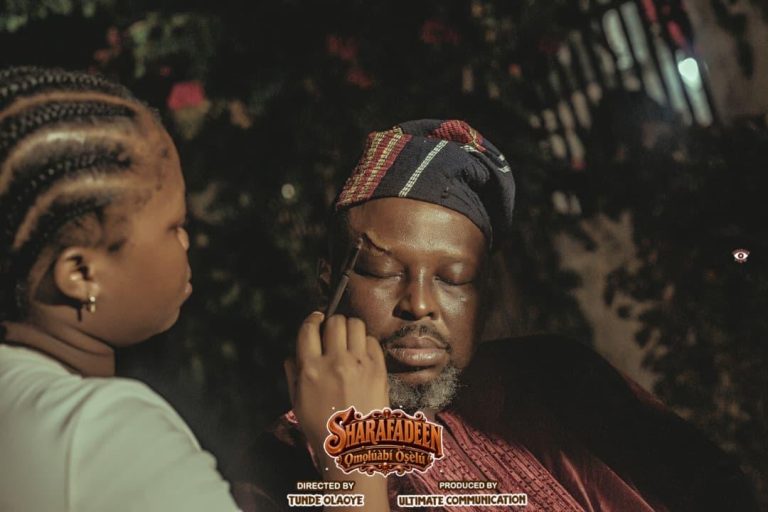
The life and political journey of Senator Sharafadeen Abiodun Alli, representing Oyo South Senatorial District, will be brought to the big screen this October as Ultimate Communications prepares to premiere a new biographical film on the politician. The film, Sen. Sarafa Alli – The Movie, produced by veteran filmmaker Seun Oloketuyi, will have its premiere on Wednesday, October 1, 2026, at Viva Cinema, Palms Mall, Ring Road, Ibadan. The premiere will take place on Nigeria’s Independence Day and will tell the story of Senator Alli’s political journey, his experience in public service and his years in Oyo State politics.
Directed by Tunde Olaoye, the movie features notable actors including Taiwo Ibikunle, Dele Odule, Adetutu Adesoji and Aishat Isiaka, alongside other members of the cast.
Rather than focusing only on Senator Alli’s time in the Senate, the film traces different stages of his journey, including his background in law, his period as Chief of Staff and the experiences that shaped his rise in Oyo State politics.
According to Seun Oloketuyi, the project is an attempt to document Senator Alli’s story and give audiences a closer look at the experiences behind his political career. The premiere is expected to attract political figures, traditional rulers, members of the business community, entertainment industry stakeholders, media practitioners, friends and associates of the Senator.

EVENT DETAILS
Film: Sen. Sarafa Alli – The Movie
Date: Wednesday, October 1, 2026
Venue: Viva Cinema, Palms Mall, Ring Road, Ibadan
Red Carpet: 6:00 PM
Film Screening: 8:00 PM
Producer: Ultimate Communications
Director: Tunde Olaoye

Dangerous threats and inflammatory rhetoric ahead of 2027 elections

0


By Ehi Braimah

​


As Nigeria inches towards the 2027 general elections, an ominous pattern is beginning to emerge. The language of politics is becoming more threatening, more intolerant and, in some cases, dangerously inflammatory. Politics is not supposed to be a do-or-die affair, and an election shouldn’t be a declaration of war.


Political opponents are not enemies of the state, and citizens who choose to support a different political party have committed no offence. Democracy rests on one fundamental principle: the freedom of the people to choose their leaders without fear, intimidation, coercion or violence.


Unfortunately, too many Nigerian politicians are desperate and appear prepared to go to any length to win elections. We have seen vote buying, threats, intimidation, ballot snatching, manipulation of results and endless legal battles. The desperation to capture power is often so intense that the electorate – the people in whose name democracy is practiced – becomes an afterthought. What is particularly troubling ahead of 2027 is the emerging pattern of inflammatory political rhetoric.


Consider the controversy in Kuje Area Council of the Federal Capital Territory. A viral video showed the council chairman, Danjuma Shekwolo, declaring that residents must either support the All Progressives Congress, APC, or leave the area. The statement was rightly condemned because no elected official owns Kuje and no Nigerian should be required to belong to a political party as the price for living peacefully in any part of the country.


Shekwolo later clarified that he had no right to disenfranchise residents or deny them their fundamental rights. But the damage had already been done: the statement revealed a dangerous mindset – that political loyalty can be demanded from citizens and that disagreement with those in power can attract consequences.


That is precisely the danger. When powerful people speak recklessly, their supporters may take them literally. A politician may later claim to have been misunderstood, but political language does not exist in a vacuum. It is becoming evident that what politicians cannot do does not exist. Words can inflame passions, legitimise intolerance and embolden those who are prepared to commit violence in the name of their party or political leader.


The Osun governorship election offers an important warning and a useful case study. The campaign was marked by allegations and counter-allegations of threats, violence, intimidation and plans to manipulate the electoral process. There was controversy over remarks attributed to political actors, including threats of violence against opposition supporters, while accusations of possible rigging and voter intimidation became part of the political conversation. These developments heightened anxiety before polling day.


Yet, when the election was eventually held on August 15, 2026, the people voted and INEC declared Governor Ademola Adeleke of the Accord Party the winner, with 511,067 votes against 444,815 votes for the APC candidate, Bola Oyebamiji – a margin of 66,252 votes. Whatever political arguments that may have followed after the election, the larger democratic lesson is clear: the ultimate power in a democracy must remain with the people, not with politicians who threaten to intimidate or compel citizens into supporting them.


Osun should therefore be studied carefully as Nigeria prepares for 2027. Political threats and inflammatory rhetoric should not be dismissed as ordinary campaign talk. Every threat must be investigated, and any politician who crosses the line into incitement or intimidation must be held accountable, irrespective of party affiliation.


The disturbing pattern is not limited to one political party, one state or one politician. Reports and controversies involving political actors in Osun, Kuje and other parts of the country should concern every Nigerian. Today, the target may be an opposition supporter, and tomorrow, it may be a member of the ruling party who refuses to obey a local political godfather. Once citizens begin to accept the proposition that those in power can dictate where people should live, whom they should support or how they should vote, democracy itself is in danger.


The comments attributed to Ebonyi State governor Francis Nwifuru are even more disturbing because they were directed at local government chairmen. While swearing the in the newly elected chairmen, Nwifuru warned that any chairman whose local government failed to deliver victory for APC in 2027 would be removed. He reportedly told them if they allowed opposition politicians to “mess” up in their areas, they should “deal with that person mercilessly.”


He went further, saying that he wanted the threat reported publicly and that the government would use councillors to remove any chairman who failed to deliver his local government to the APC. If the survival of a council chairman depends on delivering 100 per cent of the votes of the votes in his local government to the ruling party, what happens to electoral neutrality and opposition votes?


Kebbi State has also entered the troubling conversation. Governor Nasir Idris has been reported in a widely circulated video making remarks about fighting and chaos in connection with the 2027 elections. Other reports have quoted political actors in the state, warning of consequences for those who refuse to support the APC.


A frightening dimension occurred in Kano when politics was subjected to a religious test. At a mass wedding organised by the Kano State government for 1,500 couples, Islamic cleric Sheikh Sani Yahaya Jingir reportedly urged Muslims to sustain the Muslim-Muslim presidential ticket and warned that Christians would be shown their “limits” if they do not support the ticket. The event was attended by senior political figures,including the Kano State governor, Abba Kabir Yusuf.


The comments provoked widespread condemnation from civil society and political groups. But what makes the incident especially disturbing is that Jingir did not subsequently retract the incendiary language or apologise. Instead, reports indicate that he defended his position. This is precisely where Nigerians must draw the line. Is Jingir trying to transform political disagreements into a potential religious conflict?


There is nothing wrong with a Muslim supporting a Muslim-Muslim ticket. There is equally nothing wrong with a Christian supporting a Christian candidate, or a Muslim-Christian ticket. In a democracy, citizens have the right to make political choices based on religion, ideology, competence, character, performance or any combination of considerations.


Another statement that deserves closer scrutiny is the declaration by the Minister of the Federal Capital Territory, Nyesom Wike, that he would “deliver” Rivers State and the FCT to President Bola Ahmed Tinubu in 2027. Wike has publicly restated his support for the President and declared that he remains in control of political structures in both Rivers State and the FCT. But Nigerians are entitled to ask an important question: how exactly does one politician “deliver” an entire state and the Federal Capital Territory to another politician?


In a genuine democracy, Rivers State and the FCT do not belong to Nyesom Wike; they belong to the people who are constitutionally entitled to make their choices through the ballot box. Of course, politicians are free to campaign vigorously for their preferred candidates, and they can mobilise party members, persuade voters and deploy legitimate political structures. That is democracy, but the language of “delivering” entire states must not create the impression that election outcomes have already been negotiated, guaranteed or placed in the hands of political strongmen.


Minister Wike should therefore tell Nigerians what he means by “delivering” Rivers State and the FCT. Will it be through persuasion and legitimate campaigning? Will it be through the superiority of policies and performance? Or does the language suggest something more troubling – a belief that political structures, public institutions or the machinery of government can be deployed to predetermine the choices of voters?Nigerians deserve answers because 2027 must not be an election in which the people merely ratify decisions already made by political godfathers.


The media has an enormous responsibility. Journalists must refuse to normalise dangerous political rhetoric simply because it generates headlines, social-media engagement and television ratings. Threatening statements must be reported accurately, placed in context and followed up. When a politician threatens opponents, the media must ask: what does the law say? What’s the police doing about it? Has INEC responded? What steps are being taken to protect voters?


The media must also fact-check claims and expose misinformation designed to provoke ethnic, religious or political tension. Politicians must not be allowed to make an inflammatory statement in the morning and quietly withdraw it in the evening after the intended message has reached their supporters.


Civil society organisations must also become early-warning institutions. They should document hate speech, threats, intimidation, vote buying and politically motivated violence. They should also educate citizens about their rights and create mechanisms through which threats can be reported and independently verified. Democracy cannot be defended only on election day – it must be defended every day before the election.


Security agencies have perhaps the most immediate responsibility. The police, the Department of State Services and other relevant agencies must act professionally and impartially. A threat by a powerful politician must receive the same attention as a threat by an ordinary citizen. There must be no sacred cows. Politicians should not be invited for questioning merely to satisfy public opinion and then allowed to walk away without a transparent outcome.


The lesson must be simple: political power does not confer immunity from the law. INEC, too, must strengthen public confidence. Nigerians want an electoral umpire that is truly independent, transparent and prepared for every attempt to compromise the process. The commission must protect the voter register, improve the integrity of technology used in elections, ensure that results are transmitted and made available transparently, and resist every form of political pressure.


Most importantly, INEC must convince Nigerians that their votes will count. International election observers should not wait until a few days before polling to arrive in Nigeria. The danger signs are already visible, and the rhetoric is already becoming toxic. International and domestic observer groups should monitor the entire electoral environment, including campaign financing, vote buying, political intimidation, misuse of state resources, hate speech and threats against opposition supporters – not merely what happens at polling units.


The security situation will also shape the outcome and credibility of the 2027 elections. Nigerians cannot exercise their democratic rights freely where they are afraid to travel, gather or vote. Economic hardship is another major factor. Hunger, unemployment and poverty create a fertile environment for vote buying. A hungry voter can easily become the target of a politician with a few naira, rice, garri, noodles, and vegetable oilto distribute on election day.


This is why the defence of democracy is inseparable from the defence of human dignity and economic opportunity. A citizen who is economically desperate is more vulnerable to political manipulation, and a citizen who fears violence is less likely to vote freely.


As 2027 approaches, Nigerians must remain vigilant, and reject threats, intimidation and the language of political conquest. In addition, we insist that no politician, no matter how highly placed, owns a state, a local government, a community or its people. Every part of Nigeria, under the Constitution, belongs to Nigerians who have the right to choose their leaders freely.


Above all, Nigerians must defend their democracy peacefully but firmly. Our votes are not the property of governors, ministers, party chairmen, senators or political godfathers. No politician should be able to tell us whom to support, where to live or how to vote. We want free, fair and credible elections in 2027. That should not be too much to ask in a democracy.


The battle for Nigeria’s democracy will be won when Nigerians insist, loudly and without apology, that only the people can deliver their votes – and only at the ballot box.

Braimah is a PR specialist, marketing strategist, and publisher/editor-in-chief of Naija Times (www.ntm.ng) and Lagos Post (www.lagospost.ng). He is a strong advocate for African prosperity and can be reached through:ehi.braimah@neomedia.com.ng
Lagos Assembly Mourns Former Lawmaker Kamal Olorunoje, Nollywood Actor Taiwo Hassan

0


The Lagos State House of Assembly has expressed its condolences to the family of Hon. Kamal Owolabi Olorunoje, a former member of the Assembly, who died on Tuesday morning.

The demise of the former lawmaker was announced during Tuesday’s plenary by Hon. Lanre Afinni, representing Lagos Island Constituency II.
Afinni stated that Olorunoje represented Lagos Island Constituency II in the 3rd Assembly of the Lagos State House of Assembly.

He later served as a member of the Lagos State Civil Service Commission.
Contributing to the matter, Hon. Oladele Ajayi described the death of the former lawmaker as a great loss, particularly at a time when political activities are intensifying across the State.

Ajayi urged the House to formally convey its condolences to the deceased’s family and observe a minute of silence in his honour.

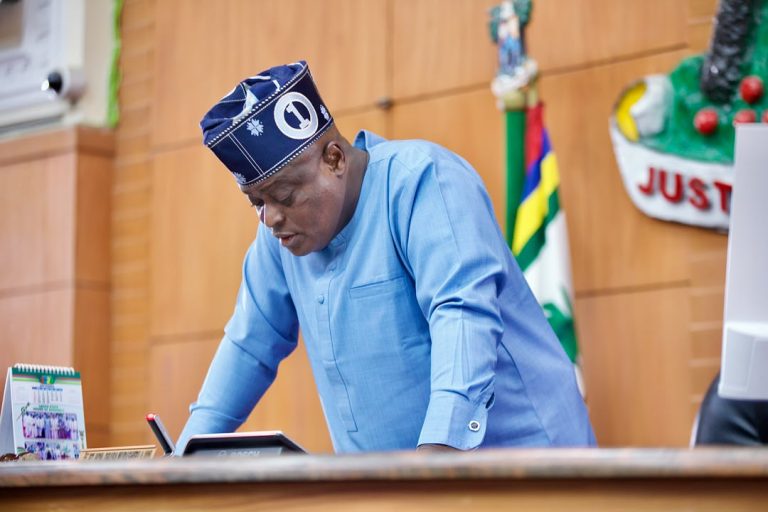
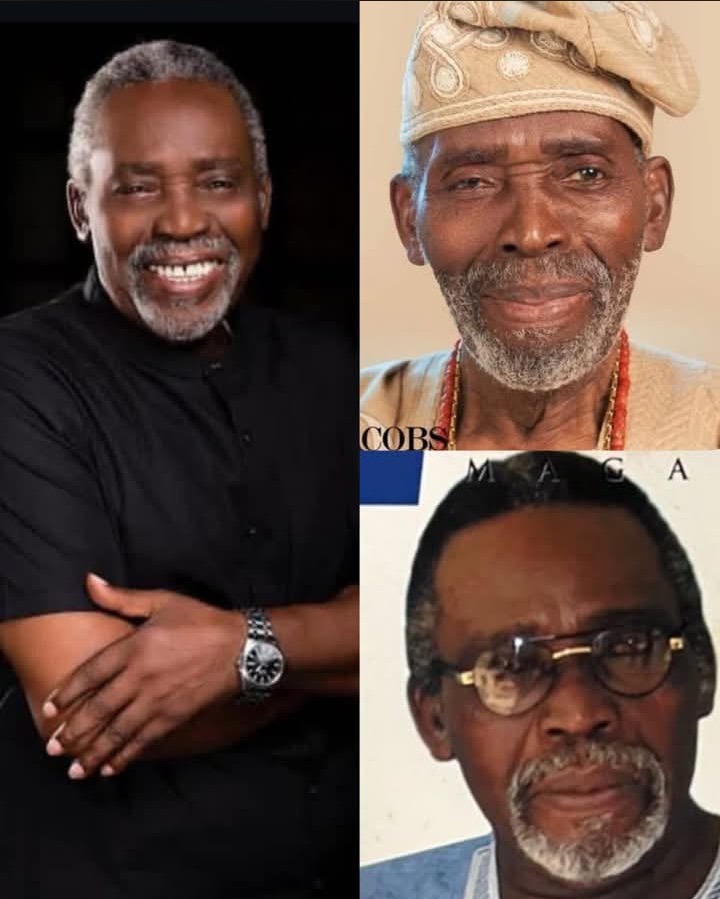
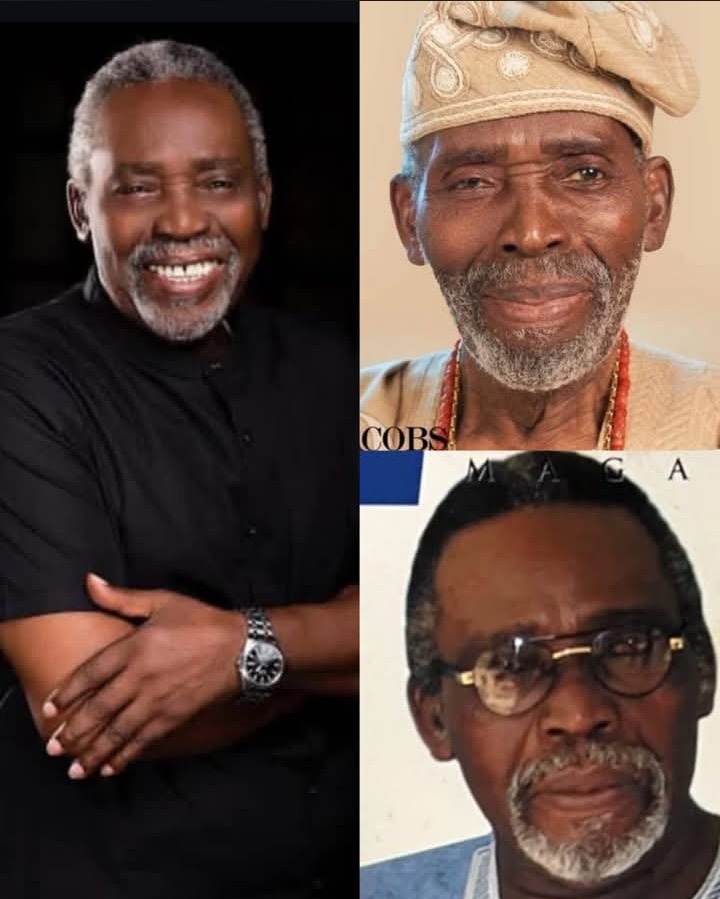
Speaker of the House, Rt. Hon. Mudashiru Obasa, also commiserated with the family of renowned Nollywood actor, Alhaji Taiwo Hassan, popularly known as “Ogogo,” who died some weeks ago.

Obasa acknowledged the late actor’s significant contributions to the Nigerian entertainment industry, noting that his death was a loss to his colleagues, associates and society at large.

The Speaker thereafter directed the Clerk of the House to convey the condolences of the Lagos State House of Assembly to the families of the deceased.

The House prayed for the peaceful repose of the souls of the deceased and for Almighty Allah to grant their families, loved ones and associates the fortitude to bear the irreparable losses.

PDP Leadership Visits Family of Late Bamanga Tukur, Fintiri, Lamido to Pay Condolences

0


The leadership of the Peoples Democratic Party (PDP) has paid condolence visits to the family of its late former National Chairman, Alhaji (Dr.) Bamanga Tukur, the Lamido of Adamawa, Alhaji Muhammadu Barkindo Aliyu Musdafa, and the Governor of Adamawa State, Ahmadu Fintiri, over the death of the elder statesman.

The PDP delegation, led by the Chairman of the Interim National Working Committee, Kabiru Tanimu Turaki, SAN, visited the Tukur family at Tukur Lodge, Yola, the Lamido at his palace, and Governor Fintiri at the Governor’s Office in Yola.


Speaking during the condolence visit to the Tukur family, Turaki said Bamanga Tukur had left behind a great legacy in Adamawa, the old Gongola State, Northern Nigeria, as well as Nigeria’s business and political landscape.

“According to the Quran, every person who lives will die and go to the great beyond. So, Baba Tukur has gone the way of all mortals. We do not mourn his death because all humans will die, but we are pained by the loss of his presence and the concomitant virtues he graciously exuded all through his life, in both private and public engagements,” he said.

Turaki added that the party was deeply pained by the loss, assuring that the PDP would remain committed to the ideals for which Tukur and other founding fathers established the party.
Responding, Awwal Tukur, son of the deceased and Secretary to the Adamawa State Government, thanked the PDP leadership for the condolence visit.

Awwal described the late Bamanga Tukur as a man who made significant contributions to the professional, social, economic and administrative development of the country, adding that his legacy would continue to live on.

At the Government House, Governor Fintiri appreciated the PDP leadership for visiting Adamawa to offer condolences, describing the late Tukur as “a father and a shining light.”

Similarly, the Lamido of Adamawa, Alhaji Muhammadu Barkindo Aliyu Musdafa, described Bamanga Tukur, who held the traditional title of Tafidan Adamawa, as a respected son who brought honour, respect and recognition to the kingdom.

The Lamido said Tukur’s death was a huge loss whose impact would linger for a long time, while praying Allah to forgive his shortcomings and grant him Aljannah Firdausi.

Members of the PDP delegation included BOT Secretary, Muazu Babangida Aliyu; Hajiya Zainab Maina, BOT member; National Treasurer, Isa Abubakar; National Organising Secretary, Theophilus Dakas Shan; National Financial Secretary, Obiechina Daniel; National Legal Adviser, Shafi Bara’u; National Youth Leader, Umar Dan Abu; and National Publicity Secretary, Ini Ememobong.

Also on the delegation were the party’s governorship candidates in Adamawa, Taraba and Kebbi States: Caleb Andrew Myebangara, Senator Joel Danlami Ikenya and Ibrahim Abdullahi.

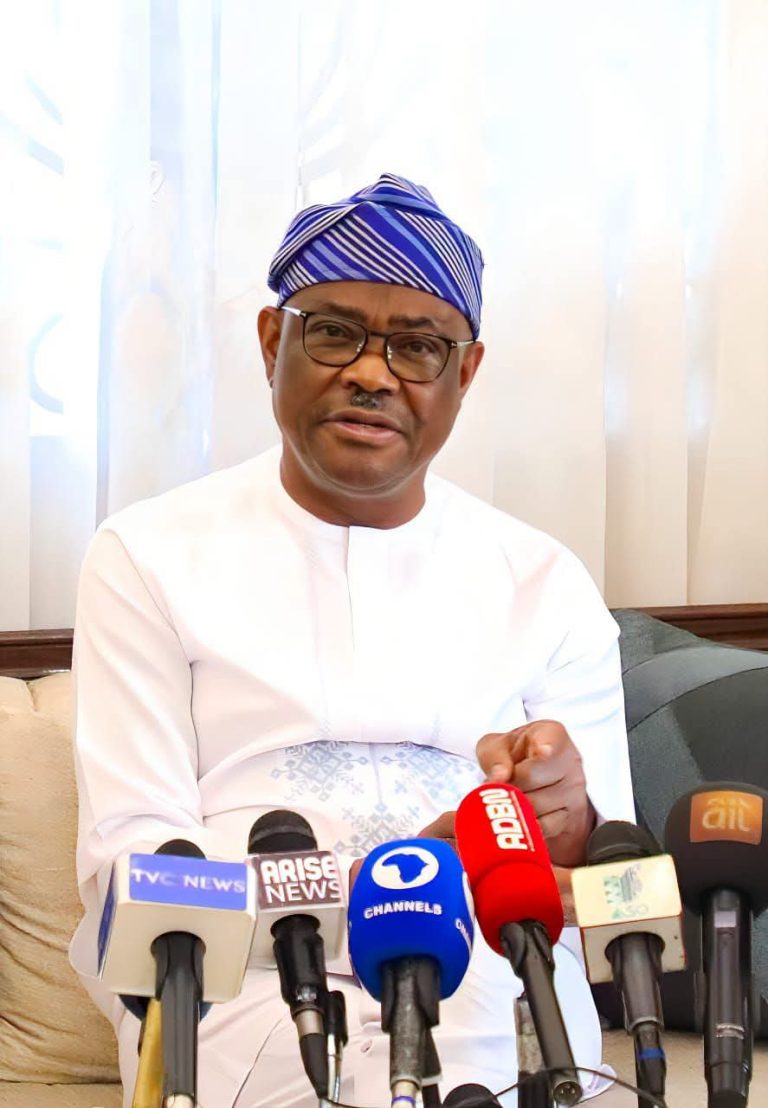
2027: My support only for President Tinubu, I didn’t promise PDP won’t field candidates in other elections – Wike

0


The Federal Capital Territory (FCT) Minister, Nyesom Wike, has reiterated that his support for the reelection of President Bola Ahmed Tinubu remained sacrosanct, saying he never promised that the Peoples Democratic Party (PDP) will not field candidates in governoship, National Assembly and States House of Assembly elections.

The Minister said the rainbow coalition does not have anything to do with the All Progressives Congress (APC), describing the coalition as a platform for other political parties that are pleased with the good works of the President and are supporting his reelection.

In a statement on Tuesday, by his Senior Special Assistant to the Minister on Public Communications and Social Media, Lere Olayinka, the FCT Minister, who said he won’t be the one to help people to win elections in their States, noted that “politics is local and those having problems in their States should resolve them instead of using the reelection of the President to whip up sentiments.”

Wike pointed out that he never met with the All Progressives Congress (APC) before himself and other members of the G5 supported the President in 2023, and that for 2027, his support is for the president only.

The Minister said politics is no longer about coming from fourth position to be governor, it is about genuinely mobilising support and winning elections from the polling units.

He asked; “In Imo State under Governor Hope Uzodinma, how did APC win two senate seats in 2023, in an election held the same day with that of the President and APC had less than 15 percent in the presidential election? Was it rainbow coalition? Were the voters confused?

“Was it rainbow coalition that also made APC to win National Assembly elections in Ebonyi, Abia and Enugu States where the President did not have ten percent of the votes?

“If in 2023, the voters in Imo, Abia, Enugu and Ebonyi voted APC in the Senatorial election and voted another party in the presidential election, they won’t be confused in 2027 provided we all support the president genuinely this time?

The Minister urged all stakeholders to put the presidential election first, saying; “after the President must have been reelected, we can all go and face elections in our States.”

“What I said and stand for is that I will mobilise support for the reelection of the President. I never promised anyone that PDP will not field candidates to contest governorship, National Assembly and States House of Assembly elections.

“Most importantly, rainbow coalition has nothing to do with the APC. Rather, it is own way of mobilising support accross political parties for Mr President, who has done well to deserve a second term,” he said.

Lere Olayinka
Senior Special Assistant
Public Communications and Social Media

SANWO-OLU TO OPPOSITION: “PUT FORWARD CREDIBLE IDEAS THAT CAN COMPETE WITH OURS…”

0

•Says Lagos spirit has driven democracy, governance, development

•Yoruba Tennis Club reaffirms commitment to heritage, excellence at centenary anniversary

The Governor of Lagos State, Mr Babajide Sanwo-Olu has challenged opposition parties to put forward credible ideas that are able to compete with the transformation agenda of the ruling All Progressives Congress (APC) instead of seeking change for the sake of change.

Governor Sanwo-Olu spoke on Tuesday while delivering the Centenary Anniversary Lecture of the Yoruba Tennis Club. The event was attended by the First Lady, Dr. Ibijoke Sanwo-Olu; Deputy Governor and Lagos State All Progressives Congress (APC) gubernatorial candidate, Dr. Obafemi Hamzat; public office holders, political and traditional leaders, members of the Yoruba Tennis Club and dignitaries, among others.

Titled: “Democracy, Governance, and the Lagos Spirit: A Century of Excellence, the lecture was held at the Greetings Hall of the Yoruba Tennis Club, Onikan in Lagos.

Governor Sanwo-Olu, who is the South-West Zonal Coordinator of the APC Presidential Campaign Council, declared that untested novelty is no longer an option for a Lagos State and now, Nigeria that has tasted and felt the superiority of continuity.

“We must keep insisting that it cannot be changed merely for the sake of change. We must never think we need to tear things up just to prove that we are in control. This is the message that I am taking into the political campaign, as my party strives to build on our legacy of transformation in Lagos State.

“And also, at the National level where our own Asiwaju Bola Ahmed Tinubu, GCFR, will be flying the flag of our All Progressives Congress (APC) as the presidential candidate. As I have always said, the gains of the bold reforms he has undertaken are now visible in foreign exchange stability, education, agriculture and security, among many others.

“Our challenge to the opposition remains the same – to put forward credible ideas that are able to compete with ours, instead of seeking change for the sake of change. Untested novelty is no longer an option for a Lagos State that has tasted and felt the superiority of continuity,” he declared.

Governor Sanwo-Olu described the “Lagos Spirit” of courage, self-reliance, openness and continuous improvement as a major force behind the State’s democratic tradition, governance and development.

He described Lagos as a city that does not wait to be given, recalling its role in the June 12 pro-democracy struggle, the development of indigenous political institutions and its long history of civic activism.

Governor Sanwo-Olu said Lagos’ development since the return of democracy in 1999 has been driven by continuity, with successive administrations building on the development blueprint initiated under former Governor Bola Tinubu, who is now President of Nigeria.

He said: “The Lagos Spirit is the spirit of a city that does not wait to be given. In 1926 it was shut out of the colonial clubs, so it built its own, and a better one. In 1993, a free and fair presidential vote was stolen, so Lagos chose to lead the march to the streets and into the pro-democracy trenches.

“In 2004, its constitutionally allotted allocation was illegally withheld by the federal government, so it decided to make its own money. Every time a gate has been closed to Lagos, Lagos has built a house across the road and thrown a better party.

“Lagos is not just Nigeria’s former administrative capital and current commercial nerve-centre, but also the country’s longstanding home of democracy and political activism. It is the birthplace and engine of the June 12 pro-democracy movement. In the arena of political governance, too, Lagos is just as visible and influential.”

Governor Sanwo-Olu also identified four habits that define what he called the “Lagos Playbook” for governance — vision, self-reliance, partnership and measuring governance by its impact on ordinary citizens.

He said: “The first habit is the vision. In 1999, when democracy returned, this State did something remarkable and rare. It crafted a blueprint – the brainchild of the then Governor, Asiwaju Bola Ahmed Tinubu, and his brilliant team of technocrats. Every Governor who has followed has faithfully built on that blueprint. It’s been 27 years now, and we have not departed from the original vision.

“Much of the Lagos that we can see today is because leaders like Governor Lateef Jakande and Governor Bola Ahmed Tinubu saw a picture that stretched far beyond their time in office. Continuity is the reason the Blue and Red Lines run today, as the first rail services ever built and operated by a sub-national government in the history of this country.

“The second habit is self-reliance. When the federal government vindictively closed its purse to us, Lagos did not become a beggar. It turned to its own people. It reformed its tax administration, modernised its fiscal architecture, and asked Lagosians to pay for their own city. They did. Today this State raises more of its own revenue than any other in the Federation.

“The third habit is partnership. Our founders did not wait for the European Club to open its doors, or for the colonial government to build them an Indigenes’ club. They instead looked for and found land, here in Onikan, and raised the money to develop the original club premises from their own pockets.

“The fourth habit is that governance is measured at the bottom, not the top. The true measure of our work in Lagos is whether a doctor or nurse in Alimosho or Ibeju-Lekki can get to work on time, whether a child in Ajegunle has a desk and school books, whether a trader in Mile 12 can get her tomatoes or fish to market before they rot, whether a taxi driver can make enough money to maintain his vehicle and cater for his family.”

Speaking on his administration’s performance in the last seven years, he said the incumbent government through its THEMES+ development agenda has impacted millions of Lagos residents in the areas of traffic and transport, health and environment, education and technology, the economy, tourism and entertainment, security and governance.

He said: “We have accomplished a great deal: built, improved, reformed, restored, and reset. We have established two new public universities, and built one of Africa’s largest rice mills at Imota.

“We have attracted hundreds of millions of dollars in investments into submarine cable landings and new data centres, laying the foundation for a digital revolution that before now could only be imagined. We are building West Africa’s largest children’s hospital, and bringing digital technology to public school classrooms.

“To cater to our N5.89 trillion per annum food market in Lagos, we are building the Lagos Central Food Security System and Logistics Hub in Ketu-Ereyun, to show the world that an African megacity can defy its severe land limitations and operate efficiently in the agriculture space by focusing on modernising the aggregation, storage, processing and distribution of its food.”

Reflecting on the Yoruba Tennis Club’s 100-year history, Governor Sanwo-Olu said the establishment of the club was a bold response by indigenous Lagosians to racial segregation in colonial-era Lagos, noting that the founders demonstrated the same courage and self-belief that have continued to shape the city.

He urged the Yoruba Tennis Club to preserve its founding values while continuing to evolve, stressing that institutions must embrace change without losing the ideals that made them relevant.

Governor Sanwo-Olu also called for greater inclusion of young people, stronger documentation of its history and high standards in admitting new members.

Speaking at the event, the Chairman of Yoruba Tennis Club, Chief Olawunmi Gasper, reaffirmed the Club’s commitment to preserving rich cultural heritage, promoting fellowship and contributing to the social, economic and civic development of Lagos State.

Gasper said the choice of Governor Sanwo-Olu as Guest Speaker was particularly significant, describing the Governor as a progressive and inspirational leader, a public sector reformer and an advocate of people-centred development.

He commended Governor Sanwo-Olu’s administration for its infrastructure and development initiatives, stressing that the anniversary lecture offered an opportunity to examine the relationship between democracy, governance and the growth of Lagos.

Gasper described Governor Sanwo-Olu as a technocrat in politics, a gentleman in the service of Lagosians and a leader whose achievements had earned him the affectionate appellations “Mr Saleable,” “Mr Talk and Do” and “Mr Infrastructure.”

He said Governor Sanwo-Olu “is an exemplary public sector reformer, with the City State of Lagos standing at approximately $259 billion, ranking it as Africa’s second largest city-economy after Cairo and accounting for over 26 per cent of Nigeria’s total GDP and over 50 per cent of its non-oil GDP under his watch, with several infrastructure projects executed. Lagos is a global African city, ambitious, entrepreneurial, culturally progressive, constantly reinventing itself. Under Governor Sanwo-Olu’s leadership, Excellency, Lagos continues to pursue a vision of greater productivity, connectivity, innovation and global competitiveness. We are proud to be part of that story.”

The Yoruba Tennis Club’s Centenary Anniversary celebration featured the centenary anniversary lecture, presentation and launch of the anniversary history book, the turning of the sod for the proposed Legacy Building, and an exhibition of 100 years of historical and archival materials.