Home Blog Page 116

“I Stopped Acting To Face My Family, I Am Not A Second Wife” – Nollywood Actress Mosun Filani Clears The Air

0

Popular Nollywood actress Mosun Filani has finally addressed the rumors surrounding her marriage.

Speaking out, she said:

“I stopped acting to face my family, I’m not a second wife, my husband might’ve had a marriage before but I didn’t meet anyone in his house. My kids are grown that they know left from right and it’s time for me to get back to acting…”

The actress who took a long break from the movie industry to focus on her home, has made it clear that she is not a second wife and she is now ready to make a full comeback to acting.

credit DamilolaOni

2027: APC responsible for taking us backward, Tinubu must go – Atiku

0

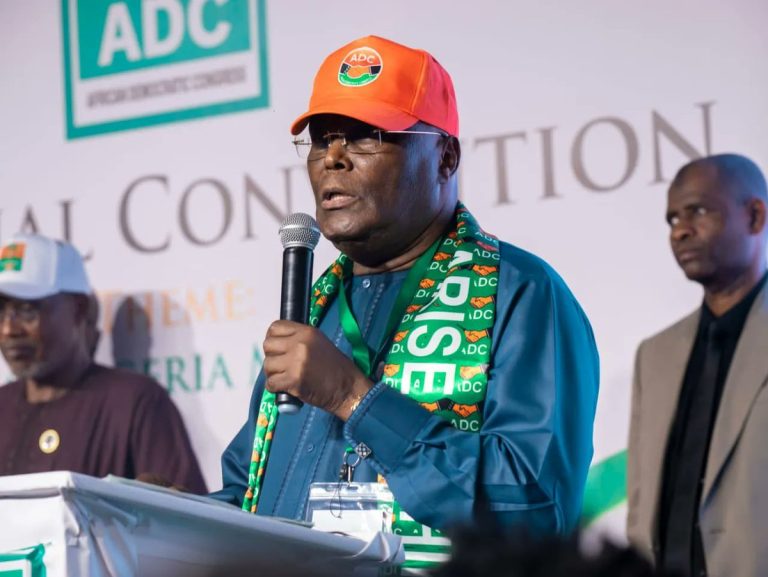
Former Vice-President and presidential candidate of the African Democratic Congress (ADC), Atiku Abubakar, has blamed the ruling All Progressives Congress (APC) for what he described as Nigeria’s economic decline, urging Nigerians to vote the party out in the 2027 general election.

Atiku spoke on Thursday, September 24, 2026, in Akure, the Ondo State capital, during the reception of former Peoples Democratic Party (PDP) governorship candidate in the state, Eyitayo Jegede, and his supporters into the ADC.

The former vice-president also called for President Bola Tinubu to leave office after the 2027 election, citing the economic hardship facing Nigerians.

Atiku said the ADC would provide an alternative government focused on addressing insecurity and economic challenges, promising to restore fuel subsidy if elected.

“We are committed to restoring subsidy; we are committed to restoring security all over this country. If we are elected, no part of this country would feel insecure anymore,” Atiku said.

He also compared Nigeria’s economic position during the period he served as vice-president between 1999 and 2007 with the country’s current position.

“You know what we did between 1999 and 2007. We took Nigeria to be the first finest economy in Africa. Today, we are number five. Who is responsible for taking us down and backward? Is it not APC?” he asked.

“This is the moment for us to vote them out. And there’s this popular saying now that Tinubu must go.”

Atiku further urged ADC supporters to mobilise voters at the grassroots and protect their votes during the 2027 elections.

He cited the August 2026 Osun State governorship election as an example, urging party members to replicate what he described as high voter turnout and efforts to safeguard ballots.

Atiku said Jegede’s defection would strengthen the ADC’s structure in Ondo State and expressed confidence that the party would expand its support base across the country.

The ADC National Chairman, David Mark, who was represented at the event by the party’s National Secretary and former Osun State governor, Rauf Aregbesola, also urged members to intensify grassroots mobilisation.

Aregbesola called on party supporters to campaign from house to house, while promising that the ADC would address the rising cost of living if elected.

“You can see things are costly; we are going to bring it down,” he said.

“It is our vote that would determine the strength of our political party. As we came out today, let’s vote ADC massively.”

Jegede, who formally defected from the PDP to the ADC alongside his supporters, said he joined the party to contribute to efforts to provide what he described as a democratic alternative ahead of the 2027 elections.

He cited unemployment, hardship and rising living costs among the challenges facing Nigerians.

“There is unemployment in Nigeria; you can all see it. There is hardship; you can all see that,” Jegede said.

“The suffering is too much. The journey has begun. We want a democratic government. We are sure of winning the Senate, House of Representatives and presidency. We are going to mobilise and unite to win come 2027.”

Oyo 2027: Inside the Alli-Adedeji Ticket and the ‘2 for 1’ Strategy By Seun Oloketuyi

0

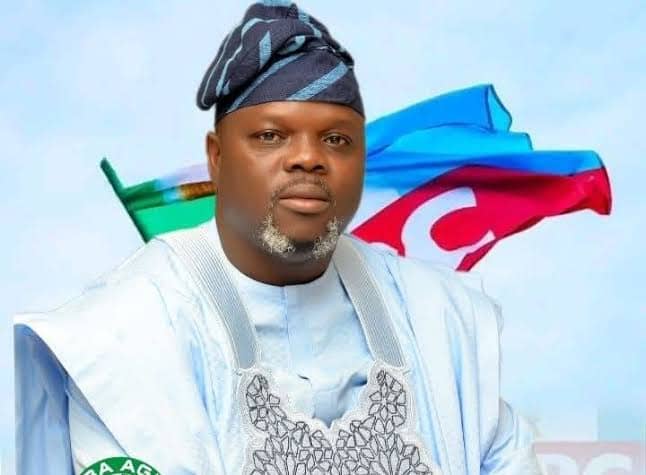
The All Progressives Congress in Oyo State has settled on a two-man ticket for the 2027 governorship election, with Senator Sharafadeen Abiodun Alli as its candidate and Hon. Adesoji Michael Adedeji as his running mate. The two were formally presented on July 2, 2026, in Ibadan, where Alli also received the party’s nomination form.
Since then, one phrase has followed the ticket: “two for the price of one.” It is a simple description, but there is some thinking behind the pairing.

Who is Adesoji Adedeji?
At 46, Adesoji Adedeji is the younger half of the ticket. He studied Economics at Obafemi Awolowo University, Ile-Ife, and is from Iwo-Ate in Ogo Oluwa Local Government Area of Oyo State, in the Ogbomoso zone.
He is also the younger brother of Dr Zacch Adedeji, Executive Chairman of the Nigeria Revenue Service.That family connection has brought some attention to his emergence, but the APC ticket also gives Adedeji an opportunity to build his own political profile.
Unlike Alli, who has spent years in politics and currently represents Oyo South in the Senate, Adedeji is relatively new to elective politics. His emergence therefore brings a younger face and a different background to the ticket.

There is also the question of geography.
Alli is from Ibadan, while Adedeji comes from Ogo Oluwa. In a state where the different zones often feature prominently in political calculations, that is part of what makes the pairing notable.

Why ‘2 for 1’?
The idea behind the phrase is fairly straightforward.
On one side is Alli, a politician with years of experience in public office. On the other is Adedeji, a younger candidate with an Economics background and a different professional experience. Then there is the geographical spread.
Ibadan has long been a major centre of political activity in Oyo State. Adedeji’s roots in the Ogbomoso axis allow the APC to present the ticket as one that extends beyond the state capital.
Whether that will translate into votes is another matter. For now, the choice gives the party a ticket that brings different parts of the state into the same political arrangement.

What Adedeji says he wants
Since emerging as Alli’s running mate, Adedeji has also spoken about some of the issues he wants the ticket to address. At a stakeholders’ meeting, he talked about improving infrastructure across Oke-Ogun, Ogbomoso, Ibarapa, Oyo and other parts of the state.
He also spoke about the need for functional hospitals in every local government and greater financial and administrative autonomy for local councils.“Every local government will receive all that is due to them,” he said.
The message is centred largely on taking development beyond the major urban areas and ensuring that local communities also benefit from government programmes.

The politics behind the pairing
Adedeji’s emergence came after Alli secured the APC governorship ticket in a primary that featured several notable aspirants, including former Deputy Governor Rauf Olaniyan, Akeem Agbaje and former Minister of Power, Chief Adebayo Adelabu. The primary has ended, but bringing the party together after a contest involving several interests is now part of the work ahead. That was evident at the unveiling, where party leaders repeatedly stressed the need for unity.

Oyo APC Chairman, Chief Moses Alake Adeyemo, called on party members to put their differences aside and work towards the 2027 election. “By the grace of God, come May 29, 2027, our governor and deputy governor will be Senator Sharafadeen Alli and Hon. Adesoji Adedeji,” he said.

Alli also called on his former opponents and their supporters to work with the party’s ticket. The task now goes beyond simply presenting the two candidates. Alli and Adedeji will have to bring their different backgrounds together and show party members and voters across the state how they intend to work as a team.

Two Men, One Ticket
So, what exactly does the APC have in Alli and Adedeji?
It has a sitting senator with years of political experience and a younger running mate from a different part of the state. It has Ibadan and Ogo Oluwa. And it has two men with different professional and political backgrounds coming together on the same ticket. That is where the “2 for 1” description comes from.
But a slogan is only one part of a political campaign. Alli and Adedeji will still have to explain what they want to do with the mandate they are seeking and how their plans would work across Oyo State. For now, the APC has made its choice.
The next stage is taking that ticket to the people.

2027: Obi disowns OK Movement campaign council, backs NDC structure

0

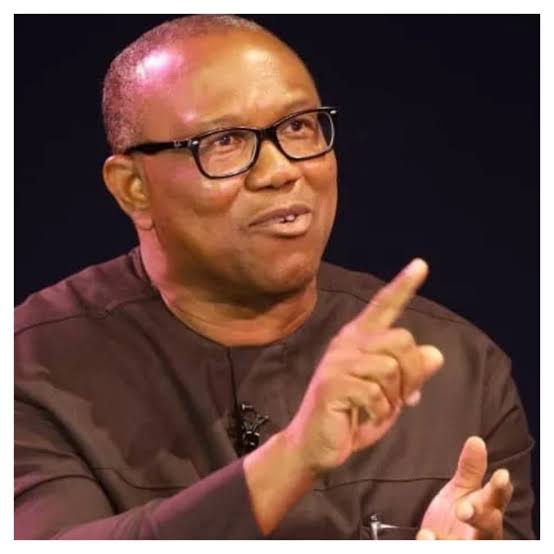
Presidential candidate of the Nigeria Democratic Congress (NDC), Peter Obi, has disowned the reported formation of a presidential campaign council by the Obedient Kwankwasiyya (OK) Movement ahead of the 2027 general elections.

Obi said he was not involved in the formation of the council and backed the position of NDC National Leader, Seriake Dickson, who had criticised the move.

Speaking during an interview with ARISE NEWS on Thursday, Obi said the NDC remained the political party to which its members belonged, while groups such as the OK Movement, Obidient and Kwankwasiyya should operate as support organisations.

“I was not aware, and that’s why I’m disapproving it here,” Obi said.

He agreed with Dickson’s position on the matter, stressing that support groups should not attempt to perform the functions of the political party.

“I’m not involved. The NDC is the political party we all belong to, and I agree entirely with the position of the leader,” Obi said.

According to him, the various support groups have an important role to play in helping the party but should operate within their defined roles.

“OK Movement, Obidient, Kwankwasiyya and other groups are supporting groups. They must play their role as supporting groups supporting the party,” he said.

“They should not play the role of the party. We found a situation where one of the supporting groups is using the nomenclature and forming a presidential campaign council. It shouldn’t be. No.”

Obi’s comments followed the reported establishment of the OK Movement Presidential Campaign Council under the leadership of John Ughulu ahead of the 2027 election.

NDC National Leader Seriake Dickson had earlier criticised the development, describing it as “nonsensical” and calling for the movement to be brought under control.

Obi maintained that the NDC should remain the central political structure for its candidates and members, while support groups should complement the party rather than create parallel structures.

His position comes as opposition parties and political groups continue discussions on possible cooperation ahead of the 2027 presidential election.

2027: INEC deploys AI to detect errors, fake results

0

The Independent National Electoral Commission (INEC) has begun deploying artificial intelligence (AI) to detect discrepancies and administrative errors in election results before their final validation.

INEC Chairman, Prof. Joash Amupitan, disclosed this yesterday at the 24th All Nigeria Editors Conference in Enugu, warning that AI-generated disinformation could also threaten public confidence in the 2027 general elections.

Amupitan said the commission had established a dedicated Artificial Intelligence Division within its Information and Communication Technology (ICT) Department and developed an AI Roadmap and Governance Framework based on human oversight, transparency, accountability, data protection and cybersecurity.

“We have commenced deploying intelligent AI tools directly within our results management process. This technology automatically scans and detects discrepancies or administrative errors in result records before final validation,” he said.

The INEC chairman stressed that AI would not replace human officials, saying every automated result check would remain subject to human auditing and legal verification.

“Technology must complement, rather than replace constitutional institutions. AI must strengthen electoral integrity, improve public service, and always remain under human control,” he said.

Amupitan said INEC was also strengthening its defences against AI-generated fake result sheets, cloned voices of electoral officials, fabricated videos and forged official documents.

He disclosed that the commission had engaged senior executives of Microsoft and Google on cybersecurity resilience, cloud infrastructure protection and threat mitigation, while discussions with the International Foundation for Electoral Systems focused on technical capacity building and responsible AI integration.

According to him, synthetic disinformation could cause Nigerians to lose confidence even in genuine election results.

“The primary danger of synthetic disinformation is not merely that it tricks citizens into believing a specific falsehood, but it causes the systemic destruction of public trust,” he said.

Amupitan listed possible threats ahead of the 2027 elections as fake videos of electoral officials announcing results, cloned audio recordings allegedly directing manipulation of voting devices, forged letters announcing election postponements and manipulated result sheets.

He said the challenge would be greater in 2027 because the elections would take place across the 36 states and the Federal Capital Territory.

“Osun was a single-state exercise, 2027 will be across 36 states and the Federal Capital Territory,” he said.

Amupitan said the Presidential and National Assembly elections would hold on January 16, 2027, while the Governorship and State Houses of Assembly elections would take place on February 6.

He urged the media to make verification central to election reporting and resist the pressure to publish unverified claims simply because they were trending online.

“The pressure on modern newsrooms to be first is immense. But in national elections, it is vastly more important to be right than to be first,” he said.

He also urged media organisations to establish fact-checking desks and adopt deepfake detection software, digital verification tools and forensic image analysis ahead of the elections.

2027: You can’t decide my Senate return, Kingibe fires back at Wike

0

Senator Ireti Kingibe, representing the Federal Capital Territory (FCT), has rejected Minister of the FCT Nyesom Wike’s claim that she will not return to the Senate in 2027, saying the decision belongs to voters.

Kingibe also said she would not be intimidated into silence by what she described as insults, threats or political pressure.

She made the remarks on Thursday, September 24, 2026, in a post on X, following Wike’s comments about her political future and her criticism of the FCT Administration’s borrowing.
Wike had on Tuesday said Kingibe would not return to the Senate in 2027, claiming that FCT residents had chosen former senator Philip Aduda for the senatorial seat.

The minister made the statement while inspecting ongoing road projects in the FCT, after Kingibe questioned the approval process for loans obtained by the FCT Administration.

Wike dismissed her concerns, saying they demonstrated a lack of understanding of how government borrowing is secured. He also said Kingibe had “nothing to offer” the people of the FCT.

Responding, Kingibe said no individual had the authority to determine who the people of the FCT would elect in 2027.

“And no individual has the authority to decide by personal declaration who the people of the FCT will elect in 2027. That decision belongs solely to the people,” she said.

The senator said her criticism of public borrowing was part of her constitutional responsibility as a legislator.

“If I raise questions about public borrowing, public funds, or the conduct of government, it is not an act of disrespect; it is part of my duty as a legislator,” she said.

Kingibe also challenged Wike to provide evidence that the Senate had approved the loans she questioned.

“As for not getting approval for the loans, I dare the FCT minister to show the people of the FCT, and all who have asked, the Votes and Proceedings of the day the approval was given,” she said.

“I cannot speak for the House of Representatives but I know that it was NEVER brought before the Senate.”

The dispute over the FCT’s borrowing began in August when Kingibe alleged that the administration had obtained loans without the required approval of the National Assembly.

Wike has maintained that government borrowing for FCT projects was incorporated into the budget and subjected to legislative approval. A House of Representatives spokesperson, Philip Agbese, also defended the minister, saying the borrowing process followed due procedure.

Kingibe, however, insisted that no public official was beyond scrutiny.

“No Minister, no matter how powerful, is above the law. No public office holder is above scrutiny,” she said.

She also criticised attempts to intimidate or silence women in public office who raise questions about government policies.

“I also want to make this very clear: attempts to intimidate, silence, or demean women in government are totally unacceptable,” Kingibe said.

The senator vowed to continue scrutinising government activities and speaking on issues affecting FCT residents despite the disagreement with Wike.

“I did not enter public service to be intimidated. I entered it to serve,” she said.

Kingibe added that the outcome of the 2027 senatorial election would ultimately be determined by the electorate.

“The will of the people of the FCT will prevail on the day of the election,” she said.

2027 Presidential Election: I’ll Vote for Someone Who Will Win — Otti

0

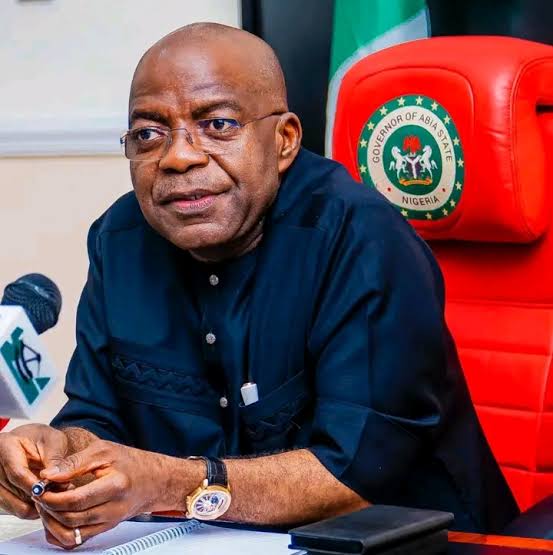
Anambra State Governor, Alex Otti, has said he will not disclose his preferred candidate for the 2027 presidential election, but would vote for a candidate capable of winning the election.

Otti stated this on Friday during an exclusive interview with Arise TV.
When asked who he would support between President Bola Tinubu and the Labour Party’s presidential candidate in the 2023 election, Peter Obi, Otti declined to reveal his choice.


“I will not speak on who I will vote for here, but it must be somebody that will win,” the governor said.

President: No 50% votes, no winner, Onaiyekan advocates

0

• Amupitan, Idris, Otu, others task media on democracy, AI threat, public trust

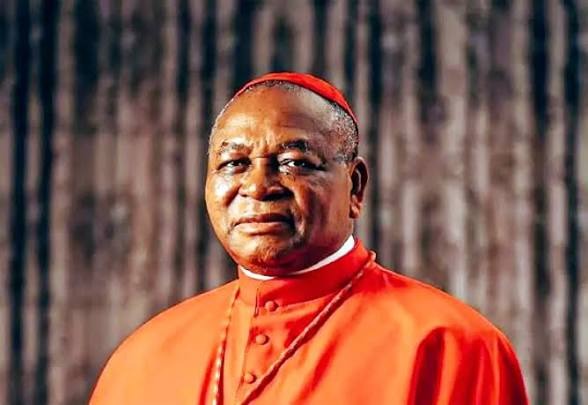
John Cardinal Onaiyekan, Archbishop Emeritus of Abuja, has advocated a major change to Nigeria’s presidential electoral system under which no candidate would be declared winner without securing at least 50 per cent of votes cast.

He also called for a more independent process for appointing the leadership of the Independent National Electoral Commission (INEC), determination of election petitions before winners are inaugurated, independent candidacy and stricter rules against legislators defecting from parties on whose platforms they were elected.

In their remarks, INEC Chairman, Prof. Joash Amupitan; Minister of Information and National Orientation, Mohammed Idris and Cross River State Governor, Senator Bassey Otu, raised concerns over technology, misinformation and declining public trust, challenging the media to defend truth and democratic institutions as Nigeria approaches the 2027 general election.

The positions emerged from separate interventions at the All Nigeria Editors Conference (ANEC) of the Nigerian Guild of Editors (NGE) in Enugu, themed, “The Ballot, the Media and the Task of Keeping Democracy Alive.”

While Onaiyekan delivered the keynote address, Amupitan and Idris addressed the conference in separate goodwill messages, with Idris represented by the Managing Director of the News Agency of Nigeria (NAN), Dr. Ali Ali. Otu’s goodwill message was delivered by his Special Adviser on Media and Publicity and Chief Press Secretary, Mr. Linus Obogo.

Onaiyekan anchored his reform proposals on the primacy of the voter, insisting that political power must ultimately reflect the will of the people.

“We must insist on the primary position of the people who cast their votes,” he said.

On the presidential threshold, he said: “For the presidential election, we should insist on at least 50% of all votes cast before declaring any victory. In the absence of 50% at the first vote, a second vote should be called among the first two highest scorers to determine the winner.

“A 50% minimum would ensure that whoever becomes our president has a traceable margin of endorsement by the Nigerian people.”

The Cardinal also called for a review of the process for appointing the INEC chairman and national commissioners, arguing that the electoral umpire should be sufficiently insulated from political authorities with interests in elections.

“We need to review the method of appointment of the INEC, the Chairman and the commissioners. They should not depend on Mr. President and the governors, who are themselves contestants in elections,” he said.

He also proposed a special election tribunal devoted exclusively to electoral disputes, with petitions concluded before successful candidates assume office.

“We must do all that is necessary to dispose of all tribunal cases before swearing in any candidate,” he said.

“A situation where a candidate has been declared a president still going to tribunal to defend his position using state means and state resources to defend himself against his opponents is not serious as far as natural justice is concerned.”

Onaiyekan also canvassed legal standing for voters, rather than candidates alone, to challenge election results where they believe their votes have not been properly accounted for.

“As of now, only candidates have a locus standi to challenge election results. But we who cast the votes and whose votes are at stake have no room to complain. This must change,” he said.

He renewed calls for independent candidacy, particularly at the grassroots, declaring: “It is about time we curb the tyranny of the political parties and their ruthless godfathers.”

The Cardinal also proposed that legislators who defect from the parties on whose platforms they were elected should return to their constituencies for fresh mandates.

“It is not fair for the constituents to watch their legislator changing the party they voted for without their consent,” he said.

Although he acknowledged that there might be limited room for fundamental changes to the electoral framework before 2027, Onaiyekan maintained that credible elections remained possible if existing rules were faithfully applied.

“For the 2027 elections, just around the corner, there is not much we can do to change the rules on ground. We therefore have to work with what we have now in terms of the legal frameworks.

“But I do believe that even with our deficient electoral laws, we can still conduct free, fair, and credible elections if the rules are followed with sincerity of purpose.”

Beyond the legal and institutional framework, Amupitan, Idris and Otu drew attention to another challenge confronting democracy — the integrity of information reaching citizens in a rapidly changing technological environment.

Amupitan warned that generative AI had made the production of convincing false audio, video and images cheaper and more difficult to detect.

“Generative AI has made it cheaper and considerably harder to detect manipulated audio, video and images,” the INEC chairman said.

“Its misuse extends beyond fabricated content to targeted messaging capable of dividing voters along conflicting narratives.

“This is no longer a distant, theoretical risk.”

Amupitan said electoral credibility could therefore no longer be assessed solely by what happened at polling units and collation centres.

“Election credibility today no longer depends only on ballot papers, BVAS machines and result sheets, but equally on the information environment in which voters form their judgments,” he said.

He warned that the challenge would intensify as the country moved closer to the next general election.

“We are preparing for the 2027 general elections, a period during which the volume, speed and, at times, the inaccuracy of information about the commission and the electoral process will increase considerably.”

Idris similarly drew attention to increasingly sophisticated AI-generated images, audio, video and documents and the danger they pose to public trust.

The minister stressed the importance of verification and professional journalism in an information environment in which fabricated material could increasingly resemble authentic content.

Otu reinforced the concerns from the perspective of the media’s democratic responsibility, describing editors as “custodians of public truth” and “indispensable guardians of democracy.”

The governor said technological advancement had brought enormous benefits to communication but had also “multiplied misinformation, sharpened division and tested the ethical foundations of journalism.”

Against that background, he described the editor as “an indispensable compass: calm amid turbulence, discerning amid confusion, and steadfast amid pressure.”

Otu said editors occupied “a sacred place in the architecture of every thriving democracy” because they stood at the intersection between information and public understanding, influencing “not merely what the nation reads, but how it reflects, reasons and responds.”

He urged the Guild to strengthen professional standards, protect press freedom, rebuild public trust, nurture younger journalists and ensure that technological innovation served truth rather than undermined it.

“Nigeria needs an editorial community that remains fearless without becoming reckless, critical without becoming cynical, and influential without surrendering its independence,” the governor said.

According to him, the media’s responsibility transcends transmitting information to helping society distinguish fact from falsehood.

“Through sound judgment, courage, balance and fidelity to fact, you illuminate the public square and help society separate substance from noise, truth from falsehood, and hope from despair.”

The interventions placed the integrity of the 2027 electoral process on interconnected fronts — the rules governing the ballot, the independence and credibility of electoral institutions and the reliability of information on which citizens make their choices.

Onaiyekan also criticised what he described as the do-or-die disposition of some politicians.

“They see elections as a struggle for power, which brings wealth and influence. In all this, the people hardly count at all. Rather, they are just pawns on the political game.”

He also questioned politicians who boast that they would “deliver” entire states to particular candidates.

“Where is the freedom of the people of the state to vote according to their individual consciences? Or does the governor intend to vote for everybody in his state?” he asked.

Onaiyekan equally called for a rethink of the heavy security deployment that traditionally accompanies Nigerian elections.

“We have to review our own habit of turning election days into a nation at war,” he said.

The Cardinal expressed concern about the growing prominence of post-election litigation, maintaining that courts and tribunals should resolve disputes rather than effectively become the arenas where electoral contests are ultimately decided.

“It should be stressed that the judiciary is not to determine elections about who wins, but rather to adjudicate disputes when they arise.

“Our experience in the recent past has almost become that we have been witnessing a situation where our elections are being determined not at the polls, but in the courts by the tribunals.”

Onaiyekan said the combination of contentious elections and an increasingly complex information environment imposed an even greater responsibility on professional journalism.

“The media has an important role in upholding democracy, to keep the people informed about the true state of the nation,” he said.

“A free press is necessary for a genuine democracy.”

On AI, the Cardinal said: “It is already working wonders in the communication space, though not without its dangers if it is allowed to spin out of human control.”

He urged journalists to preserve their professional independence and exercise their freedom responsibly, saying the objective of the democratic process must remain “to install a government that is freely chosen by the people and that works for the common good of the people.”

“The relatively good margin of freedom, which the Nigerian Media now enjoys, should be used with responsibility and professionalism, to rescue democracy in our nation, to uphold and to nurture it for a great nation under God.”

On his part, Vice President Kashim Shettima, who delivered his address virtually, said the administration of President Bola Tinubu was taking difficult but necessary decisions to address the country’s economic challenges, adding that there were encouraging signs from the reforms.

He said recent economic indicators, including the growth recorded in the second quarter of 2026 and the moderation of inflation, showed that the country was moving in the right direction, but stressed that the real test remained the impact of the reforms on ordinary Nigerians.

“These numbers give us reason for confidence, but not for complacency. President Tinubu’s objective is clear: macroeconomic stability must translate into jobs, stronger businesses, greater purchasing power and a better quality of life for Nigerians.

“That work continues, and we are confident that, with sustained reforms, the trajectory can only get better.”

The Vice President said the media had a critical responsibility in monitoring the reform process, holding the government accountable and ensuring that Nigerians were properly informed about developments in the country.

He said the theme of the conference was particularly relevant as Nigeria approaches another election cycle, stressing that the ballot could only give citizens meaningful power when voters had access to credible information.

According to him, the media interrogates power, informs citizens, shapes public debate and preserves institutional memory, while the emergence of artificial intelligence has made professional journalism even more important.

He urged editors to ensure that their reporting captured the full picture of the country, including areas where progress was being made.

“Government and the media will not always agree, nor should we. Democracy is strengthened when disagreement is informed by facts, exercised responsibly and conducted in good faith,” he said.

Addressing the gathering, Governor Peter Mbah of Enugu State said the government and the media should not necessarily be regarded as adversaries, arguing that both institutions had responsibilities to the people.

Mbah, who described the conference as an opportunity for a “temporary ceasefire” between government and the media, said the ultimate meeting point between the two should be truth.

“Today, fortunately, you are our guests. So perhaps, as I said yesterday, we can declare a temporary ceasefire,” he said.

The governor said while the government had the responsibility to be transparent and accountable, the media must establish facts, report the truth and scrutinise those in authority.

He said journalism should not be driven by the desire to prove a preconceived position, stressing that investigative journalism must involve a rigorous examination of evidence and competing claims.

“Our responsibility is to be transparent and deliver radical and positive change. Yours is to be independent: look closely, establish the facts, and tell the story as you find it. And the point at which those responsibilities meet should be the truth,” Mbah said.

He said the emergence of artificial intelligence had made it even more important for journalists to go beyond the surface and verify information before publication.

Mbah also highlighted some of the projects and programmes undertaken by his administration in Enugu, including road construction and reconstruction, education, healthcare, water supply, transportation and industrial development.

He said government officials were trustees of public resources and should not regard themselves as owners of the land, water or other resources entrusted to them.

The governor urged journalists to remain independent and rigorous in their work, saying the media’s responsibility was to establish facts and tell the story as it found it.

Earlier, the Obi of Onitsha, Igwe Nnaemeka Alfred Achebe, who chaired the conference, said democracy was not something that could be established and then left unattended.

“Democracy is not a monument we erect and then walk away from. It is more like a fire lit to keep the house warm. It must be tended, fed and protected from wind and rain, or it dies quietly in the night while everyone believes it still burns,” he said.

Achebe linked the modern ballot to the traditional African value of consultation, noting that in Igbo society, the Obi traditionally governs in council through dialogue and consultation.

He described the ballot as the modern expression of citizens’ voice, while the media provides the information citizens need to make informed choices.

“The ballot is the citizen’s voice. The media is the mirror by which that citizen sees the world clearly enough to know what to say with that voice. When the mirror is cracked, or worse, deliberately distorted, the citizen no longer votes from truth but votes from illusion.

“And a democracy built on illusion is not genuine democracy but drama. It becomes a theatre,” he said.

The monarch warned that artificial intelligence, deepfakes and the rapid spread of false information through social media and messaging platforms posed a serious challenge to journalism and democracy.

He called on editors and journalists to prioritise verification over speed, promote media literacy and demonstrate courage in confronting falsehoods.

“Being first with a lie dressed as news is a betrayal of the public trust, however unintentional,” Achebe said.

He added: “Debunking a lie that flatters your own political camp is far harder than debunking one that flatters your rival. True journalistic integrity in this era will require you to correct falsehoods regardless of who benefits from them, before, during, and yes, after elections.”

Achebe charged journalists to remain steadfast even when other institutions failed to live up to expectations.

“Even if politicians, electoral bodies, institutions and others fail, you must be the ultimate last man standing in the task of defending democracy,” he said.

In his welcome address, President of the Nigerian Guild of Editors (NGE), Eze Anaba, said the choice of the conference theme was informed by the approaching election cycle, concerns over political intolerance and hate speech, and the need to strengthen democratic institutions.

Anaba said politicians were not the only actors responsible for the quality of Nigeria’s democracy, stressing that the media also had a major role to play in ensuring credible elections and accepted outcomes.

He said the credibility of the ballot should be strong enough to reduce the need for the courts to determine the outcome of elections.

Anaba also warned that artificial intelligence, deepfakes, misinformation and disinformation had made the work of editors more difficult and more important.

He urged journalists to uphold verification, independence, accuracy, fairness, accountability and courage, saying economic pressures facing media organisations must not be allowed to destroy the independence required for effective journalism.

Sun

UNGA: Nigeria, Italy rally global support for $5bn education fund

0

• Nigeria targets 29m children, 500,000 teachers through HOPE-EDU
• Italy pledges €50m to GPE programmes as donors back education for 370m children

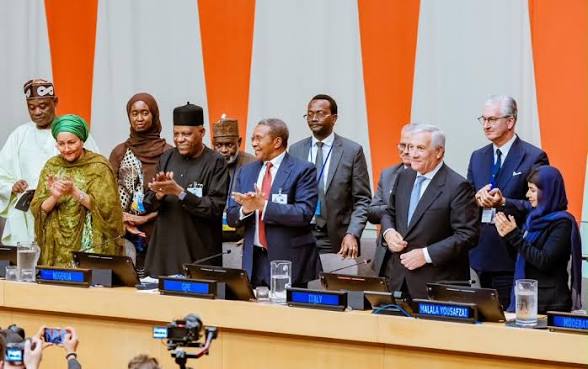
Nigeria and Italy have joined forces to drive a fresh global financing for education, rallying governments, donors and multilateral institutions behind a proposed $5 billion global partnership for education (GPE) financing campaign.
The campaign, unveiled at an event on the sideline of the ongoing 81st Session of the United Nations General Assembly (UNGA 81) in New York, is aimed at mobilising resources to expand access to quality education, strengthen educational systems and improve learning outcomes, particularly in developing countries facing widening financing gaps.

The development came as the Nigerian government sought to position education financing as a strategic investment in economic growth rather than a conventional expenditure, with Vice President Kashim Shettima declaring that education was central to Nigeria’s productivity, prosperity and long-term stability.

The event, tagged, “A New Era for Education Financing,” was co-hosted by Nigeria and Italy as part of the ‘multiply possibility’ high-level engagement.

President Bola Tinubu, in a video message to the gathering, said the GPE campaign was consistent with his administration’s education agenda, particularly its focus on expanding access and building the capacity of teachers, while improving educational outcomes.

He commended stakeholders in the GPE for their efforts to accelerate education financing globally, stressing the importance of collective action to address the resources required to transform education systems.

Representing the President at the event, Shettima said Nigeria’s participation was not simply to seek increased foreign assistance but to demonstrate the country’s own commitment to financing education.

“For Nigeria, education is not an expenditure at the margins of our development agenda. It is an investment in our economic future, national productivity and the prosperity and stability of our people,” he said.

The Vice President said since Tinubu assumed office in 2023, the administration had substantially increased resources devoted to education while implementing reforms designed to strengthen basic education financing, expand foundational learning and widen access to tertiary and technical education.

He also highlighted the Nigerian Education Loan Fund (NELFUND), saying the initiative was widening access to higher education while strengthening the connection between education, skills, employment and enterprise.

According to him, the Federal Government was also exploring lawful domestic sources beyond conventional budgetary allocations to sustain education financing.

He said Tinubu had directed that liquid funds recovered by the Economic and Financial Crimes Commission (EFCC), once legally cleared and free from litigation, should be channelled to NELFUND.

The Vice President added that the Federal Executive Council (FEC) had recently approved the consideration of unclaimed dividends and dormant funds for the same purpose, subject to relevant legal requirements.

He said the measures reflected Nigeria’s conviction that financing education required the mobilisation of “every responsible and lawful domestic source available.”

Shettima also pointed to Nigeria’s partnership with the World Bank and GPE through the HOPE-EDU programme, which he said was expected to reach approximately 29 million children and 500,000 teachers across the country.

“This is precisely why GPE matters. GPE does not replace national investment; it multiplies it,” he said.

He said the ambition of the campaign was to mobilise $5 billion for GPE and use the funding to unlock additional financing for education in partner countries.

“Domestic resources must remain the anchor, complemented by development assistance, concessional finance, philanthropy and innovative financing,” he added.

Shettima argued that Nigeria’s youthful population could become one of the country’s greatest economic assets if young people were equipped with quality education, relevant skills and meaningful opportunities.

He, therefore, called for a new approach to global education financing amid declining development assistance.

“The answer to declining global aid must, therefore, be smarter multilateralism, using scarce international resources to leverage much larger investments,” he said.

He urged participants to ensure that the initiative went beyond fundraising to become a renewed compact for human capital, bringing together national leadership, international partnerships and responsible financing.

The objective, he said, should be to ensure that every child has the opportunity to learn, thrive and contribute meaningfully to the future of their country.

He expressed Nigeria’s appreciation to the Italian government and GPE for joining the campaign, reiterating that Nigeria was participating as a co-host not merely to ask the international community to invest more in education.

“We are not participating merely to ask the international community to invest more in education but to demonstrate that we are investing in education ourselves,” he said.

The Italian government subsequently announced a €50 million contribution to GPE programmes and interventions, as governments and donors at the event made commitments towards supporting the education of at least 370 million children globally.

Italian Prime Minister Giorgia Meloni, in a video presentation, praised President Tinubu’s leadership and Nigeria’s determination to improve educational outcomes across all levels.

Meloni also called on partners in the global alliance to demonstrate greater commitment towards reversing the declining education outcomes and financing trends affecting developing countries.

United Nations Deputy Secretary-General, Amina Mohammed, similarly called for stronger action to close the education financing gap, stressing that meaningful change must begin with the choices governments make.

She urged international financial institutions to support countries demonstrating commitment to education by helping them create the fiscal space required to improve educational outcomes.

Mohammed particularly highlighted teacher capacity building, noting that teachers’ motivation and training remained critical to achieving sustainable improvements in learning.

Chairman of the GPE Board of Directors, Jakaya Kikwete, said the meeting was a reminder that education remained central to human rights, security and peace.

He said GPE’s renewed financing drive was being propelled by the decline in development assistance for education at a time when the financing gap was widening.

Kikwete said the world would increasingly depend on education systems capable of delivering tangible and desirable outcomes, making accelerated financing imperative.

Also speaking, girls’ education activist, Malala Yousafzai, stressed the importance of combining ideas and resources through global partnerships, saying collaborative efforts could deliver greater and more impactful results than isolated interventions.

She called on governments and multilateral organisations to commit greater resources to gender equality in education and address the specific challenges facing girls, particularly in developing countries.


2027: Atiku too corrupt to be Nigeria’s president -APC

0

The national leadership of the All Progressives Congress (APC) has urged Nigerians not to vote for the candidate of the African Democratic Congress (ADC), Atiku Abubakar in next year’s presidential election, warning that he is too corrupt to be allowed anywhere close to a commanding position of trust and responsibility.

The APC National Working Committee (NWC), in a statement by its National Publicity Secretary, Felix Morka, said as a former public official, Atiku’s record is an executive summary of some of Nigeria’s vilest episodes of corruption and cronyism.

The national leadership of the ruling party told Nigerians that the upcoming presidential election would present them the opportunity to deal a final blow to Atiku’s desperate quest for presidential power to save the country from his ravenous plunder.

According to the statement, “The media and public discourse have been awash with damning reports of former Vice President Atiku Abubakar’s alleged dealings in local and international bribery and corruption schemes.”

“Ghosts of his sordid past continue, restlessly, to haunt and warn that Atiku must never again be allowed anywhere close to such a commanding position of trust and responsibility as the presidency.

“As a former public official, Atiku’s record is an executive summary of some of Nigeria’s vilest episodes of corruption and cronyism that pulverized our economy and decimated public trust.

“Nigeria’s upcoming presidential election presents the electorate the opportunity to deal a final blow to Atiku’s desperate quest for presidential power, and save the country from his ravenous plunder,” the statement read.

Making further appeals, “From the Mambilla Hydroelectric Power Project and the Siemens bribery scandal to the William Jefferson case, the PTDF funds controversy, and the US Senate investigation into suspicious financial transactions, Atiku’s name is engraved ingloriously on files and dossiers of onshore and offshore financial scandals and atrocities.”

“These are not mere allegations. They are matters that are well documented in official records, tribunal proceedings, government investigations, national and foreign legislative reports, and international financial inquiries. Together, they raise legitimate questions about the fitness for probity and accountability of this serial presidential contender.

“The latest controversy surrounding the Mambilla Hydroelectric Power Project is particularly troubling. An International Chamber of Commerce Arbitration Tribunal in Paris examined a $500,000 payment made in January 2003 by Leno Adesanya, promoter of Sunrise Power, to Jennifer Douglas, Atiku’s wife at the time, through an offshore company.

“Reportedly, the payment occurred around the period when the Mambilla contract was awarded with Atiku as Vice President. Atiku declined an opportunity to explain and justify what clearly was an illegal bribe payment to his wife.

“There was the Siemens bribery scandal in which US authorities alleged that Siemens paid at least $4.5 million in bribes to secure Nigerian telecommunications contracts during the Obasanjo administration, with approximately $2.8 million reportedly passing through a bank account owned by Jennifer Douglas, Atiku’s ex-wife.

“Siemens subsequently agreed to pay approximately $1.6 billion in penalties to US and German authorities over global bribery violations. Again, Atiku’s Vice Presidential soiled fingerprints were in focus.

“And there was the William Jefferson bribery case with Atiku and his close associates falling under the scrutiny of American investigators. US court records indicated that former Congressman William Jefferson disclosed paying Atiku $100,000 to influence a proposed business partnership involving iGate and Netlink Digital Television.

“Jefferson was eventually convicted and sentenced to prison. Again, Atiku’s dark web of corrupt influence peddling and abuse of office on display,” the party’s spokesman listed.

Chronicling Atiku’s sins further, APC claimed that, “The 2010 report of the US Senate Permanent Subcommittee on Investigations that linked Atiku and his ex-wife, Jennifer Douglas, to more than $40 million in suspicious funds transferred into the United States through offshore companies and lodged in over 30 shadowy bank accounts associated with ex-wife, Jennifer Douglas and her family, again tells a sordid tale of a man that cannot be trusted with the nation’s treasury.”

“Atiku’s sudden u-turn from his 2023 policy position in favour of fuel subsidy removal to his new promise to restore the fuel subsidy regime, if elected, must be understood as his latest device to lay his hands on and squander the country’s 18-year foreign reserve of over $54 billion built up from $3 billion by President Bola Tinubu in less than four years through bold and prudent economic reforms.

“The national treasury that President Tinubu has built is what Atiku desires to scatter and plunder under the cover of his fake and unrealistic promise to restore the ruinous fuel subsidy regime.

“In his book, My Watch, President Olusegun Obasanjo characterised Atiku as possessing a propensity for corruption, a tendency towards disloyalty, poor judgment, and a readiness to sacrifice the national interest for selfish gains. In August 2026, Obasanjo described his decision to select Atiku as his running mate in 1999 as the biggest mistake of his presidency.

“The man I picked as my running mate, my number two, if I had known him as I came to know him later, I would not have picked him.” That is an open and shut reference by the former President, Atiku’s principal, to his unfitness for public office. Atiku was an accidental Vice President, and categorically unfit for the office of President of the Federal Republic of Nigeria,” the statement read.

Sun