Home Blog Page 108

UCTH Fixes Oct. 21 for Mass Burial of unclaimed Corpses

0

The University of Calabar Teaching Hospital (UCTH) has given owners of abandoned and unclaimed corpses in its mortuary three weeks to come forward and claim them.

The Chief Medical Director of the hospital, Prof. Ikpeme Ikpeme, gave the deadline in Calabar on Wednesday, during the inauguration of the task force saddled with the responsibility of evacuation of unclaimed corpses.

Represented by the Deputy Chairman of Medical Advisory Committee in charge of Clinical Service, Dr Stephen Ogbudu, Ikpeme gave Oct. 21, as deadline.

He said the notice affected corpses that had remained in the mortuary beyond the statutory 90-day period from the date of deposition.

Ikpeme noted that some of the unclaimed corpses had been there for over 10 years.

According to him, all affected corpses that remain unclaimed after the deadline will be evacuated for mass burial without further notice.

He urged depositors and relatives of the deceased to take advantage of the three-week grace period to identify and recover the corpses.

He explained that the measure was aimed at decongesting the mortuary and improving service delivery.

He apologised for any inconvenience the exercise might cause and appealed for the understanding of members of the public.

Independence: FG declares Thursday public holiday

0

The Federal Government has declared Thursday, October 1, 2026, as a public holiday to mark Nigeria’s 66th Independence Anniversary.

The Minister of Interior, Olubunmi Tunji-Ojo, announced the declaration on behalf of the Federal Government in a statement signed by the Permanent Secretary in the ministry, Magdalene Ajani, on Wednesday.

Tunji-Ojo congratulated Nigerians at home and abroad on the anniversary and urged citizens to use the occasion to demonstrate unity, patriotism, peaceful coexistence and mutual respect.

He said peace and stability were necessary conditions for national development, calling on Nigerians to emulate the nation’s founding fathers in their love for the country.

“As we celebrate 66th years of our independence, we should always remember that there is hope for our country and our diversity is our strength, and our collective determination remains the foundation upon which a stronger and more prosperous nation will be built,” he said.

The minister assured Nigerians that the Federal Government remained committed to strengthening national security, improving public safety and creating an environment where citizens could live, work and pursue their legitimate aspirations with confidence.

He also said the administration’s Renewed Hope Agenda would continue to pursue a better Nigeria for all citizens.

Tunji-Ojo urged Nigerians to use the celebration to reaffirm their commitment to national unity and peaceful coexistence.

Army deploys 3 new battalions to strengthen security in Zamfara

0

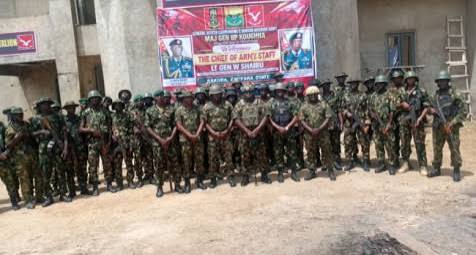
The Nigerian Army has operationalised three new Infantry Battalions in Zamfara to enhance rapid response capabilities, and secure communities from banditry and kidnappings that have ravaged parts of the State.

It was reported that the newly activated units are 12 Infantry Battalion, 23 Infantry Battalion and 28 Infantry Battalion in Bakura, Kaura Namoda, and Anka local government areas respectively.

Speaking at the event, the General Officer Commanding (GOC) 8 Division Nigerian Army and Commander, Sector II Joint Task Force Operation FANSAN YAMMA, Maj.-Gen. BP Koughna, reaffirmed the military’s commitment to sustaining aggressive operations and protecting law-abiding citizens.

Koughna who was represented by the Acting Commander, I Brigade, Col. Joseph Umaru emphasised that lasting peace requires synchronised cooperation between the military, sister security agencies, traditional institutions, and the general public.

The GOC urged residents of Zamfara to continuously support security agencies by providing timely and credible intelligence.
He appealed for support from the traditional institutions, especially emirates under who’s domains the battalions were domiciled.

The GOC charged the newly deployed troops to maintain strict discipline, professionalism, and operational vigilance in full alignment with their constitutional mandate and established rules of engagement.

Meanwhile, in separate remarks, the Emir of Bakura, Alhaji Bello Sani; the Emir of Anka, Alhaji Attahiru Ahmad; and the Emir of Kaura Namoda, retired Maj. Sanusi Asha, commended the leadership of the Nigerian Army for establishing the additional battalions.

The traditional rulers described the deployment as a crucial milestone towards restoring normalcy and safety across communities.

They assured the military of the the cooperation and backing of the traditional institution through community mobilisation and information sharing.

Atiku asks Tinubu to publish Nigeria-US health MoU

0

Queries data, pathogen-sharing provisions
Cites N36m release from N218bn 2025 health capital vote

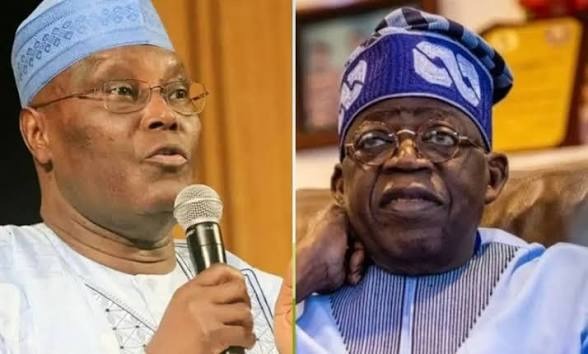
African Democratic Congress (ADC) presidential candidate Atiku Abubakar has asked President Bola Tinubu to publish the full details of Nigeria’s five-year health Memorandum of Understanding (MoU) with the United States, saying Nigerians deserve to know the commitments entered into on their behalf.

The agreement, signed on December 19, 2025, provides nearly $2 billion in United States grant funding, while Nigeria committed to increasing domestic health financing, a move projected to mobilise nearly $3 billion over five years.

In a statement by the Director of Strategic Communication of the ADC Presidential Campaign Council, Phrank Shaibu, Atiku said the terms of the agreement should be examined against Nigeria’s healthcare conditions.

The former vice president noted that the MoU covers areas including disease surveillance, health data systems and procedures relating to pathogen sample collection, transportation, testing, storage and disposal.

The Federal Ministry of Health has publicly confirmed those broad areas of cooperation.

Atiku said public disclosure had become more important following concerns raised in Ghana over a proposed health arrangement involving issues of medical records, pathogen information, funding commitments and regulation of imported medical products.

“At this point, Nigerians do not know whether the provisions Ghana rejected are in the agreement Tinubu signed. That is precisely why the government must publish the full text. Nigerians should not have to guess what has been agreed in their name,” he said.

Atiku also drew attention to Nigeria’s maternal mortality burden.

“Those commitments must be measured against the condition of healthcare at home. The latest internationally comparable estimates put Nigeria’s maternal deaths at 75,000 in 2023, the highest total in the world.

“Every one of those deaths represents a woman whose family expected her to come home. This crisis did not begin under Tinubu, but he has had more than three years to show Nigerians how his government is making childbirth safer. Where are the results?” he said.

WHO and other UN agencies estimated that Nigeria recorded about 75,000 maternal deaths in 2023, accounting for 28.7 per cent of the global total, the highest number recorded by any country.

The ADC candidate also questioned how the Federal Government intended to meet its domestic funding commitments under the agreement when approved health projects had suffered funding shortfalls.

He recalled that Coordinating Minister of Health and Social Welfare, Prof Muhammad Ali Pate, told lawmakers during the ministry’s 2026 budget defence that only N36 million had been released from the N218 billion appropriated for capital projects and programmes at the ministry’s headquarters in 2025.

“A government that cannot release funds for approved health projects must explain how it intends to honour a multibillion-dollar commitment,” Atiku said.

“A signed partnership cannot staff a maternity ward, supply a hospital or save a woman in labour. Nigerians need to see the funding and the care.”

Atiku called on the Federal Government to publish the complete MoU as well as related protocols, annexes, data-sharing arrangements, specimen-sharing agreements and financial commitments.

“Can Nigerians’ medical information or pathogen samples leave the country? Who may access them? What safeguards protect patients? Does NAFDAC retain full authority to inspect medicines and medical products?

“What exactly have the Federal Government and the states promised to spend? Tinubu should put the documents before Nigerians and answer these questions plainly,” he said.

He maintained that Nigeria should continue to engage in international health cooperation but insisted that government should be transparent about the commitments it undertakes.

“Nigeria welcomes international cooperation that saves lives, but the government must be accountable for the terms it accepts and the results it delivers. The same duty of disclosure applies to the administration’s other international commitments, including its expanding partnership with France.

“Ghana examined the proposal before it and said no. Nigeria has already signed. Tinubu must now tell Nigerians exactly what he said yes to. Nigeria’s sovereignty is not classified information,” Atiku said.

Sun

Nigeria among worst-hit countries as cholera deaths rise 30%

0

• 548 Nigerians died in 2025 –WHO •Global death toll hits 7,870, highest since 1999

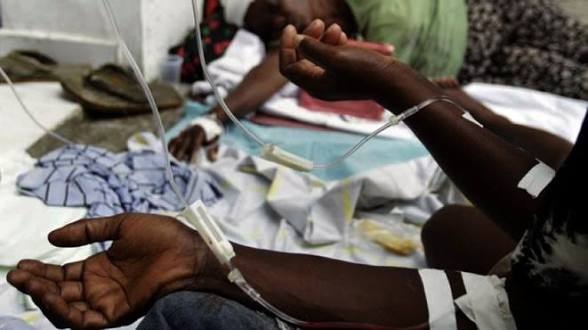
Nigeria was among the countries worst hit by cholera globally in 2025, with 548 deaths recorded from 24,354 reported cases, as worldwide deaths from the preventable disease rose by about 30 per cent, the World Health Organisation (WHO) has said.

WHO’s latest global disease surveillance report showed that 7,870 people died from cholera in 2025, the highest annual toll reported to the organisation since 1999, despite 451,499 cases being recorded across 47 countries.

Nigeria, Angola, Bangladesh, Democratic Republic of the Congo, South Sudan, Sudan and Yemen accounted for about 90 per cent of reported cholera cases and deaths worldwide.

Africa recorded the sharpest deterioration, with cases increasing by 34 per cent and deaths rising by 58 per cent compared with 2024.

WHO warned that the actual burden could be higher because many cases and deaths go unreported.

Cholera is caused by Vibrio cholerae, a bacterium spread mainly through food and water contaminated with faeces. It can cause severe diarrhoea and rapid dehydration and may kill within hours if treatment is delayed. More than one in five reported cholera deaths in 2025 occurred outside health facilities, raising concern that many patients failed to receive treatment early enough.

Among patients treated in health facilities, the global case fatality rate remained below one per cent, although 12 countries recorded fatality rates above that benchmark.

Executive Director, WHO Health Emergencies Programme, Dr Chikwe Ihekweazu, said the rising death toll was unacceptable given the availability of effective prevention and treatment measures.

“No one should be dying from cholera today when we have the tools to prevent and treat this disease,” he said.

Ihekweazu said the concentration of cases and deaths in a small number of countries showed where investments in safe water, sanitation and hygiene could have the greatest impact.

WHO also called for stronger disease surveillance, community engagement, vaccination and wider access to quality healthcare.

“There has been progress in cholera vaccination. Global production of oral cholera vaccines more than doubled from about 30 million doses annually in 2022 to approximately 80 million in 2025,” WHO said.

Sun

Local Content: NLNG CEO Pledges Stronger Partnership with Coleman, Hails World-Class Facilities

0
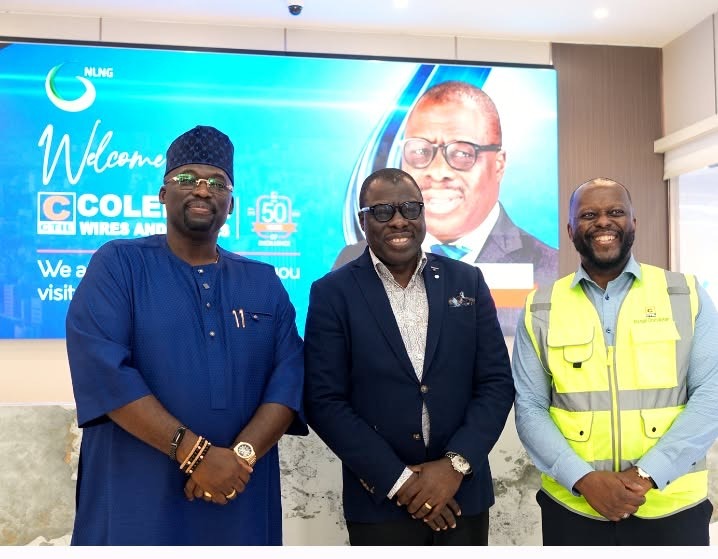
L-R Executive Director Coleman, Mr. Micheal Onafowokan, Engr. Adeleye Falade, Managing Director NLNG, Managing Director Coleman Technical Industries Limited, Mr. George Onafowokan during a tour to Coleman factories in Sagamu and Arepo Ogun State
L-R Managing Director, Coleman Technical Industries Limited and Managing Director NLNG, Mr. Engr. Adeleye Falade at a courtesy visit to Coleman factories both in Sagamu and Arepo Ogun State


The Managing Director and Chief Executive Officer of Nigeria LNG Limited (NLNG), Mr. Adeleye Falade, has pledged to strengthen the company’s partnership with Coleman Technical Industries Limited, particularly in the area of local content development.

Falade spoke during a facility tour of Coleman’s factories in Sagamu and Arepo, Ogun State, where he expressed surprise at the scale of the company’s operations, investment in machinery and equipment, and the professionalism of its workforce.

He described what he saw at the facilities as “mind-blowing,” saying the visit demonstrated what Nigerian businesses could achieve through sustained investment and commitment.

Falade said NLNG and Coleman already had a business relationship, adding that there were opportunities to expand the partnership beyond 2027.

“We’re already in partnership. That partnership will only expand. There is scope; there is opportunity,” he said.

He said NLNG was exploring opportunities to connect Nigerian manufacturers with international projects, including the construction of vessels for the company, stressing that Nigerian-made products could compete globally when quality and value were demonstrated.

“I’m not sure I was prepared for what I saw. I mean, that’s the honest truth. I’d seen a few of Coleman events, and I knew that something remarkable is going on, but I don’t think any of that prepared me for what I saw,” Falade said.

The NLNG CEO said the company would continue to support opportunities that could grow Nigerian businesses, create employment and deepen local content, noting its commitment to promoting Nigerian capacity.

He described Coleman’s facilities as a source of immense pride to Nigeria, saying the company had demonstrated world-class operational standards and local manufacturing capacity.
Falade also commended Coleman’s leadership, particularly the Managing Director and CEO, George Onafowokan, and Executive Director, Michael Onafowokan, for building a business with the characteristics of a world-class organisation.

Responding, Onafowokan described Falade’s visit as an endorsement of the longstanding relationship between NLNG and Coleman, as well as NLNG’s commitment to local content development.
He said Coleman had benefited from NLNG’s local content initiatives, including its participation in major NLNG projects such as Train 7.

Onafowokan said Coleman’s growth from a family-owned business into a multinational and generational company was driven by its belief in Nigerian talent and capacity.

He said the company’s story was ultimately “the Nigerian story” of a business built on the conviction that Nigerians could manufacture world-class products and operate world-class facilities from within the country.

Onafowokan thanked the NLNG CEO for the visit, saying the positive feedback would further encourage Coleman to invest in its people, facilities and capacity as it seeks to contribute more to Nigeria’s industrial development.

Morocco names first female prime minister

0

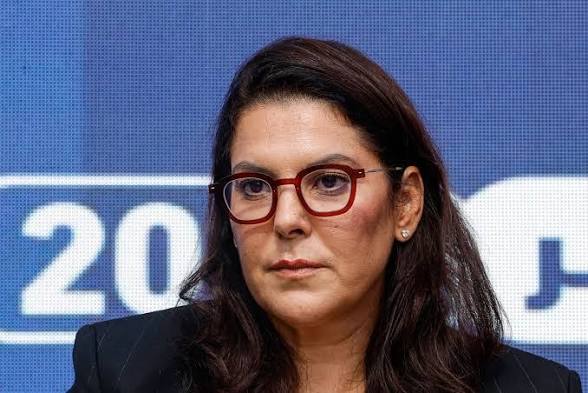
Morocco’s King Mohammed VI has appointed Fatima Ezzahra El Mansouri as the country’s first female prime minister and tasked her with forming a new government.

Her appointment followed the September 23 parliamentary election, where her party, the Authenticity and Modernity Party (PAM), emerged with the highest number of seats in the 395-member House of Representatives.

The Royal Palace announced the appointment on Tuesday, stating that the King received El Mansouri at the Royal Palace in Rabat before appointing her head of government in accordance with the country’s constitution.

PAM secured 97 seats in the election, followed by the National Rally of Independents with 66 seats and the Istiqlal Party with 65. The outcome means El Mansouri will have to negotiate with other parties to assemble a coalition government.

Morocco operates a constitutional monarchy under which the King retains substantial powers. The constitution provides that the monarch appoints the head of government from the political party that obtains the largest number of seats in the House of Representatives.

El Mansouri, 50, is a lawyer who previously served as mayor of Marrakech. She also held the position of minister responsible for national territory planning, urban planning, housing and city policy in the outgoing administration.

Her appointment makes her the first woman to head Morocco’s government and only the second woman to serve as prime minister in the Arab world, following Tunisia’s Najla Bouden.

The incoming government will be responsible for overseeing Morocco’s preparations for the 2030 FIFA World Cup, which the country will co-host with Spain and Portugal. It will also face economic and social pressures, including challenges relating to youth employment and the delivery of public services.

Sun

2027: Pantami emerges PDP candidate after court-ordered Gombe rerun

0


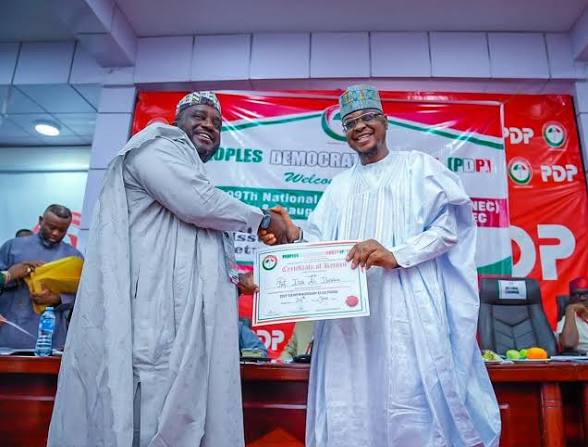
Pantami presented with certificate as Gombe PDP governorship candidate
Former Minister of Communications and Digital Economy, Isa Ali Pantami, has emerged as the Peoples Democratic Party (PDP) governorship candidate for Gombe State in the 2027 election after winning the party’s fresh primary.

Pantami secured 2,054 votes in the direct primary conducted across the 11 local government areas of the state on Tuesday.

His challengers, Khamisu Mailantarki and Aliyu Usman Garry, polled 389 and 112 votes respectively.

The results were collated and announced at the PDP state secretariat in Gombe by the Chairman of the Governorship Primary Rerun Committee, Johnbull Shekarau, who declared Pantami the winner.

The exercise was conducted following a Federal High Court judgment that nullified Pantami’s earlier emergence as the PDP candidate and directed the party to conduct a fresh governorship primary.

Justice Amina Aliyu delivered the judgment on September 24, ordering the PDP to hold another primary within 30 days.


The court held that the earlier process did not comply with the party’s internal regulations and relevant provisions of the Electoral Act 2026.

The case followed legal challenges by PDP governorship aspirants Mailantarki and Garry, who questioned the process through which Pantami emerged at the party’s May 26 primary.

Pantami had initially been declared the PDP candidate through voice affirmation during that exercise.

Following the court ruling, the PDP scheduled the fresh primary for September 29 and cleared Pantami, Mailantarki and Garry to participate.

The court also declined a request seeking Pantami’s disqualification or removal from the PDP over an allegation that he remained a card-carrying member of the All Progressives Congress (APC) at the time.

With the completion of the rerun, Pantami has now secured the PDP ticket again and is set to represent the party in the 2027 Gombe State governorship election, subject to any further legal developments.

Sun

Fuel price hike: Workers to embark on strike in October

0

Nigerian public servants under the Joint National Public Service Negotiating Council (JNPSNC) have reaffirmed plans to embark on a three-day warning strike from October 2 if the Federal Government fails to address their demands over the rising cost of petrol, wage award and negotiations for a new national minimum wage.

The council, comprising eight public sector unions, gave the Federal Government until September 30 to reduce the price of Premium Motor Spirit (PMS) to ₦500 per litre, approve a wage award and begin negotiations for a new national minimum wage of not less than ₦500,000 from 2027.

The JNPSNC said it had mobilised public servants nationwide for the warning strike if the Federal Government failed to address the issues raised in its letter to President Bola Ahmed Tinubu.

The council had, on September 21, written to Tinubu demanding a reduction in petrol prices, an immediate wage award and the commencement of negotiations for a new national minimum wage, among other measures.

In a statement issued on Tuesday by the National Secretary of the JNPSNC and General Secretary of the Nigeria Civil Service Union, Gbenga Olowoyo, the council said its September 30 deadline remained sacrosanct.

Olowoyo said the concerns of Nigerian workers could no longer be ignored, warning that failure to address the issues would lead to the commencement of the three-day warning strike from Friday, October 2.

He said, “The three critical issues requiring urgent attention are as follows: reduction of fuel price to ₦500 per litre. The Federal Government should take urgent steps to bring down the price of Premium Motor Spirit (PMS) to ₦500 per litre.

“This can be achieved through the provision of an intervention fund to address landing costs and support oil and gas operators.

“It is equally important for the Federal Government to ensure the sale of crude oil to the Dangote Refinery and operators of modular refineries at appropriate terms to facilitate increased domestic refining and help bring down the price of petroleum products.

“The current price of PMS, ranging from ₦1,450 to ₦2,000 and, in some locations outside major communities and cities, as high as ₦2,500 per litre, is unacceptable to Nigerian workers.”

“The council said the high cost of petrol had placed severe pressure on workers, their dependants and the wider population.

“The council maintains that the economic hardship occasioned by the high cost of fuel is placing the survival of Nigerian workers, their dependants and the general populace under severe pressure, making it increasingly difficult for Nigerians to live normal and dignified lives.

On the demand for a wage award, the council said, “The Federal Government should urgently approve a wage award for Nigerian workers to cushion the effects of the prevailing harsh economic conditions being experienced by workers, their dependants, and vulnerable Nigerians.”

It added that such intervention would support public servants to remain productive despite the economic pressures.

“The council believes that urgent action on this demand will further enable public servants to consolidate their loyalty, commitment and productivity within the public service ecosystem,” it said.

The workers also called on the Federal Government to urgently constitute a tripartite committee to begin negotiations for a new national minimum wage ahead of 2027.

“The Federal Government should urgently establish a tripartite committee to commence and facilitate negotiations for the new national minimum wage expected to become due in 2027,” the council said.

“The Nigerian workers’ demand for the immediate constitution of the committee is informed by the need to avoid any administrative or procedural delay that could affect the implementation of the new National Minimum Wage once it is eventually negotiated and passed into law by the National Assembly.”

The council said the Federal Government’s response before September 30 would determine whether the planned industrial action would go ahead.

“Consequently, the council states that failure by the Federal Government to take the necessary steps to address these issues on or before 30th September 2026 will leave Nigerian workers with no option but to commence a three-day warning strike, with effect from Friday, 2nd October 2026, to press home their demands,” it said.

The council further urged the President to use his Independence Day address to respond to the issues raised by the workers.

“It is imperative to state clearly that the Independence Day address of the President of the Federal Republic of Nigeria should adequately address these critical issues,” the council said.

It warned that failure to address the demands would deepen dissatisfaction among workers and other Nigerians affected by the economic situation.

“Failure to address the concerns raised, according to the Council, will attract the displeasure of Nigerian workers and their dependants, as well as other vulnerable Nigerians who continue to bear the brunt of the prevailing economic hardship,” it said.

The JNPSNC comprises the Nigerian Civil Service Union; Medical and Health Workers Union; Association of Senior Civil Servants of Nigeria; National Association of Nigerian Nurses and Midwives; Amalgamated Union of Public Corporations, Civil Service Technical and Recreational Employees; Nigeria Union of Public Service, Reportorial, Secretarial, Data Processors and Allied Workers; National Union of Printing, Publishing and Paper Products Workers; and National Union of Agriculture and Allied Employees.

Sun

Ibrahim Idris: A man with a large heart whose enduring legacy lives on

0


By Emmanuel Omale

The passing of former Kogi State Governor Ibrahim Idris, fondly known as Ibro, has stirred a flood of memories for me. Beyond the public tributes, political commentaries and reflections on his years in office, his death has brought me face to face with the memories of a man I had known long before he emerged as one of the most prominent political figures in Kogi State.

I knew Ibrahim Idris from the age of 19, long before politics thrust him into the glare of public attention. My recollections of him, therefore, extend beyond the corridors of power and the demands of governance. They are rooted in personal encounters, conversations, relationships and the values he expressed in the course of his life’s journey.

To me, Ibro was more than a former governor. He was a man whose life traversed the worlds of business, enterprise, public service and politics, leaving behind memories that cannot be adequately captured by official records alone.

From humble beginnings to a life of enterprise

Born in 1949 in Idah, in present-day Kogi State, Ibrahim Idris began his educational journey in Onitsha in 1954 before moving to Kano, where he completed his elementary education in 1963. He subsequently attended King’s Commercial College, Buguma, Rivers State, in 1964 and later studied law at the University of Abuja.

Yet, long before politics became the defining feature of his public identity, Idris had established himself as an entrepreneur with an expanding vision.

Through Ibro Trading Company, he developed business interests in construction, furniture manufacturing and hospitality. In 1970, he moved to Sokoto, where he established the Ibrahim Furniture Factory. His entrepreneurial journey later extended into the hospitality industry with the establishment of Ibro Hotel.

These were important chapters in the making of the man I knew. His experience was not shaped solely by political ambition or the privileges of public office. It was also formed through years of business, personal enterprise and interaction with people from diverse backgrounds.

Having known him from the tender age, I had the opportunity to observe aspects of his personality that might otherwise have remained hidden behind the public image of a successful businessman and, later, a governor.

What I remember most is that his story did not begin in Government House. It began with a journey of enterprise, relationships and personal ambition, long before the political stage beckoned.

The journey into Politics

When Ibrahim Idris eventually ventured into partisan politics and contested for the governorship of Kogi State, he embarked on a new and demanding chapter of his life.

He became governor in 2003 and remained in office until 2012, spending nearly nine years at the centre of the state’s political and administrative affairs.

Those years became an important part of Kogi State’s political history. As governor, he occupied a position of considerable responsibility in a state still consolidating its institutions, strengthening its administrative structures and managing the complexities of its diverse communities.

His tenure, like those of other public office holders, will continue to attract historical examination and public discussion. Yet, whenever I reflect on Ibrahim Idris, my thoughts inevitably travel beyond the official title and the responsibilities that came with it. I return to the man behind the office.

I remember a man who had risen from relatively modest beginnings, built businesses and established relationships across geographical, ethnic and religious boundaries before assuming the responsibility of leading a state.
That journey, in itself, offers a glimpse into the different dimensions of his life.

A large heart beyond politics

One of the qualities I remember most vividly about Ibro was his ability to relate with people from different backgrounds.

His years in Sokoto exposed him to a different social and cultural environment, and, from my personal recollection, he maintained relationships that extended beyond the boundaries of ethnicity, religion and geography.

He was not, in my experience, a man who confined his relationships to people who shared his background or affiliations. He related with people across different communities, and this openness remains an important part of my memories of him.

I also recall his interest in places of worship and his support for religious institutions. He supported the building of mosques and churches, while one of the projects associated with his administration was the construction of what was described as the biggest mosque in Anyigba.

To me, these gestures reflected a disposition towards community, faith and human relationships. They also reinforced my personal impression of a man who understood that people could hold different religious convictions and cultural identities while still sharing a common humanity.

His life reminds us that public office is only one aspect of a person’s identity. Beyond political power are the relationships we cultivate, the people we touch and the memories we leave in the hearts of those who encounter us. Political positions are temporary, but the human connections formed along the way can endure long after the occupant has left office.

The wisdom of forgiveness, patience and humility

Among the many memories I cherish of Ibrahim Idris, one conversation stands out with particular clarity. On one occasion, I asked him about the secret of his success. His response was simple, direct and memorable.

He simply said: Forgiveness, patience and humility are the key words for anyone to be successful in life. Don’t show what you have achieved in life, let your achievements speak for themselves.” Those words have taken on a deeper significance for me following his death.

There was something profound in the simplicity of his counsel. Forgiveness requires the strength to let go of resentment. Patience demands the discipline to endure life’s challenges without surrendering to frustration. Humility reminds us that achievements need not be advertised incessantly to be recognised.

Together, these qualities speak to a philosophy of life in which character matters as much as accomplishment, and restraint is valued above self-promotion.

His advice also offers a timeless lesson for those who aspire to success in business, leadership, public service and personal relationships. Life’s achievements may bring recognition, but the manner in which we treat others often determines the memories we leave behind.

Looking back, I find it significant that a man who had built businesses, occupied the highest political office in his state and experienced the demands of public leadership would offer such a straightforward response when asked about success. It is a statement I shall continue to remember, not merely because of who said it, but because of the enduring wisdom it contains.

A legacy beyond Government House

The life of Ibrahim Idris illustrates the possibilities and complexities of a journey through different worlds. From education to entrepreneurship, from private enterprise to public service, his experiences reflected the changing character of Nigeria’s political and business landscape.

His years as governor placed him at the heart of Kogi State’s development and political evolution. His administration will remain part of the state’s institutional history, subject to the assessments of historians, political observers and the people whose lives were affected by the decisions made during his tenure.

But history is not written exclusively through government documents, policy decisions, public projects or official ceremonies. It is also preserved through personal memories, private conversations, friendships and the impressions people carry long after a person’s public career has ended.

For those of us who knew Ibrahim Idris personally, there is another dimension to his legacy: the man we encountered away from the public stage.
That is the dimension I reflect upon today.

I remember his journey from Sokoto to business, from enterprise to public service, and from private life into the demanding arena of governance. I remember the relationships he maintained with people from different backgrounds. Above all, I remember the words he shared with me about forgiveness, patience and humility. These memories form an enduring part of the story I tell about him.

Ibrahim Idris came from a modest beginning, built a career in business, entered politics and spent nearly nine years leading Kogi State. His name is now inseparably linked with the political history of the Confluence State.

His public record will continue to be examined, debated and documented. Yet, beyond the public record lies the personal legacy of a man whose life intersected with the lives of many others in ways that official accounts may never fully capture.

For me, the enduring value of his story lies in the reminder that a person’s life is measured not only by the offices held, the businesses established or the achievements recorded, but also by the relationships nurtured, the wisdom shared and the memories preserved in the hearts of others.

Farewell, Ibro

As I bid farewell to Ibrahim Idris, I am reminded of the unpredictability of life’s journey. We arrive with little, strive to make our mark, build relationships, pursue our ambitions and, eventually, leave the stage. What remains is the legacy we have created and the memories we leave with those whose paths crossed ours.

Ibro’s journey took him from the world of business to the corridors of political power. He experienced the responsibilities of leadership and became a significant figure in the story of Kogi State. But for those of us who knew him beyond his public titles, he was also a friend, a familiar presence and a man whose personal philosophy offered lessons worth remembering.

His counsel on forgiveness, patience and humility will remain with me. In remembering him, I choose to hold on to those words and to the personal encounters that gave them meaning.

We will miss you, Ibrahim Idris, the man fondly called Ibro. Your departure has closed a chapter in our personal histories, but the memories remain.

You came, you saw and you conquered. May the Almighty God grant you eternal rest and receive you into His everlasting kingdom.

Continue to rest in the bosom of the Lord. Amen.


*Prophet Emmanuel Omale is the Founder and General Overseer of Divine Hand of God Prophetic Ministry International, Abuja.