Home Blog Page 105

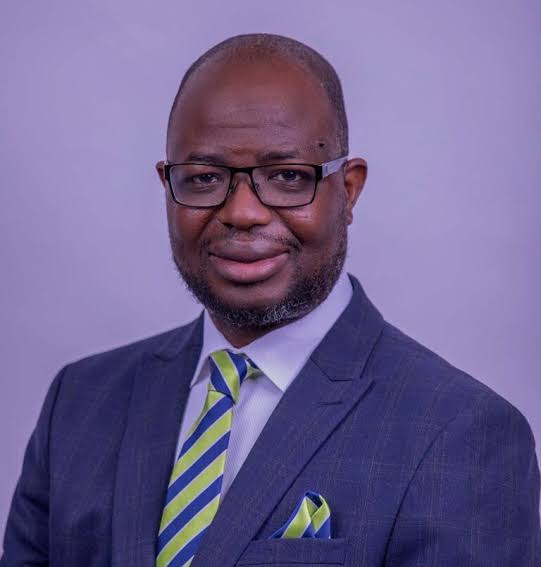
Embrace zero tolerance for corruption, Olukoyede urges Nigerians

0

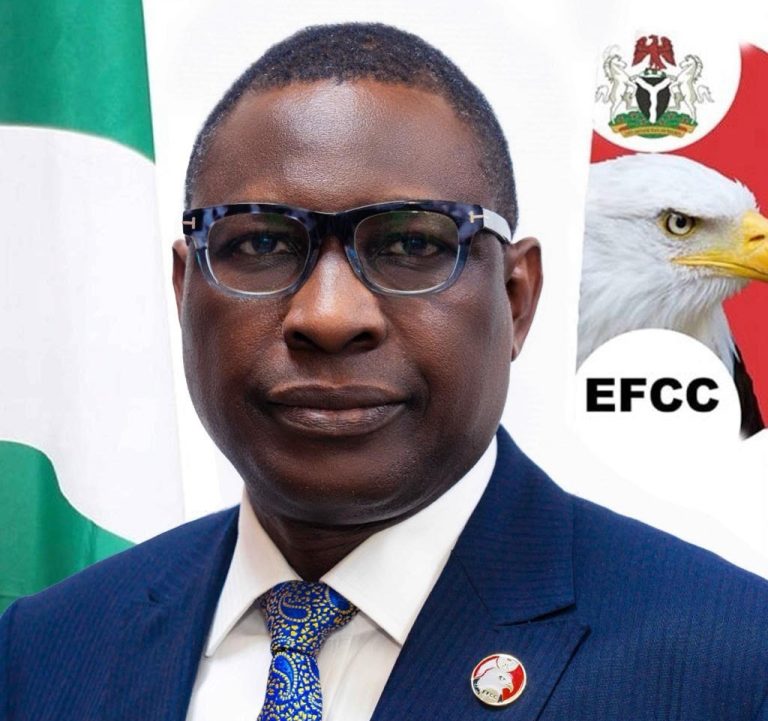
The Executive Chairman of the Economic and Financial Crimes Commission (EFCC), Ola Olukoyede, has called on Nigerians to embrace zero tolerance for corruption, saying accountable conduct is essential to sustaining the country’s ongoing reforms.

Olukoyede made the call in his Independence Day message to Nigerians on Thursday, as the country marked its 66th anniversary of independence.

He said the reforms and efforts aimed at strengthening the country’s institutions and economy were “building blocks of the greater nation we desire”, urging citizens to complement such initiatives by rejecting corrupt practices.

“At 66, Nigeria has come a long way. Independence has offered us liberty and self-determination. We are also making considerable progress in nation building.

“All these efforts are significant. They are the building blocks of the greater nation we desire. Let’s therefore couple all our reform-focused initiatives with zero tolerance for corruption,” he said.

The EFCC chairman stressed that corruption could undermine the gains of ongoing reforms if citizens and institutions failed to uphold accountability.

“We cannot be building and allow corrupt practices to vitiate our efforts.

“Progress only comes with purposeful rejection of compromises. Nigeria will surely get better!” Olukoyede said.

He expressed optimism about Nigeria’s future, while urging Nigerians to reject corruption in all its forms and support efforts aimed at strengthening the country’s development.

Nigeria @66: NANS scribe salutes Nigerians, calls for renewed patriotism, youth participation

0

The National Association of Nigerian Students (NANS), National Headquarters, has felicitated with the government and people of Nigeria, particularly the student community, on the occasion of the nation’s 66th Independence Anniversary.

In a Thursday statement signed by its Secretary General, Comrade Oladimeji Uthman, NANS said sixty-six years after independence on October 1, 1960, the anniversary should be seen not just as a commemoration but as a continuing responsibility to build a nation worthy of the sacrifices of past heroes.

The association noted that Nigeria’s journey since independence has been marked by achievements, difficult moments and renewed possibilities.
“The attainment of sovereignty was not the product of one individual, region or generation. It was shaped by the contributions, negotiations, aspirations and sacrifices of Nigerians from different backgrounds.

“This historical reality offers a profound lesson: Nigeria has always been bigger than its differences,” the student body said.

NANS explained that Nigeria’s ethnic, religious and cultural diversities should be harnessed as sources of strength and creativity.

It further said the meaning of independence must evolve from political sovereignty to human development, equal opportunity, educational advancement and youth empowerment.

For students, it said, independence must mean freedom to acquire quality education without unnecessary barriers, the opportunity to acquire relevant skills, and the assurance that background does not determine the limits of one’s future.

The statement reads, “As we celebrate Nigeria at 66, the National Association of Nigerian Students (NANS) believes that the meaning of independence must continually evolve from political sovereignty to human development, equal opportunity, educational advancement, economic inclusion, justice and the empowerment of citizens to fulfill their potential.

“For the Nigerian students, independence must mean the freedom to acquire quality education without unnecessary barriers; the freedom to dream beyond present circumstances; the opportunity to acquire relevant skills; the confidence to innovate; and the assurance that one’s background should not determine the limits of one’s future.
“Education remains one of the strongest instruments through which a nation transforms its population into productive human capital. Consequently, the Nigerian students community must remain central to every serious national conversation on development.

“A country cannot sustainably build a knowledge economy while its students are excluded from meaningful policy conversations.”

The student body called on all levels of government to place education, human capital development, research, innovation and employability at the centre of national development.

It urged government and stakeholders to strengthen the educational system, improve learning environments, support academic and non-academic staff, and expand opportunities for research and innovation, while ensuring that students have meaningful access to the tools required to compete in an increasingly knowledge-driven global economy.

NANS urged Nigerian students to move beyond being beneficiaries of development to becoming active participants in its design and execution.

“The future of Nigeria will not be built by government alone. It will be built in lecture halls and laboratories; through innovation, entrepreneurship and technology; through responsible citizenship,” it said.

The student body also called on students to reject academic dishonesty, violence, cultism, examination malpractice and intolerance.

Reaffirming its commitment to the Nigerian project, NANS said it would continue to advocate for accessible quality education, student welfare and youth inclusion.

“Our history is our foundation. Our unity is our strength. Our youth are our energy. Our students are our intellectual capital. And our future is a responsibility we must collectively build,” the statement further reads.

UNGA 81: Minister outlines pathway from humanitarian relief to shared prosperity

0

The Minister of Humanitarian Affairs and Poverty Reduction, Dr Bernard M Doro, has said Nigeria is advancing a new approach that seeks to connect humanitarian assistance directly to protection, productivity, economic inclusion and sustainable pathways out of poverty.

Doro spoke during a high-level side event at the 81st Session of the United Nations General Assembly (UNGA 81) on 24 September at the United Nations Headquarters in New York.

The event, themed “Beyond Assistance: Reducing Poverty, Advancing Protection and Building Shared Prosperity”, brought together government leaders, United Nations officials, development partners and experts to examine how humanitarian interventions can move beyond immediate relief towards lasting protection, resilience, self-reliance and shared prosperity.

This was contained in a statement by the minister’s Senior Technical Adviser on Information Systems and Data Analysis, Dr Abimbola Fasanu.

The minister said the administration of President Bola Tinubu is working to shift humanitarian and poverty reduction interventions from fragmented, emergency-driven responses towards more integrated, data-driven and household-centred systems.

“Humanitarian assistance must save lives, but our responsibility cannot end there. Vulnerable households also need credible pathways to resilience, self-reliance and shared prosperity,” the minister said.

At the centre of this approach is the minister’s flagship reform under the Renewed Hope Agenda, “One Humanitarian One Poverty Response System (OHOPRS)”, designed to strengthen coordination across humanitarian response, social protection, poverty reduction and economic inclusion.

Doro explained that OHOPRS seeks to reduce fragmentation and duplication, improve the use of data and strengthen coordination so that vulnerable households can be connected to appropriate interventions throughout their journey from vulnerability towards resilience and prosperity.

He identified a four-stage pathway underpinning the approach to include palliative, protection, productivity and prosperity, describing it as a deliberate effort to ensure that emergency assistance becomes an entry point into a wider system capable of connecting vulnerable households to social protection, skills, livelihoods, enterprise, financial inclusion and other opportunities for sustainable economic participation.

“Success in poverty reduction cannot be measured only by how many people receive assistance. We must increasingly ask what happens to the household after the intervention. Our goal is to connect relief to recovery, recovery to productivity and productivity to prosperity,” Doro said.

He also reaffirmed Nigeria’s commitment to the humanitarian-development-peace nexus, linking immediate humanitarian response with recovery, resettlement, social cohesion and longer-term development.

He stressed the importance of national ownership and domestic resource mobilisation in building sustainable systems capable of protecting vulnerable populations and responding effectively to shocks.

The event was convened by the Federal Ministry of Humanitarian Affairs and Poverty Reduction in partnership with the International Organisation for Migration (IOM), Innovations for Poverty Action (IPA), IQS, PVBLIC and Learning Economic Foundation.

A message from the United Nations Deputy Secretary-General, Amina J Mohammed, was delivered by Mr Mohamed Yahya, the Assistant Secretary-General for Humanitarian Affairs and Deputy Emergency Relief Coordinator of the United Nations Office for the Coordination of Humanitarian Affairs (OCHA).

Nigeria’s Minister of Foreign Affairs, Ambassador Bianca Odumegwu-Ojukwu, the Minister of Women Affairs, Hajiya Imaan Sulaiman-Ibrahim and Ms Ugochi Daniels, IOM’s Deputy Director General for Operations, also contributed to the high-level discussions.

Ambassador Odumegwu-Ojukwu stressed that while humanitarian assistance remains essential, assistance alone cannot provide a sustainable pathway out of poverty or address the underlying difficulties confronting vulnerable communities.

She highlighted the importance of initiatives under President Tinubu’s Renewed Hope Agenda aimed at creating more sustainable livelihoods and opportunities for vulnerable communities.

Ms Daniels underscored the importance of translating evidence into action, including ensuring that early-warning information triggers timely response and that humanitarian support connects effectively with social protection and sustainable economic opportunities.

In her contribution, Hajiya Sulaiman-Ibrahim highlighted the importance of moving from repeated and fragmented palliatives towards sustainable productivity and shared prosperity, while strengthening integrated approaches to addressing vulnerability. Post-event reporting similarly highlighted her emphasis on this transition.

The event also featured expert discussions involving Professor Sabina Alkire of the University of Oxford, representatives of IOM Nigeria and the International Rescue Committee, as well as Dr Kehinde Ajayi of the Center for Global Development, among other participants.

Doro said the discussions in New York reinforced Nigeria’s determination to build a humanitarian and poverty reduction architecture in which assistance is not the end of the journey for vulnerable households, but a bridge towards dignity, resilience and sustainable economic participation.

“We are moving from palliatives to pathways and from vulnerability to shared prosperity. The ultimate measure of our interventions must be whether vulnerable households are able to recover, become more resilient and progressively move towards self-reliance,” he said.
Tinubu: We Can’t Erase Decades of Hardship in Four Years

0

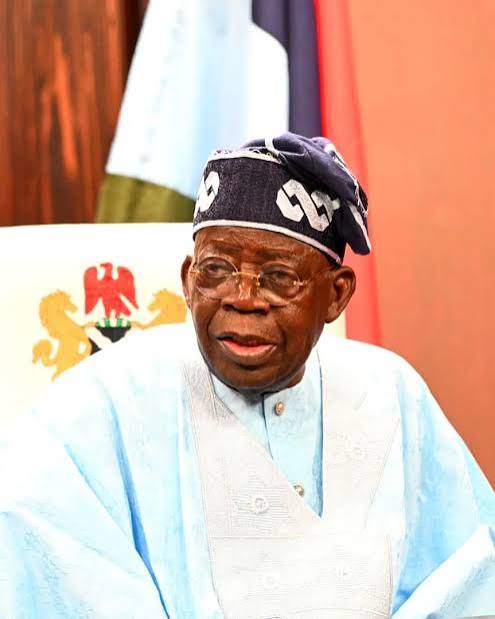
President Bola Tinubu has acknowledged the economic hardship facing millions of Nigerians, saying the challenges confronting families today are the accumulated consequences of decades of low productivity, inadequate infrastructure and limited opportunities.

Tinubu made the remarks in his Independence Day address to Nigerians.
The President said many families were still struggling to afford basic necessities, including food, school fees, medical bills and transportation to work.

He said the circumstances of these Nigerians did not begin with the economic reforms introduced by his administration over the past three years.

“Some Nigerian families still struggle today for the next meal, the next school fee, the next medical bill, or simply enough money to get to work,” Tinubu said.

According to him, the hardship is the result of decades of structural challenges and institutions that often failed to adequately support those in need.

Tinubu said his administration could not erase in four years the problems that had accumulated over generations, but would work to change the country’s trajectory.

“We can build an economy that steadily lifts people out of poverty while ensuring that those who remain vulnerable are not abandoned along the way,” he said.

The President added that the Federal Government was strengthening direct support for the poorest households and improving the National Social Register to ensure that assistance reached Nigerians who genuinely needed it.

Zimbabwe billionaire, wife die in helicopter crash

0

Zimbabwean billionaire and businessman Wicknell Chivayo and his wife, Lucy Muteke, have died in a helicopter crash that killed all six people on board.

The helicopter crashed in the Marondera rural area, about 70 kilometres east of Zimbabwe’s capital, Harare, on Wednesday evening.

Zimbabwean police said the aircraft crashed at about 5pm local time, while government officials later confirmed that there were no survivors.


Government spokesman Nick Mangwana said the helicopter was carrying “a prominent businessman, three other passengers and two pilots”.

“Current information indicates that there were no survivors in this crash,” Mangwana said.

Family spokesperson Herbert Chivayo also confirmed the deaths of the businessman and his wife to Zimbabwe’s state broadcaster, ZBC.

“We are at a loss for words after the tragic news,” he said.

According to ZBC, the couple had travelled from Gandami in Chikomba, where they were building a rural home, before the helicopter crashed at Kudenga Farm about 40 minutes after take-off.

The cause of the crash was not immediately known as authorities commenced investigations into the incident.

Chivayo was the managing director of Intratrek Zimbabwe and was widely known for his lavish lifestyle, philanthropy and high-profile relationships across Africa.

His death has drawn reactions from prominent African figures, including Kenyan President William Ruto, who described Chivayo as a “dear friend” and said he would remember him for his friendship, energy and belief in the continent’s potential.

Authorities are continuing investigations to establish what caused the crash and confirm further details about the other victims.

We didn’t betray El-Rufai, he abandoned us, say ex-allies

0

Former political associates and grassroots allies of former Kaduna State Governor Nasir El-Rufai have rejected accusations of betrayal over their decision to leave his political camp, saying it was the former governor who abandoned the political understanding that had bound them togeth

The group, under the platform of Kaduna De-Initiative, said its members supported, campaigned for, defended El-Rufai and helped build political structures across Kaduna State, but decided to move on after years of what they described as growing political disagreements, marginalisation and a breakdown of mutual trust.

The position, signed by former Deputy Speaker of the Kaduna State House of Assembly, Hon Mukthar Isa Hazo, and former Kaduna State SDP chairman and four-time House of Assembly member for Ungwan Sanusi constituency, Hon Nasiru Abdullahi Maikano, listed former Commissioner for Local Government and Chieftaincy Affairs, Hon Ja’afaru Sani, former Education Commissioner, Dr Shehu Usman Makarfi, former Commissioner for Local Government Affairs and Finance and two-time Chief of Staff to El-Rufai, Hon Bashir Saidu, and former commissioner and senator, Abdu Kwari, among those involved in the realignment.
The group said it was not “a handful of disgruntled individuals looking for political relevance”, stressing that its members had contested elections, won and lost elections, mobilised communities and built political relationships across the state’s 23 local government areas. “We did not abandon El-Rufai; rather, we believe El-Rufai abandoned the political understanding that had bound us together,” it said.

According to the former allies, the relationship began to deteriorate after El-Rufai’s re-election in 2019, when former political associates increasingly felt excluded from the centre of decision-making while members of the former governor’s family were perceived to be assuming greater influence in government affairs.

The group said its grievance was not that El-Rufai relied on family members or trusted associates, but what it described as the growing dominance of family interests and the consequent weakening of the political structure that had supported his administration.

It said the political relationship was already seriously strained by 2023 and deteriorated further after El-Rufai left office, with the decisive rupture coming during the politics surrounding the African Democratic Congress (ADC) governorship primary.

According to the group, Ja’afaru Sani was regarded within their political camp as the preferred successor and the figure around whom their structure would be organised for the 2027 governorship contest, but El-Rufai allegedly supported Isa Ashiru, his former political rival. Ashiru subsequently emerged as the ADC candidate with 86,113 votes against Sani’s 29,580 votes, while Sani rejected the result and alleged irregularities.

The former associates further alleged that El-Rufai’s support for Ashiru was connected to an effort to retain political influence over a possible Ashiru administration, including an alleged understanding that two of El-Rufai’s wives would receive appointments if the ADC won the 2027 election. They acknowledged that the allegation had not been independently established by a court or formally documented in a public agreement.
The group said its experience should also be viewed against what it described as a wider history of changing political relationships around El-Rufai. It listed former SSG Balarabe Lawal Abbas, former Chief of Staff Hadiza Bala Usman, former Chief of Staff and Budget Commissioner Moh Sani Dattijo, former Deputy Governor Hadiza Sabuwa Balarabe, former Education Commissioner Prof Adamu Danfulani, former Agriculture Commissioner Dr Daniel Manzo Maigari, former Education and Local Government Commissioner Dr Shehu Mohammed Makarfi, and former Water Resources Commissioner Arc Ibrahim Hamza.

Others listed were former Works and Budget Commissioner Thomas Gyang, former KADIRS Chairman Mukhtar Monrovia, Senator Sule Hunkuyi, Senator Sani Saleh, Hon Abbas Tajuddeen, Hon Garba Datti Babawo, Hon Ahmed Munnir, former Speaker Yusuf Ibrahim Zailani, former Speaker Aminu Shagali, current Speaker Yusuf Liman, former Political Adviser Ben Kure, former National Population Commissioner Dr Abdulmalik Durunguwa, and former Federal Character Commission Commissioner Hadiza Muazu.

The group clarified that the listed individuals did not necessarily share identical reasons for their political differences with El-Rufai and that not every case amounted to a complete or permanent political break. Rather, it said the list demonstrated that political relationships were dynamic and that former associates could not automatically be dismissed as disloyal simply because they changed political direction.

It also rejected the suggestion that El-Rufai alone created the political structures that produced electoral victories, noting that CPC and PDP politicians, grassroots organisers, former elected officials and established political networks existed in Kaduna before his emergence as the dominant political figure. It cited Bashir Saidu as one of those involved in the political structure before El-Rufai’s rise and who later served in senior positions in his administration.

The former allies argued that political loyalty could not be treated as a permanent debt, saying El-Rufai had the right to make political choices based on changing circumstances and that his former associates possessed the same right. They asked why those who had supported him should be denied the freedom to determine their own political future.

The group said its decision was not motivated by hatred or a desire for revenge, but by the need to take responsibility for its political future and that of its followers. It announced that Kaduna De-Initiative had accepted Governor Uba Sani’s reconciliation initiative and returned to the APC.

It said the realignment would involve its political structures, networks and grassroots supporters across Kaduna State, with the group pledging to focus on security, education, infrastructure, employment, economic opportunities and peaceful coexistence.

The former allies said they were not interested in turning their disagreement with El-Rufai into a personal war, but insisted that they would not apologise for exercising their political independence. “We are adults, and we have made our decision,” they said.

Independence Day: Sowore raises concerns over poverty, insecurity in Nigeria

0

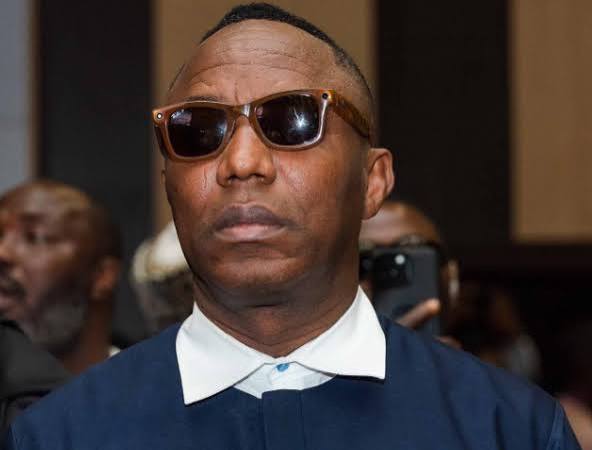
Presidential candidate of the African Action Congress, Omoyele Sowore, has said Nigerians cannot genuinely celebrate the country’s 66th Independence Anniversary amid widespread poverty, hunger, unemployment and insecurity.

Sowore argued that true independence would remain incomplete without freedom, dignity, justice and equality for citizens.

The human rights activist stated this in a post on X on Thursday to mark Nigeria’s 66th Independence Anniversary.

He said although Nigeria gained independence from British colonial rule in 1960, millions of Nigerians were yet to enjoy the fundamental benefits associated with independence.

“Today, Nigeria marks 66 years since the Union Jack was lowered and our green-white-green flag was raised. But for millions of Nigerians, the fundamental promise of independence, freedom, dignity, prosperity, justice, and equality, remains unfulfilled,” he said.

Sowore said the country could not genuinely celebrate independence while many citizens continued to grapple with poverty, hunger, unemployment, insecurity and inadequate access to basic services.

“We cannot celebrate independence while our people are trapped in poverty, hunger, unemployment, insecurity, darkness, and hopelessness,” he stated.

He also criticised the state of education, healthcare and electricity, while accusing those entrusted with public resources of misappropriation.

“We cannot call ourselves truly independent when our children are denied quality education, workers earn wages that cannot sustain their families, hospitals are collapsing, the paltry electricity that exists remains a luxury, and those entrusted with public resources loot with impunity,” he said.

Sowore maintained that Nigerians were not responsible for the challenges confronting the country, describing them as hardworking, creative and resilient.

“Nigeria’s problem is not its people. Nigerians are hardworking, creative, resilient, and extraordinarily resourceful,” he said.
He, however, accused successive governments of failing to adequately utilise the country’s human and natural resources.

“The tragedy is that successive ruling establishments have squandered our enormous human and natural wealth while demanding endless sacrifices from those who have the least,” he added.

The activist said Nigerians deserved more than ceremonial celebrations and promises, arguing that citizens should enjoy equal rights and what he described as “revolutionary justice.”

He said Nigerians deserved a country where workers could earn a living wage, access quality education and healthcare, and enjoy reliable electricity.

“They deserve a country where workers earn a living wage; where education and healthcare are accessible; where electricity works; where young people can build meaningful lives; where farmers can work without fear; and where no Nigerian is arrested, brutalized, or imprisoned simply for challenging those in power,” he stated.

Sowore said the responsibility of his generation went beyond celebrating the independence attained in 1960.

“The task before our generation is not merely to celebrate the independence handed to us in 1960. Our historic duty is to redo it,” he said.

He called for what he described as genuine independence from corruption, oppression, poverty, injustice, ethnic manipulation and religious bigotry.

“We must build a Nigeria that is genuinely independent, not just from colonial rule, but from internal colonizers enmeshed in monumental corruption, oppression, poverty, injustice, ethnic manipulation, religious bigotry, divisive politics, and the political establishment that has held our people down for decades,” he said.

Sowore concluded by calling for a Nigeria that serves all citizens rather than a privileged section of the population.

They deserve nothing – Ronaldo’s sister Elma criticises Portugal

0

Cristiano Ronaldo’s sister, Elma, has criticised Portugal following her brother’s departure from the national team camp on Wednesday.

In a post on Instagram, Elma said Portugal does not deserve to be regarded as the best in anything.

“CR7 deserved more respect. The national team deserved more structure,” she wrote last night.

“Portuguese journalism deserved more competence and less speculation.

“As for the Portuguese people, well… they don’t deserve to have the best at anything. We are envious, disdainful, and ignorant.”

Ronaldo has since returned to Madrid and will not play for Portugal in their upcoming UEFA Nations League matches against Denmark and Norway.

Sun

Mohbad: IGP approves fresh investigation into singer’s death

0

A fresh petition by the family of late singer Ilerioluwa Oladimeji Aloba, popularly known as Mohbad, seeking a comprehensive reinvestigation of the case, has been approved by the Inspector-General of Police, Olatunji Disu, and forwarded to the Lagos State Police Command for action.

The family disclosed this through its lawyer, Oladayo Ogungbe, in a statement dated September 29, 2026.

The development comes days after the Federal High Court in Abuja dismissed a separate suit seeking to compel the police to reopen investigations into the singer’s death. The family stressed that the court case was unrelated to its petition and that the police re-investigation remains ongoing.


According to Ogungbe, the Aloba family submitted its petition to the IGP on April 14, 2026, while it was received at the Force Headquarters, Abuja, on May 7.

The lawyer said the petition raised concerns over inconsistencies in the earlier investigative process and called for a comprehensive forensic reconstruction of the circumstances surrounding Mohbad’s death.

The petition was subsequently approved by the IGP and forwarded to the Lagos State Police Command for immediate action, according to the statement.

The family was later informed that the matter had been assigned to officers of the Special Enquiry Bureau for further investigation.

Ogungbe said a representative of the family had already been invited by the new investigative team and had engaged with the officers handling the case.

“The family’s representative has since been invited and has engaged with the new team of investigators assigned to the matter,” he said.

He added that the family had continued to follow up with the investigators and remained involved in the fresh investigative process.

The clarification followed the September 25 dismissal of Suit No. FHC/ABJ/CS/363/2026 by the Federal High Court in Abuja. The case was filed by the Registered Trustees of Break the Silence Foundation, which had sought an order compelling the police to conduct a fresh investigation into Mohbad’s death.

Ogungbe said the suit was neither filed by the Aloba family nor instituted with its authority or consent.

“The Aloba Family therefore does not wish the public to conflate the dismissal of that suit with the separate investigative process already commenced pursuant to the Family’s petition to the Inspector-General of Police,” the statement said.

The family maintained that the court’s decision did not bring its police petition or the resulting investigation to an end.

It also pledged to continue assisting the investigators by providing relevant documents, information, witnesses and other materials that could help establish what happened to the singer.

The lawyers urged the police to investigate with diligence, independence and professionalism, while examining all relevant persons and circumstances surrounding Mohbad’s death.

The family further said it was not seeking to prejudge the outcome of the investigation or engage in “trial by media”, but wanted a credible, comprehensive and transparent process capable of establishing the facts.

“The re-investigation is ongoing. The Aloba Family remains fully engaged. The pursuit of justice for Mohbad continues,” the statement concluded.

Mohbad died on September 12, 2023, at the age of 27, triggering widespread public concern over the circumstances surrounding his death. His remains were exhumed days later for an autopsy, but questions surrounding the case have continued to generate public interest.

Sun

Independence Day: Kalu urges Nigerians to renew commitment to unity, development

0


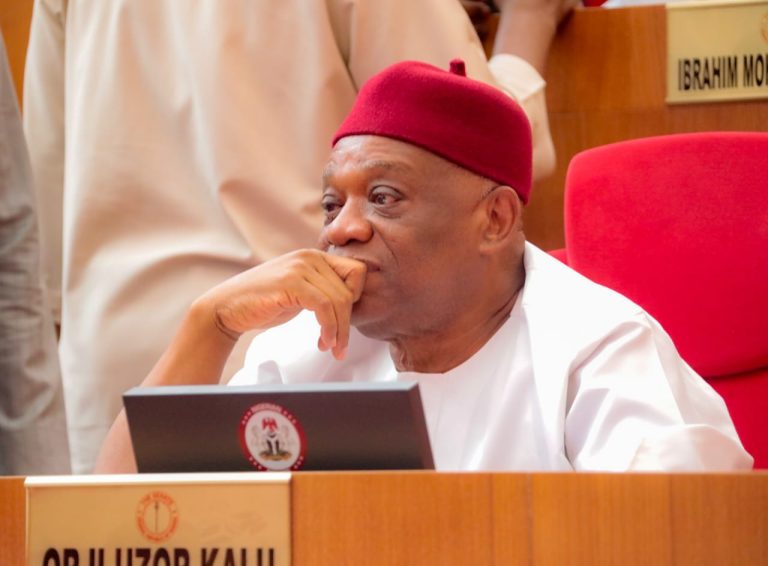
Former Abia State Governor and Senator representing Abia North Senatorial District, Orji Uzor Kalu, has called on Nigerians to renew their commitment to peace, unity, responsible citizenship and national development as the country marks its Independence Day.

Kalu, in a goodwill message to Nigerians at home and abroad to commemorate Nigeria’s independence on 1 October, said the anniversary remained an opportunity for citizens to reflect on the nation’s shared history, resilience and the enormous possibilities ahead.

The former governor acknowledged the challenges confronting the country but expressed optimism about Nigeria’s future, describing the nation as a country blessed with talented, hardworking and enterprising citizens.

According to the international business mogul, the challenges facing the country should strengthen rather than diminish the collective resolve of Nigerians to build a better nation.

He urged political leaders and citizens alike to work together towards creating a Nigeria where every citizen has the opportunity to thrive and where young Nigerians can pursue their dreams and contribute meaningfully to national development.

Kalu said the responsibility of building a stronger nation should not be left to government alone, stressing the importance of responsible citizenship and collective action.

He also urged Nigerians to remain hopeful and patriotic, noting that the country’s cultural and ethnic diversity should be viewed as a source of strength rather than division.

“Let us remain hopeful, patriotic and committed to the Nigeria of our dreams. Our diversity is our strength, and our collective determination will continue to move our nation forward,” Kalu said.

The former Chief Whip of the 9th Senate further called for renewed dedication to the ideals of peace, national unity and development, saying future generations deserved to inherit a stronger and more prosperous Nigeria.

As Nigerians mark another anniversary of independence, Kalu extended his warm greetings and heartfelt best wishes to citizens across the country and in the diaspora.

He went further to pray for the nation, saying, “God bless the Federal Republic of Nigeria.”

Sun