BY TAIWO OGUNMOLA-OMILANI
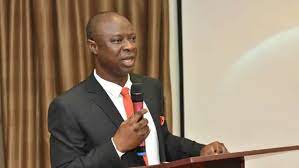
Dr. Timothy Olawale is the Director General of the Nigeria Employers’ Association (NECA).
In this interview with UPSHOT, Olawale laments how insecurity affects businesses. He also warns the Federal Government against incessant external borrowing.
What are the challenges of running businesses in Nigeria, especially at this time?
The challenges have always been there, but the issue that is very critical now is taxation.
There is a new policy called practice direction, this is a situation, where the Federal Inland Revenue Service (FIRS) asks you to pay N10million and you know that your tax liability should not be more than one million naira. What the tax practice says is that while you challenge this, you should pay 50percent in advance, then you can get a federal high court ruling which we feel is not fair. What the government does is to slam you any amount knowing that you will pay 50 percent of it. If you are unlucky, you won’t be able to sort it out. I think this is an ambush way to make businesses pay what they don’t earn.
Secondly, we discovered that many times the issue of withholding tax credit by companies is also crippling businesses now. There are huge money running into billions of naira that are in the coffers of the FIRS and the government is not living up to its expectation by making those refund.
You know the government is having problem as regard its financial obligation. To state it clearly, the government is broke, but it is a not a license for the government to be indebted to businesses. Of course, access to forex is a standing issue. CBN policy of not giving forex for any other thing except for production is affecting businesses as there are raw materials backward integration that has not been taken care of.
While businesses are investing in backward integration and investing to produce their local raw materials, there are instances which make it impossible. For instance, pharmaceutical companies cannot get their materials locally. A situation, where we use our forex to subsidize petroleum is untenable and wasting money on refineries that are not producing and importation of fuel is also not acceptable. A situation, where the government is not paying attention to the cost of governance with all the several sources we can make savings from is not tenable. I read a news, where SERAP is asking for the reduction in the allowances of legislators, how I wish this comes to pass because its contributing to cost of governance.
What will be the advantage of the reduction in allowances of legislators to the current situation of Nigeria?
We all know that there are fundamental things we can do with money in this country. As it were, we are running a budget deficit. In other words, you are owing to service all these things which are recurrent. The country is borrowing money to service people’s interest and that is why we are shouting that the government should stop making Nigeria indebted to foreign lenders.
Indebtedness is killing this country, and it is becoming unmanageable. Let us hope we are not mortgaging the future of our children and the future generation because they will not forgive us.
How have these loans impacted the infrastructural development in Nigeria?
The first observation is when you borrow, you should borrow for productive means and it is gladdening to note that there are some money that we have spent on production. Some of them are the construction of railway lines and roads.
The question again is what values are we getting for those expenditures. It has been said that we overvalue projects and if this is true, it is corruption. Secondly, most of the projects are delayed and you start to wonder what the causes are, because they borrow to service the projects. Take Lagos-Ibadan expressway for instance, that road has been under construction since the time of ex-president Olusegun Obasanjo and it was inherited by the government former president, Goodluck Jonathan. This government came into power in 2015 and borrowed heavily to continue it. This is 2021 and the end is not in sight and one will be wondering what happened to the money allocated for the project so far. The people in government are not feeling the pinch because it is the masses that are feeling the brunt.
How are the prices of commodities that have increased including cost of production affecting your members?
We have said it repeatedly that the cost of doing business in Nigeria is high and the more you do not provide enabling an environment for people to work with huge tax, the more we will continue to kill businesses. Naturally, businesses will pass the cost to the customers and once they pass it to them, it means those who will bear the brunt are the people on the streets.
This will affect cost of living because basic goods that they should enjoy would be far-fetched from them. Another one is the increase in the price of goods and services and this is driving many people out of business. I am not talking of NECA members here. There are micro-medium scale businesses whose capital for doing businesses have been eroded. The little money in their hands are no longer sufficient to stock their shops and by the time they sell the items and go back to the market, the goods they sold for small amount of money would have become more expensive and this is the reality the people are facing out there. Businesses are becoming insolvent and people are also losing their jobs and this should be a cause of concern for us all, especially now that we are talking of idle hands that are tools for banditry.
How has insecurity affected businesses in the country?
Insecurity does not affect businesses alone, but the entire Nigerians and the polity. We saw where an emir was kidnapped with his family and that is not a business person. So, if the leaders in the society can be kidnapped and a DPO with police escort could be kidnapped, who are we? So, our safety is in the hands of God. Nobody is sure of anything, people are just hoping for a better future and its getting bad everyday.
Looking at your members that are operating in the Northern part of Nigeria, how are they coping?
Most businesses in those areas have closed down. Last year, when we had briefing with newsmen, we sounded an alarm about gradual industrialization of the North. As at now, no employee wants to be posted there and even if you are posted there, it comes with a great cost because you can’t go there with your family. So, that is the experience of businesses and of course there is massive unemployment in the area.
Let’s look at the issue of oil and gas operation in Nigeria, you spoke against the government pumping money for turnaround maintenance without result, the country is now waiting for Dangote refinery, is this the way out?
As long as this will solve the problem of importation of refined products, any investment is welcomed. Towards the end of Obasanjo’s government, he took a wise decision of privatization, but some people are befitting by using it to make money to say they are turning around refineries through maintenance. He sold them and that was when Dangote came into it. It would have been a perfect solution now as it would have encouraged refurbishment and encourage those who have been licensed to go into refining product. But the late president Umar Musa Yar’Adua came in, and because of complain, the policy was reversed.
Those refineries are scrap metals now. The man has gone ahead to do massive investment in constructing his own refinery which is also positive. It’s meant to be seen if it will impact positively with regards to cost of petroleum product because as far as I know there will be monopoly because there would be no competitor. While solving a problem, you should anticipate what it will cost and start working on it.
There are others that were giving license to construct refinery what are the inhibitors or obstacle preventing them so that there will be competition and healthy rivalry with Dangote Refinery. This takes us to modular refinery, you keep bombing refineries that they claim are illegal.
These people have local technology to refine fuel and they are selling it, why don’t we license them to get optimal benefit of taxation from it and get them to buy crude through legal means and it will be good for the economy. This will solve problem of refining. There are combination of actions needed to be taken by the government in solving the bigger problems, but they are not doing this. We have advisers that are earning money and are not doing anything.