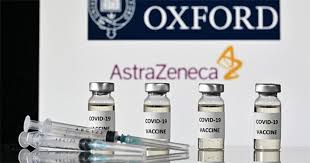
Meanwhile, the World Health Organisation will this week consult Indian health authorities to determine if expired AstraZeneca COVID-19 vaccine can be used for countries like Nigeria which benefit from its COVAX facility.
The Director, WHO, Africa, Dr. Matshidiso Moeti, stated this during an interview with select journalists on Thursday.
The idea, it was learnt, had been discussed with all ministers of health in Africa including Nigeria’s Health Minister, Dr Osagie Ehanire.
Our correspondent was informed that the move had become necessary due to the scarcity of AstraZeneca vaccine caused by the recent surge in COVID-19 infections in India which is the manufacturer of the vaccine.
Moeti said, “On Tuesday I met with ministers in the African region to discuss key issues, particularly around expiring doses, supply shortages, vaccine safety and misinformation. The WHO is awaiting additional stability data from the Serum Institute of India to determine if the shelf life of AstraZeneca COVID-19 doses can be extended from six months to nine months.
“For doses that have already expired, the WHO is looking closely at the regulatory, scientific, logistical and problematic challenges and will issue a statement next week (this week).”
The BBC had reported last week that many vaccines could be used up to 36 months after manufacture, but because COVID-19 jabs are relatively new, there is not enough data to prove their effectiveness over longer periods.
The British medium noted that the WHO had in April urged African countries not to destroy COVID-19 vaccines that might have passed their expiry date but keep hold of them and wait for further guidance.
The WHO regional director said, “We are encouraging countries to prioritise the first dose to reach more people rather than saving supplies for the second dose.
“It is imperative that the available doses are used as quickly as possible to protect people from severe disease and death due to COVID-19.”
The Executive Chairman, Bauchi State Primary Health Care Development Agency, Dr. Rilwan Mohammed, told one of our correspondents that the state government had just received additional 24,000 doses of the vaccine from the Federal Government in addition to the earlier 80,570 doses it received.
Mohammed, who is the Contact and Surveillance Sub-Committee Chairman, Bauchi State Task Force on COVID-19 said, “Bauchi State is not ready to import any COVID-19 vaccine because the Federal Government just yesterday (Saturday), released additional 24,000 doses to us. This is in addition to the 80,570 we had earlier received.”
On its part, the Sokoto State said this week it would exhaust the remaining doses of the vaccine it had.
The state Commissioner for Health, Dr Muhammad Ali Inname, told one of our correspondents that out of the 68,660 vaccines the state received, it had exhausted 34,000, on 21,000 people.
Inname stated, “Plans have been concluded to take the remaining vaccine doses to all the local government areas in the state. This will be done in the next ten days, to exhaust the remaining 34,000 doses.”
When contacted, the Special Adviser to the Osun State Governor on Public Health, Dr. ‘Siji Olamiju, stated, “Once we know Federal Government’s plan, I can assure you that the state government of Osun will be the first to kick start process of getting vaccine because Mr Governor places high premium on the healthy living of the residents.”
Also, the Akwa Ibom State commissioner of Health, Prof. Augustine Umoh, said that vaccines were only available to countries, not states.
He said “Yes, plans are still in place to bring in vaccines by the country. Vaccines are available only to countries, not states.”
The Kano State Coordinator of the Task Force on COVID-19, Dr Tijjani Husain, said that it was the sole responsibility of the Federal Government to provide COVID-19 vaccine doses to the states.
He disclosed that the Federal Government recently provided 10,000 additional doses of the vaccine to Kano State after it exhausted the 209,520 doses of the Oxford Astrazenica vaccine it received earlier.