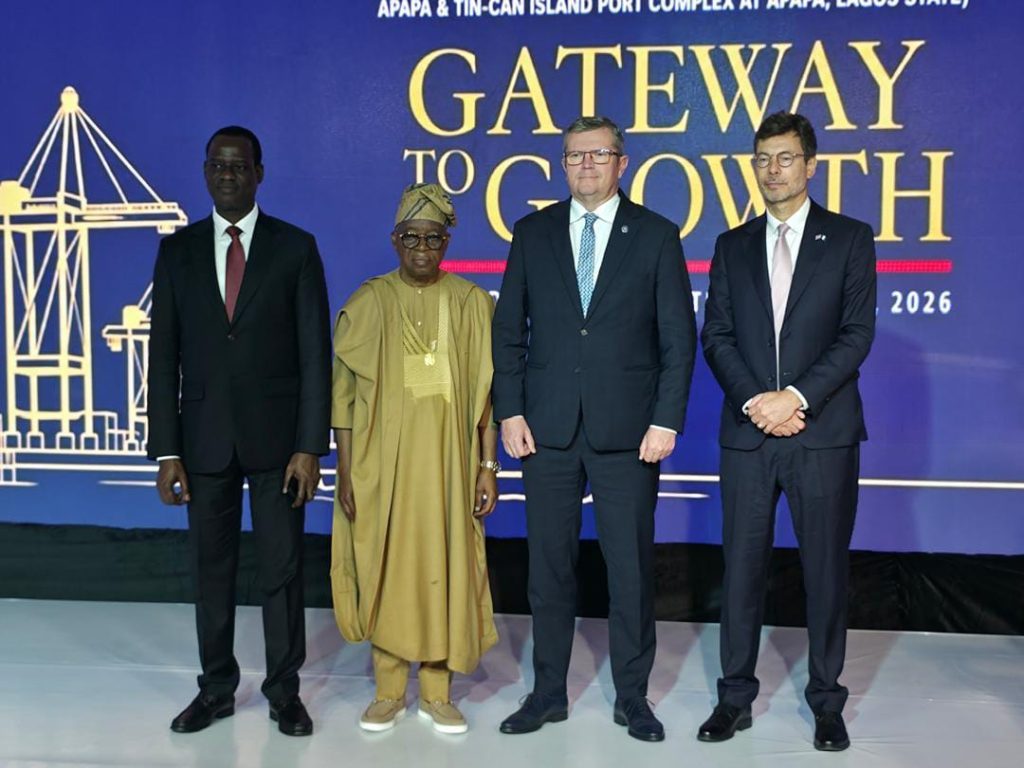
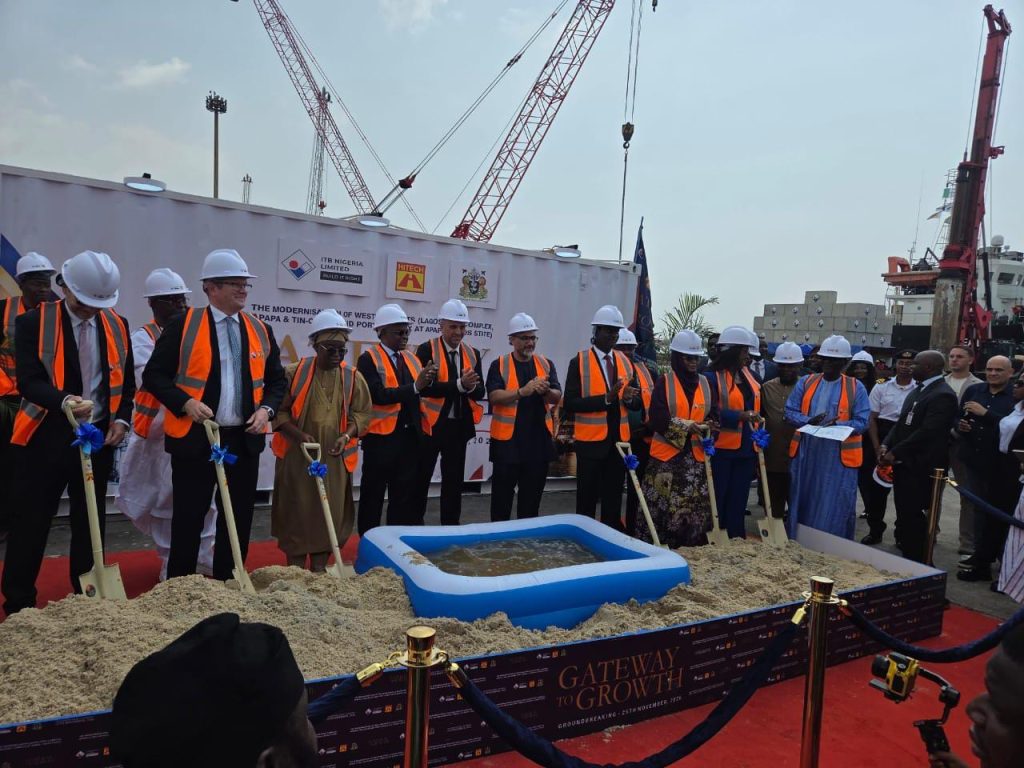
Nigeria has commenced the modernisation of the Lagos Port Complex (Apapa Quays) and Tin-Can Island Port Complex following a groundbreaking ceremony held in Lagos on Wednesday.
The project is backed by a £746 million financing package coordinated by Citi and supported by UK Export Finance (UKEF).
The rehabilitation programme is expected to modernise the two major maritime gateways, improve operational efficiency, increase cargo-handling capacity and strengthen Nigeria’s position as a regional trade and logistics hub.
The ports, which serve as Nigeria’s busiest maritime corridor, play a critical role in facilitating international trade and supporting economic activities.
Their rehabilitation is expected to reduce operational bottlenecks, improve the movement of goods and enhance trade competitiveness.
The project is being financed through UKEF’s Buyer Credit Facility and coordinated and arranged by Citi. Construction will be undertaken by Hitech Nigeria and ITB Nigeria, with specialised materials and services sourced from UK suppliers, including British Steel.
Speaking at the ceremony, the Minister of Marine and Blue Economy, Dr Adegboyega Oyetola, said the project would involve the comprehensive rehabilitation and upgrading of critical port infrastructure, including quay walls and berths, dredging and navigation channels, access facilities, cargo-handling equipment and operational systems.
He said the intervention would address longstanding physical constraints while advancing integrated, efficient and digitally enabled port operations.
Oyetola projected that the project would generate at least 20,000 direct and indirect jobs across construction, engineering, dredging, logistics, transportation, port operations and related services.
Also speaking, the Minister of Finance and Coordinating Minister of the Economy, Mr Taiwo Oyedele, described the modernisation programme as a major step towards reducing the cost of doing business, strengthening Nigeria’s competitiveness and accelerating economic growth.
He noted that improved port operations would reduce delays and associated costs for importers and exporters, enhance the competitiveness of Nigerian goods and deliver wider benefits to manufacturers, farmers and consumers.
The British Deputy High Commissioner in Lagos, Jonny Baxter, said modern ports were essential to economic growth, adding that the rehabilitation would enable Nigerian businesses to move goods more efficiently, reduce delays and connect more easily with international markets.
He said the project demonstrated the UK-Nigeria partnership through British financing, steel and Nigerian construction expertise.
Baxter disclosed that the project had £746 million in UK-backed financing, with at least £236 million in contracts for British businesses.
The Managing Director and Chief Executive Officer of Citibank Nigeria Limited, Nneka Enwereji, said the rehabilitation represented a significant infrastructure investment that would enhance trade efficiency, strengthen connectivity and promote long-term economic prosperity.
She reaffirmed Citi’s commitment to supporting Nigeria’s economic ambitions and infrastructure development through its global network, expertise and financing capabilities.
The Technical Manager of ITB, Mr Ramez Bou-Riz, said the company was committed to delivering world-class facilities, prioritising safety and quality, and equipping Nigerians with the skills and expertise required to sustain the project’s benefits.
The rehabilitation works are expected to commence following the groundbreaking ceremony, marking the next phase in the modernisation of the two ports.