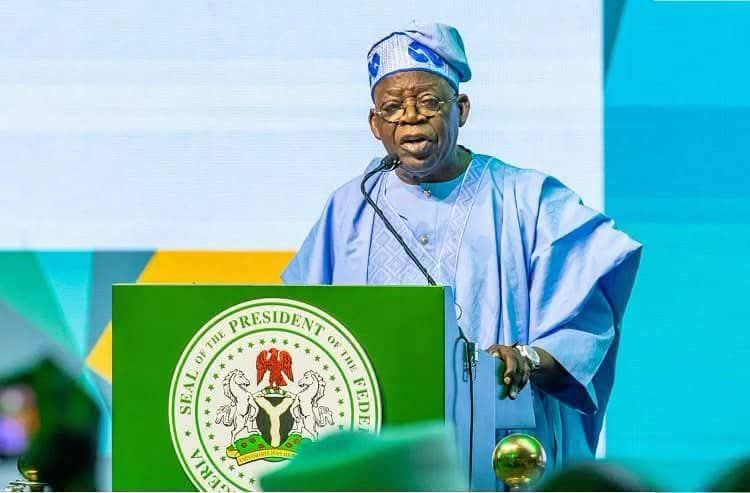
In a major push to lower daily commuting costs, President Bola Ahmed Tinubu has welcomed plans by Chinese automotive giant Yutong—the world’s largest bus manufacturer—to establish a Compressed Natural Gas (CNG) bus assembly plant in Nigeria.
The landmark agreement, scheduled to be signed in Lagos on Thursday, follows a direct invitation from President Tinubu to the global transit leader to help expand affordable mass transportation across the country.
According to a statement issued by the Special Adviser to the President on Information and Strategy, Bayo Onanuga, the partnership directly supports the National Affordable CNG Transit Programme (NACTP). Executed in collaboration with state governments, the programme targets a roughly 40 per cent reduction in transport fares on participating routes, aligning with the administration’s Renewed Hope Agenda 2.0 (2027–2031).
Initial Rollout and Local Assembly
Under the deal brokered with the Presidential Initiative on Compressed Natural Gas and Electric Vehicles (Pi-CNG & EV), Yutong will initially supply 300 CNG-powered buses, with the first batch of 100 slated to arrive in Lagos by the end of December 2026.
Subsequent units will be assembled locally through YP Automobiles Bus Assembly at the former Leyland Automotive plant in Ibadan, Oyo State. The move is expected to revive dormant industrial capacity, curb reliance on vehicle imports, and generate skilled jobs for Nigerian engineers, technicians, and factory workers. Yutong, which recorded 49,518 global bus sales in 2025, brings decades of international mass-transit manufacturing and local assembly experience to the project.
The investment coincides with a nationwide scale-up of CNG refuelling infrastructure driven by Pi-CNG & EV, the Midstream and Downstream Gas Infrastructure Fund (MDGIF), and private sector investors. Key interventions currently underway include the deployment of Mobile Refuelling Units (MRUs) and a presidential directive to establish 2,000 additional CNG refuelling units across the country to support commercial fleet expansion.
President Tinubu emphasized that easing the financial burden of daily travel on ordinary citizens remains the core objective of his administration’s gas-to-transport transition.
Noting that transportation consumes a significant share of daily earnings for millions of workers, traders, and families, the President stressed that the lower operating costs of CNG buses must directly translate into cheaper fares for commuters.
”The success of the CNG programme must ultimately be measured by how much Nigerians save on transportation,” the statement noted.
He added that the administration remains committed to collaborating with state governments and transport operators to bring affordable transit to more routes nationwide while fostering technology transfer and domestic industrial growth.