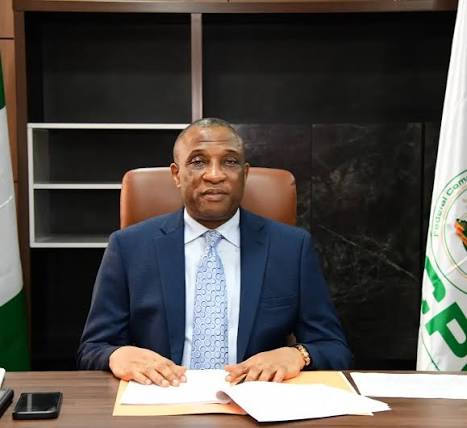
The Federal Competition and Consumer Protection Commission (FCCPC) disclosed that its South-West zonal office received over 23,000 complaints and resolved 18,500, complaints has been resolved.
The Zonal Coordinator of the Southwest zone Dr Mrs Olubunmi Otti stated this during a chat with newsmen at her office in Ikeja Lagos.
She attributed the high volume of complaints to Lagos State’s position as Nigeria’s commercial nerve centre.
In a further breakdown, she identified real estate transactions, online purchases, electricity distribution, digital money lending, aviation services and retail trade among the sectors generating significant consumer dissatisfaction.
According to Otti, complaints involving property transactions are particularly disturbing, with some developers allegedly collecting millions of naira from prospective buyers using architectural designs and three-dimensional images that bear little resemblance to the properties eventually delivered.
She said some developers also failed to complete projects within agreed timelines but subsequently demanded additional payments from buyers, even when the delays were attributable to the developers.
The situation, she added, had left some property buyers exposed to financial losses, with Nigerians living abroad particularly vulnerable because they sometimes commit funds to transactions without conducting adequate checks on developers and properties.
The complaints highlight the risks confronting investors and prospective homeowners in a property market where weak contractual accountability and misleading representations can undermine confidence in real estate transactions.
Online shopping has also become a growing source of consumer complaints, with the Commission receiving reports of customers who paid for advertised products but were subsequently blocked by vendors, making it difficult to recover their money or obtain the goods purchased.
Otti advised consumers to prioritise payment-on-delivery arrangements when shopping online and, where such options were unavailable, verify that vendors had identifiable physical addresses before transferring money.
Electricity distribution companies also featured prominently among businesses attracting complaints, particularly over arbitrary billing, failure to provide prepaid meters, non-compliance with regulatory orders, including the capping of estimated bills and net-metering provisions, as well as poor service delivery.
Other complaints involve digital money lenders and aviation service providers, reflecting the breadth of consumer protection challenges across Nigeria’s increasingly interconnected business environment.
She also noted that of particular concern to the Commission is the continued use of ‘No refund, No Return’ Notices by businesses, despite provisions of the Federal Competition and Consumer Protection Act (FCCPA) 2018 protecting consumers against defective products and misleading business practices.
Otti said consumers were entitled to seek redress where products were defective or failed to meet the specifications, quality and purposes communicated by sellers.
She explained that the law placed responsibilities on producers, manufacturers, retailers and service providers regarding defective products, adding that businesses could be required to provide refunds, replacements or compensation, depending on the circumstances.
She urged businesses to familiarise themselves with the provisions of the Act rather than impose restrictive conditions intended to deny consumers their statutory rights.
The Commission’s disclosure comes amid wider concerns about business practices, market transparency and the effectiveness of regulatory oversight in sectors where consumers often have limited bargaining power.
Otti said the FCCPC was strengthening its enforcement reach through collaboration with State Governments and other regulatory institutions, acknowledging that the scale of consumer complaints, particularly in Lagos, required a coordinated approach beyond the Commission’s physical offices.
She disclosed that the Commission had signed memoranda of understanding with several regulatory institutions, including the Lagos State Consumer Protection Agency (LASCOPA), the Standards Organisation of Nigeria (SON) and the Nigeria Data Protection Commission (NDPC), to improve enforcement and strengthen consumer protection.
As part of the collaboration, she cited a recent engagement involving LASCOPA and supermarket operators following complaints about discrepancies between prices displayed on shelves and amounts charged at checkout.
She said the Commission oftentimes remind operators that where the price displayed on a product differ from the amount demanded at the till, consumers were entitled to pay the lower displayed price.
The engagement also involved SON, which provided guidance on applicable product-labelling standards.
According to Otti, the Commission intended to address consumer violations sector by sector, stressing that partnerships with other regulatory institutions would help extend its enforcement capacity and improve compliance across different markets.
She disclosed that the FCCPC had expanded its state presence, citing the opening of offices in Ibadan and Plateau, while efforts were ongoing to establish additional offices, including in Ebonyi and Kaduna.
On electricity-related complaints, she said the Commission had recently taken its complaint-resolution activities to communities in Ikorodu, Lagos East, West abd Central following appeals from residents over persistent electricity challenges.We intend to expand our scope of stakeholders engagement to other states in Nigeria.
At our recently held stakeholders engagements at Ikorodu and Lagis Island,
the exercise brought together electricity distribution companies and relevant regulators to address complaints directly, enabling consumers to obtain interventions without relying exclusively on complaints submitted through the Commission’s online platform.
The zonal coordinator said the Commission was also intensifying consumer education through radio and television programmes, consumer clubs in schools, University Consumer Ambassadors and Collaborations with the National Youth Service Corps.
She added that educational materials had been developed in three major Nigerian Languages and Pidgin English to improve public understanding of consumer rights and responsibilities..
Fola Adeyemi
SA Media to the Executive Vice Chairman FCCPC