…Supports 80 Researchers, 75 Startups
…Says Africa Has Scaling Problem, Not Innovation
Lagos State Deputy Governor, Dr Kadri Obafemi Hamzat has disclosed that a total of N1billion in grants was earmarked by the state government to support innovators.

He said in recent times, the state government had supported 80 researchers and 75 startups, while as part of the State’s investments in digital infrastructure, about 3,000 kilometres of fibre ducts and networks had been laid, with a further $22 million invested towards developing a unified 6,000-kilometre network.
He called on governments and the private sector to bridge Africa’s technology scaling gap through sustained investment in digital infrastructure, predictable policies, local innovation and institutional reforms that translate technological breakthroughs into solutions capable of reaching millions of people.
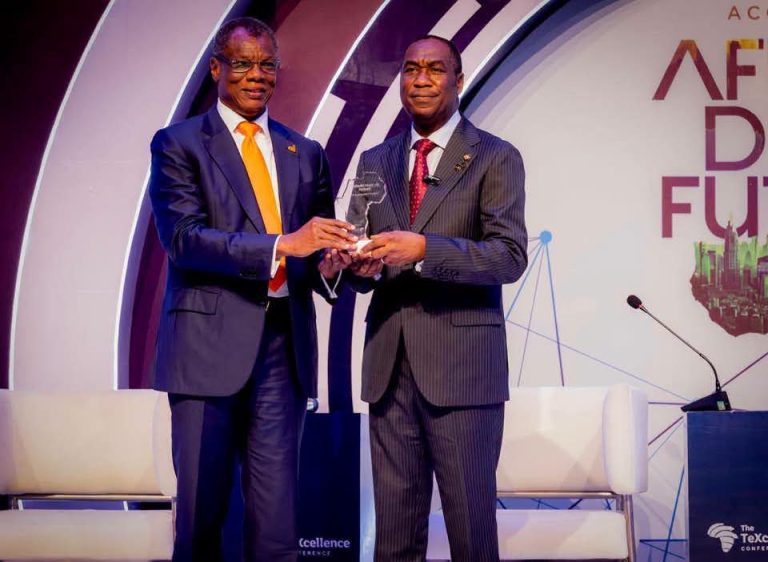
Hamzat made the call on Tuesday at the Fifth Edition of TeXcellence, with the theme, “Accelerating Africa’s Digital Future Lacks Direction and a Sustained Force,” held at Landmark Event Centre, Lagos, where he emphasised that Africa’s challenge is no longer a shortage of innovation but the inability to scale successful ideas into sustainable systems that deliver widespread economic and social benefits.
According to him, Africa must dismantle bureaucratic bottlenecks and build an enabling environment that allows technology innovations to scale into sustainable solutions capable of transforming economies and improving citizens’ lives.
“Africa does not have an innovation problem. We have a scaling problem. And scale is a systems question. The distance between a good idea and a system that works for millions is where the government lives. Across the continent, entrepreneurs, researchers and communities are already developing solutions to some of Africa’s most urgent challenges.
“The real challenge is creating the infrastructure, policies, financing and partnerships needed to move those solutions beyond isolated success stories and make them accessible to millions. The government must therefore do more than support innovation; it must build the systems that allow African ideas to grow, endure and deliver meaningful impact at scale”, said Hamzat.
In his address, themed “The Enabling State: What Government Must Become For Technology To Scale”, Hamzat said government must move beyond its traditional role as a regulator to become an enabler of innovation by providing shared digital infrastructure, ensuring predictable policies, supporting research and development, and building institutions capable of sustaining technological progress beyond individual administrations.
He added that more than 6.4 million residents of the state had been enrolled in the state’s resident identity system, while digital reforms had streamlined public services, including physical planning permits and mortgage consent processing.
Giving details, Hamzat disclosed that the Lagos State Science Research and Innovation Council (LASRIC) had “supported 80 researchers and more than 75 startups, with approximately ₦1 billion available in grants for innovators, while the state is considering an innovation law that would commit a fixed proportion of its annual budget to research, development and risk capital to ensure sustained support for local technology enterprises.”
The Deputy Governor further called for stronger collaboration between government and industry, proposing measurable commitments on both sides to accelerate digital transformation.
In his welcome address, the Group Managing Director/Chief Executive Officer of CWG Plc, Adewale Adeyipo, described TeXcellence as a platform that has evolved over five years into a strategic forum for shaping Africa’s digital future.
He urged African governments, technology companies and other stakeholders to prioritise digital sovereignty, local Artificial Intelligence infrastructure and sustainable deployment of technology to secure the continent’s future.
Adeyipo challenged stakeholders to move beyond experimenting with technology to building and deploying sustainable solutions that will strengthen Africa’s ownership of its technological destiny, stressing that the continent must take deliberate steps to own and shape its digital future rather than depend solely on innovations and infrastructure developed elsewhere.
According to him, Africa must deliberately invest in local computing infrastructure, expand access to affordable digital devices, improve digital literacy and ensure that AI solutions move beyond pilot stages into reliable, commercially viable systems. He emphasised that the continent’s digital transformation must be driven by clear direction, sustained investment and measurable outcomes, rather than speed alone.