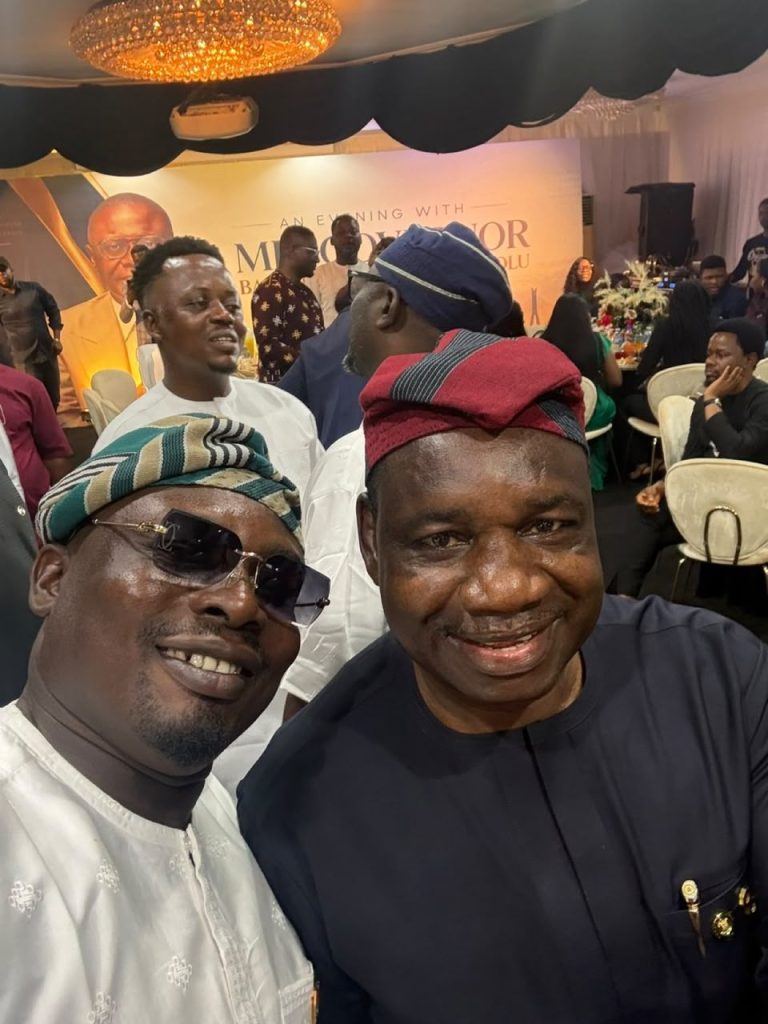
By Alexander Omughele
In public service, responsiveness is often discussed as an ideal, but it becomes meaningful only when citizens experience it firsthand.
My recent experience with the Lagos State Commissioner for Information and Strategy, Mr. Gbenga Omotoso, has given me a reason to acknowledge and publicly appreciate a quality that is sometimes taken for granted in public office, which is the willingness to listen.
My concern was about the deplorable condition of Moshalashi Road in Egan, within Alimosho Local Government Area of Lagos State. For residents of the community, the condition of the road is not an abstract policy issue. It is a daily reality that affects movement, businesses, accessibility and the general quality of life.
Like any concerned citizen, I decided to raise the matter with the appropriate authorities.
That was how I reached out to Commissioner Omotoso @gbenga_omo
What happened afterwards was, quite frankly, encouraging.
At a time when citizens can sometimes find it difficult to get the attention of government officials, Mr @gbenga_omo made himself accessible. On every occasion I called him to seek updates concerning the complaint, he picked up his phone and listened.
He never complained about the frequency of my calls. He never made me feel like I was imposing on him. Instead, he continued to engage, provide updates and demonstrate an understanding that behind every complaint is a citizen hoping that government will listen.
That, to me, is public service at its most basic and most important level.
A government does not only serve through policies, budgets and infrastructure projects. It also serves through the attitude of the people entrusted with public responsibilities.
And sometimes, the difference between a citizen feeling abandoned and feeling heard is simply whether someone in government is willing to answer the phone.
The intervention has also progressed beyond conversation. The Special Adviser on Infrastructure has indicated that a team will be sent to our community to assess the condition of Moshalashi Road and evaluate the situation firsthand.
This is an important development.
Of course, an assessment is not the same thing as rehabilitation, and residents will ultimately want to see tangible action on the road. But government intervention must begin somewhere, and allowing the relevant authorities to inspect the situation on ground is an important first step.
This is why I believe Mr. Omotoso deserves to be commended.
We have become accustomed to publicly highlighting the failures of public officials and there is certainly a place for holding government accountable. But accountability should not mean criticism alone. When a public official demonstrates responsiveness, accessibility and a willingness to facilitate action, citizens should equally have the courage to say so.
My appreciation of Commissioner Omotoso is therefore not based on political affiliation or partisan loyalty. It is based on a simple personal experience: I raised a concern, and a government official listened.
My friend @Riddwane told me about Mr Omotoso when the issue of the BRT incident happened that he is a very good man.
He did not promise miracles. He did not dismiss the complaint. He remained available and helped ensure that the matter received attention from the appropriate quarters.
That may appear ordinary, but in public administration, the ordinary can be extraordinary when citizens have become accustomed to being ignored.
There is an important lesson here for public officials everywhere.
Citizens do not always expect every problem to be solved overnight. What they often want is to know that somebody is listening; that their complaints have not disappeared into the bureaucracy; and that there is a human being on the other side of government who cares enough to respond.
Alexander Omughele wrote via his X, formerly Twitter handle