By Taiwo Ogunmola-Omilani
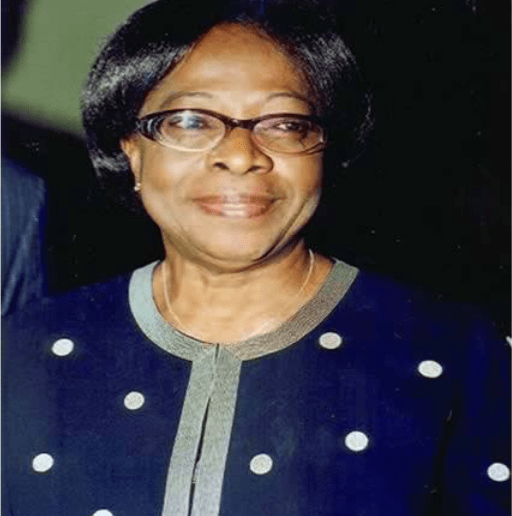
When Professor Jadesola Akande accepted the offer to become the second Vice-Chancellor of Lagos State University (LASU), she knew she was taking on a responsibility that would test more than her academic credentials.
The mantle, she later recalled, looked very heavy.
But what followed was a tenure in which the pursuit of fairness, academic discipline and institutional order would place her at the centre of tensions with staff unions and students.
Her experience offers a revealing glimpse into the challenges of leadership at a university where the Vice-Chancellor must balance academic standards, staff interests and student expectations.
Akande, widely regarded as Nigeria’s first female professor of Law, had already established herself as a formidable academic before taking over the leadership of LASU in 1989.
With donated books, voluntary lectures and a small team of academics, she helped lay the foundation for a faculty that would become prominent nationally and internationally.
Her approach was uncompromising. She enforced strict academic and disciplinary standards, including a formal dress code, zero tolerance for cultism and unrest, and merit-based admission.
That same philosophy would later shape her administration as Vice-Chancellor.
A Leadership Style That Challenged the Status Quo
Akande’s tenure was marked by efforts to maintain academic standards and enforce discipline, but her approach did not sit comfortably with everyone.
Reflecting on the challenges she faced, she identified two major sources of resistance: the Academic Staff Union of Universities, LASU Chapter, and some students who were unhappy with her insistence on discipline.
“My problem with the Academic Staff Union of Universities (ASUU), LASU Chapter, was that I did not allow any type of behaviour that was not fair to others.”
“People resisted the changes I had set in motion. I realised that when one assumes a position of authority and trouble starts, one is alone.”
‘I Was on My Own’
The tensions reached a point where Akande found herself confronting student unrest in circumstances she described as deeply unsettling.
“When the students started their riot, I was on my own, except my driver and personal assistant, who stood by me.”
In another incident, she recalled being trapped in her office by students carrying guns.
“There was a time I was locked up in my office by gun-toting students. I could not step out of the office because they were out there in huge number waiting to pounce on me.”
She said she remained in the office with her personal assistant until about 2 a.m., when a police officer, Mrs Gladys Dipeolu, helped secure her release through another avenue.
Akande said she simply smiled and reserved her comments.
Her response reflected a broader understanding of leadership: that authority often requires standing firm even when decisions are unpopular.
For her, the responsibility of a Vice-Chancellor was not merely to maintain peace, but to ensure that the university remained faithful to its academic mission.
That conviction had guided her from the Faculty of Law, where she had insisted on standards, to the Vice-Chancellorship, where she faced resistance to those same principles.
Leaving When the Ovation Was Loudest
Despite the challenges, Akande completed her tenure at LASU.
She recalled that Governor Michael Otedola wanted her to serve another term, but she declined, insisting that others should be given an opportunity.“Apart from this, one should leave when the ovation is loudest.”
She left office on March 31, 1993, after serving one term.

At her send-off party, she said she had no regrets because she had achieved what she set out to accomplish.
“The highest point of my profession was when I became a professor. Being a Vice-Chancellor was the icing on the cake.”
Her story remains one of the defining accounts of the early years of LASU leadership: a period when building a university meant not only establishing faculties and academic programmes, but also confronting the difficult realities of discipline, institutional reform and the limits of authority.
Read more in Chapter Two of Fortitude: An Insider’s Account of the Emergence of Professor Ibiyemi Olatunji-Bello as LASU’s Ninth Vice-Chancellor and the Events that Shaped her Administration.