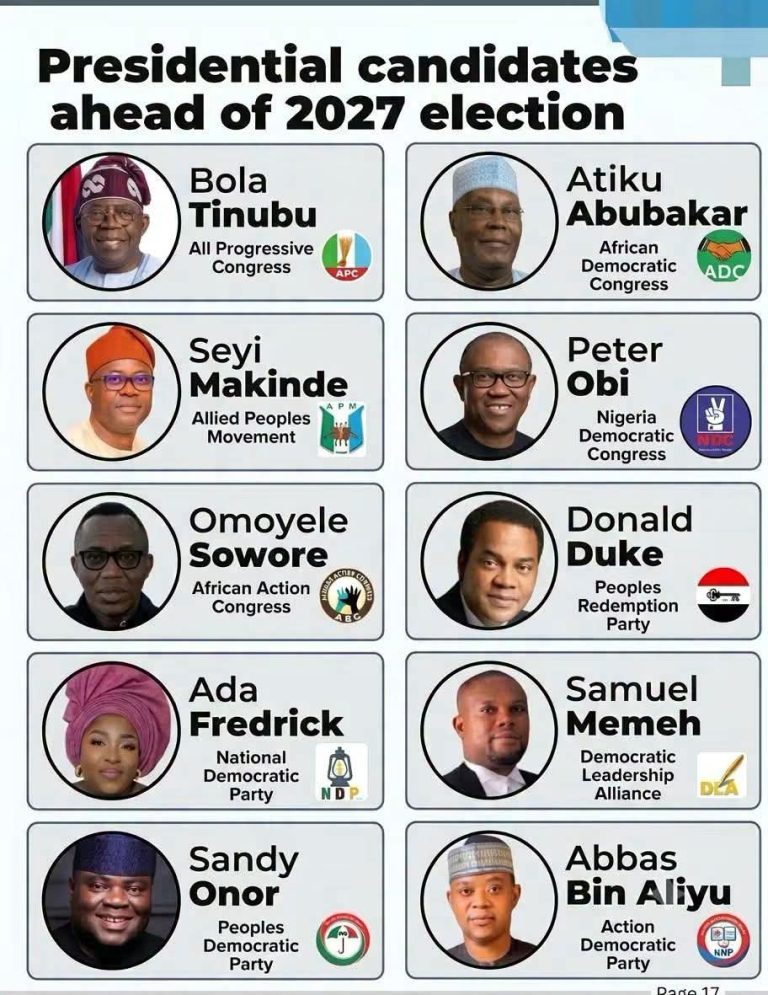
As Nigerians look forward to the 2027 general elections, voters across the country must carefully choose the leaders they want to entrust with the affairs of the nation. The presidential election, in particular, will present Nigerians with several political choices, making it important for citizens to make informed decisions without fear, favour, ethnic sentiment or political pressure.
The political landscape is already beginning to take shape, with several prominent politicians and political parties positioning themselves for the presidential contest. Among those mentioned in connection with the race are President Bola Ahmed Tinubu of the All Progressives Congress (APC), former Vice President Atiku Abubakar of the African Democratic Congress (ADC), former Anambra State Governor Peter Obi, Oyo State Governor Seyi Makinde, Omoyele Sowore of the African Action Congress (AAC), former Cross River State Governor Donald Duke and other contenders.
The lessons from recent elections are a reminder that the power to determine Nigeria’s future ultimately rests with the people.
Nigerians will have the opportunity to decide whether to retain the incumbent or support another candidate whose plans, policies and leadership capacity they believe can move the country forward.
Vote for Competence, Not Popularity
The 2027 election should not be treated merely as another contest between political parties or personalities. It is an opportunity for Nigerians to determine the kind of leadership they want and the direction they want the country to take.
Voters must look beyond political slogans, social media popularity, ethnic sentiments and party loyalty. The presidency requires competence, sound judgment, integrity, experience and the ability to unite a diverse country.
Candidates should be assessed based on their records, ideas, policies and demonstrated capacity to address Nigeria’s most pressing challenges.
Examine the Candidates’ Records
Before casting their ballots, voters should ask important questions.
What has each candidate achieved in previous public or private responsibilities? How have they handled public resources? What is their position on security, the economy, education, healthcare, unemployment and infrastructure?
Candidates should also be challenged to explain how they intend to transform campaign promises into measurable results.
Nigerians should not be satisfied with attractive promises without clear and realistic plans for implementation.
Reject Vote Buying and Empty Promises
One of the major threats to credible elections is vote buying and the exchange of money or material benefits for votes.
While economic hardship may make some voters vulnerable to inducements, Nigerians must understand that the value of an election extends far beyond whatever is offered on election day.
A voter who sells his or her vote may receive a temporary benefit but could spend years living with the consequences of poor leadership. The right to vote is too valuable to be exchanged for money, food or other short-term benefits.
Put Nigeria First
The 2027 election should also be an opportunity to reject politics based solely on ethnicity, religion or regional identity.
Nigeria is a nation of diverse peoples, cultures and interests, and whoever emerges as president will govern the entire country—not a particular ethnic, religious or regional group.
Voters should therefore consider candidates who demonstrate a genuine commitment to national unity, justice, inclusiveness, security and equal opportunity.
Verify Before You Vote
In an era of misinformation and political propaganda, Nigerians must make deliberate efforts to verify information before accepting or sharing it.
False claims, manipulated videos, fabricated endorsements and misleading statistics can influence public opinion and distort voters’ understanding of candidates.
Citizens should rely on credible sources, examine candidates’ records and study their policies before making their decisions.
The Power Is in the Voter’s Hands
The 2027 presidential election will present Nigerians with choices, but the responsibility does not end with political parties producing candidates. Citizens must take ownership of the democratic process.
Voting is not simply about choosing the person one likes most. It is about choosing the person a voter genuinely believes can best protect the country’s interests, improve governance and provide responsible leadership.
Ultimately, Nigerians should vote right—not because of inducement, ethnicity, religion, friendship, popularity or political pressure, but because of competence, character, capacity and a clear vision for Nigeria.
The future of the country is too important to be surrendered to careless choices. In 2027, every vote should count—and every voter should make that vote count.