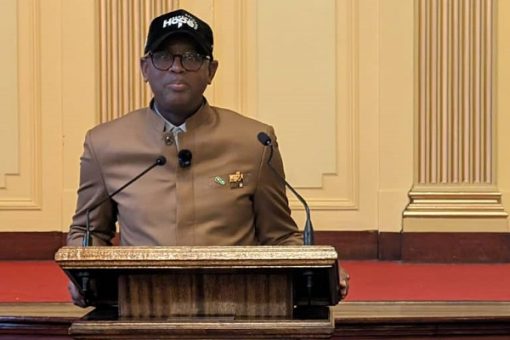
The Minister of State for Works, Bello Muhammad Goronyo, has stressed the importance of the expertise, innovations and investments of Nigerian engineers in the diaspora to accelerating infrastructure development and driving Nigeria’s economic transformation.
Goronyo said Nigeria needed to tap into the global experience and technical capacity of its professionals abroad to address its infrastructure deficit and support sustainable national development.
He made the call at the 2026 UK Engineering Conference in Glasgow, Scotland, themed “Engineering Innovation for National Impact.”
The Minister described engineering as a critical foundation for national development and economic growth, stressing that Nigeria’s large population, abundant resources and human capital could only translate into sustainable development through innovation, professionalism and deliberate investment in infrastructure.
Goronyo, in a statement by his Special Assistant on Media, Abdullahi Mohammed, said quality road infrastructure was particularly critical to economic growth because it facilitates the movement of people and goods, reduces transportation costs, creates employment and strengthens trade.
“Roads lead to prosperity. They are not just pathways of asphalt and concrete; they are the arteries of commerce, agriculture and industry, carrying the lifeblood of our economy,” he said.
He said the Federal Government, under President Bola Tinubu, had demonstrated strong commitment to infrastructure development through investments in road construction, rehabilitation and maintenance.
He urged Nigerian engineers to see themselves as custodians of public safety and national development and called on those in the diaspora and international partners to bring their expertise, innovations and investments into Nigeria.
“Nigeria is open for business. Bring your talents, innovations and investments. Join us through Public-Private Partnerships, tax credit schemes and engineering collaborations. Together, we can build roads and bridges that do more than connect cities; they can connect dreams, aspirations, opportunities and prosperity,” he said.
He highlighted the government’s flagship highway projects, including the 750-kilometre Lagos-Calabar Coastal Highway, the 1,068-kilometre Sokoto-Badagry Superhighway, the Trans-Sahara Trade Route linking Calabar to Abuja, and the 1,100-kilometre Akwanga-Jos-Maiduguri Superhighway.
According to him, the projects are strategic economic corridors designed to connect communities, facilitate trade, strengthen regional integration and unlock economic opportunities across the country.
Goronyo also emphasised the need for professional standards, regulatory compliance and accountability in the engineering sector, saying the Federal Ministry of Works was committed to ensuring that public infrastructure was delivered to the required standards.
He said the Ministry had endorsed the regulatory approach of the Council for the Regulation of Engineering in Nigeria (COREN), including stronger sanctions for professional misconduct, technical monitoring and enhanced professional development through the Engineering Residency Programme.
The Minister added that the ministry, under Works Minister David Umahi, was intensifying project audits and technical oversight to ensure that only qualified and duly registered professionals handled critical public infrastructure projects.
Goronyo commended the Nigerian Society of Engineers, Glasgow Branch, for providing a platform for Nigerian engineers and international professionals to exchange ideas on how engineering can contribute to national development.
He reaffirmed the Federal Government’s commitment to improving mobility, strengthening logistics and delivering sustainable infrastructure as part of its broader economic development agenda.