

BY TAIWO OGUNMOLA -OMILANI
For many years, Lagos State University (LASU) was synonymous with recurring leadership crises, industrial unrest, and administrative instability. Today, however, the institution stands as one of Nigeria’s most respected state-owned universities, enjoying a level of peace and academic stability that many stakeholders attribute to a landmark governance reform introduced over a decade ago—the five-year single tenure for vice chancellors.
The policy, approved by the Lagos State House of Assembly and subsequently signed into law by former Governor Akinwunmi Ambode on September 15, 2015, fundamentally altered the leadership structure of the university.
It replaced the previous system that allowed vice chancellors to serve a four-year term renewable for another four years, a practice many believed fuelled intense power struggles and institutional crises.
The Crisis That Triggered Change
The decision to introduce a single tenure was not made in isolation. It emerged from a period of severe turbulence that threatened the stability and reputation of LASU.
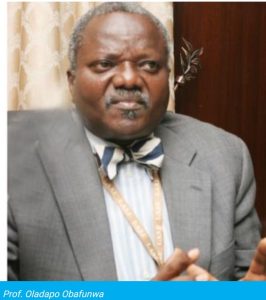
The university had experienced recurring crises over the years, but tensions reached a peak in 2014 during the tenure of then Vice Chancellor, Prof. Oladapo Obafunwa. The campus became deeply polarized as academic and non-academic staff opposed his possible reappointment for a second term.
The conflict escalated dramatically when protesting workers chased the vice chancellor and the registrar out of the campus. Reports of bizarre incidents, including sacrifices allegedly being placed in front of the vice chancellor’s office, underscored the depth of hostility and division within the institution.
Concerned by the deteriorating situation, the Lagos State House of Assembly intervened. Lawmakers established a committee to investigate the persistent crises and explore lasting solutions.
Beyond the leadership disputes, legislators were alarmed by reports that some faculties were losing accreditation or struggling to maintain academic standards.
They feared that the instability was eroding the university’s image and undermining its core mandate of providing quality education.
Lawmakers Push for Reform
The legislative committee’s findings pointed to a recurring pattern: vice chancellors seeking second terms often became the focal point of political and administrative battles.
Leading the push for reform was then Majority Leader of the House, Hon. Sanai Agunbiade, who argued that LASU’s history of crises was closely linked to contests over tenure renewal.
According to Agunbiade, successive vice chancellors frequently ended their tenures amid controversy, with leadership transitions becoming flashpoints for conflict.
The Assembly consequently recommended amendments to the relevant laws governing state-owned tertiary institutions,
introducing a five-year single tenure for vice chancellors. The objective was simple—remove the distractions associated with second-term ambitions and allow university leaders to focus entirely on administration and development.
Lawmakers also convened stakeholders’ meetings involving management, staff unions, and other members of the university community to identify solutions to the institution’s numerous challenges.
A New Era of Stability
More than a decade after the reform was introduced, many stakeholders believe the policy has delivered its intended results.
Among those who strongly support the single-tenure system is veteran labour leader and senior university staff member, Comrade Funmi Sessi, who has spent nearly three decades at LASU and previously served as Chairperson of the Senior Staff Association of Nigerian Universities (SSANU), LASU chapter.
Drawing from years of experience, Sessi described the five-year tenure as one of the most beneficial reforms in the university’s history.
According to her, many of LASU’s past crises were rooted in leadership struggles, particularly when vice chancellors sought reappointment.
She explained that under the old system, some vice chancellors allegedly built powerful inner circles and patronage networks to secure support for second terms. This often created divisions among staff, encouraged favouritism, and generated opposition from groups who felt excluded from decision-making processes.
“When leadership loses the confidence of workers and begins to focus on personal interests rather than the welfare of staff and the institution, resistance naturally follows,” she said.
Sessi noted that the competition and political manoeuvring associated with second-term bids often destabilized the university, leading to prolonged disputes and disruptions.
The introduction of a single five-year tenure, she argued, removed those distractions and significantly reduced tensions within the institution.
“Since the law was changed, LASU has enjoyed a reasonable level of peace. We are no longer witnessing the kind of crises that once made the university notorious for unrest,” she stated.
From Crisis to Excellence
Today, LASU is widely regarded as one of the leading state universities in Nigeria.
The institution has witnessed significant improvements in academic performance, infrastructure development, research output, and administrative stability. Perhaps most importantly, students now complete their programmes with fewer disruptions, a development stakeholders cite as evidence of a more stable academic environment.
Sessi believes the transformation is undeniable.
“There was a time LASU was viewed as one of the most troubled institutions in the country. Today, it is a pride of Lagos State and indeed a pride of Nigeria,” she said.
The tenure of Professor Ibiyemi Olatunji-Bello, who recently completed her five-year single term as vice chancellor, is often cited as a testament to the effectiveness of the policy. Her administration oversaw a period of relative peace and sustained institutional growth.
The Next Chapter
As LASU prepares to appoint a new vice chancellor, attention is once again focused on the future leadership of the university.
While the debate over governance models in Nigerian universities continues, many stakeholders insist that the five-year single tenure should remain untouched, arguing that it has become a cornerstone of LASU’s stability.
For them, the lesson of the past is clear: removing the politics of reappointment has helped create an environment where university leaders can concentrate on delivering results rather than campaigning for a second term.
As the search for Professor Olatunji-Bello’s successor gathers momentum, one question dominates discussions across the university community:
Who will become the next vice chancellor of Lagos State University, and can the institution sustain the peace and progress achieved under the five-year single tenure system?