BY TAIWO OGUNMOLA -OMILANI
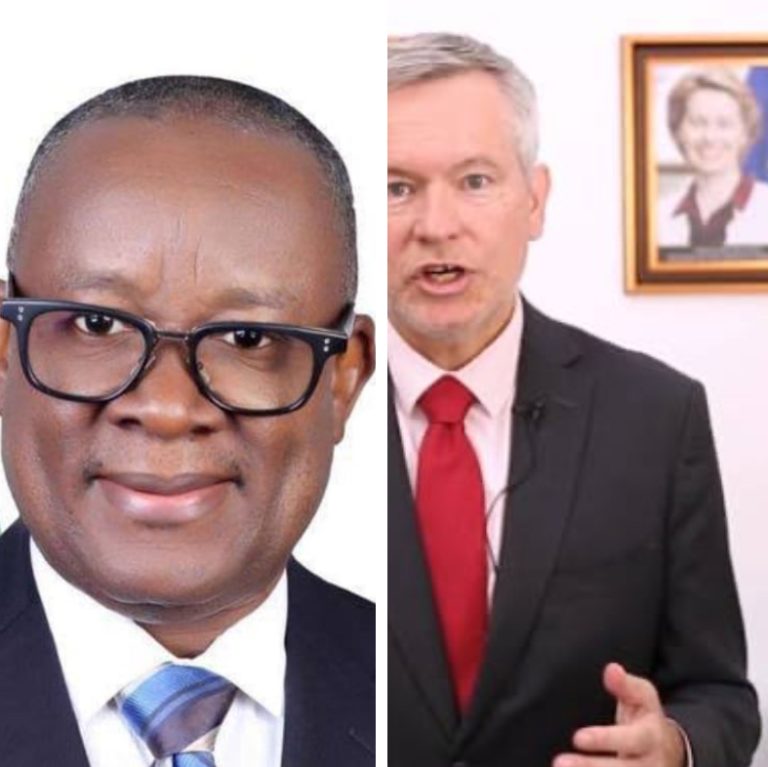
The Minister of State for Industry in the Federal Ministry of Industry, Trade and Investment, John Enoh, has said industrialisation has become critical to national sovereignty, stressing that Nigeria and other West African countries must shift from exporting raw materials to producing value-added goods.
Enoh stated this at the ongoing West Africa Industrialisation, Manufacturing and Trade Summit and Exhibition held at the Landmark Centre.
The minister noted that the global economy is undergoing major shifts, with supply chains fragmenting and the global trade order changing, making industrial competitiveness a strategic priority for nations.
According to him, industrialisation in the current global climate is no longer just an economic policy option but a national security and sovereignty issue.
“In this new era, industrialisation is not just an economic policy choice; it is a sovereignty project,” he said.
Enoh explained that West Africa is at a decisive moment, with vast natural resources and a large population that could drive industrial growth if properly harnessed.
He said the region must decide whether to continue exporting raw materials or begin to build industries that add value locally.
“We are at a crossroads. We can continue exporting vulnerability through raw materials or manufacture value at home. What Nigeria has chosen is to manufacture value locally,” he said.
The minister disclosed that the Federal Government is set to launch a new Nigerian Industrial Policy aimed at strengthening manufacturing and boosting economic growth.
He said the policy is structured around five key pillars, including energy and industrial infrastructure, affordable long-term financing, regulatory and bureaucratic reforms, skilled manpower and local content development, and patronage of Made-in-Nigeria products.
Enoh also revealed that the Federal Government recently extended the ban on the export of raw shea nuts for another year in order to encourage local processing and deepen industrial value chains.
He said the move reflects government’s commitment to ensuring Nigeria benefits more from its natural resources through local value addition.
Citing global statistics, the minister noted that although Africa controls more than 80 percent of the world’s mineral resources, the continent contributes less than three percent of global manufacturing value.
According to him, studies have shown that two-thirds of sustainable global economic growth over the last 15 years has been driven by value-added industries.
He said Nigeria aims to significantly increase manufacturing output and grow the sector’s contribution to Gross Domestic Product to about 25 percent by 2030.
The minister also commended the economic reforms of Bola Ahmed Tinubu, noting that the policies have helped stabilise the economy and support micro and small businesses.
EU Pledges Support for Africa’s Industrialisation
In another development, the European Union Ambassador to Nigeria and ECOWAS, Gautier Mignot, reaffirmed the EU’s commitment to supporting Africa’s industrialisation and economic transformation.
Mignot said the European Union is prepared to remain a reliable partner in promoting industrial growth, trade and economic prosperity across the continent.
“The European Union is dedicated to being a steadfast partner on this journey towards industrialisation and prosperity,” he said.
He noted that the EU is investing heavily in projects that promote digital infrastructure, skills development, trade competitiveness and regional economic integration across Africa.
According to him, programmes under the EU’s Global Gateway initiative include investments in trade facilitation, transport corridors and market access aimed at strengthening both EU–Africa trade and intra-African trade.
Mignot also highlighted ongoing cooperation with regional institutions, including the Economic Community of West African States, to improve competitiveness and deepen economic integration in West Africa.
He further noted that the EU is supporting innovation, research and education through initiatives such as Erasmus Plus, while also prioritising green industrialisation and gender inclusion in its development partnerships across Africa.