BY TAIWO OGUNMOLA -OMILANI
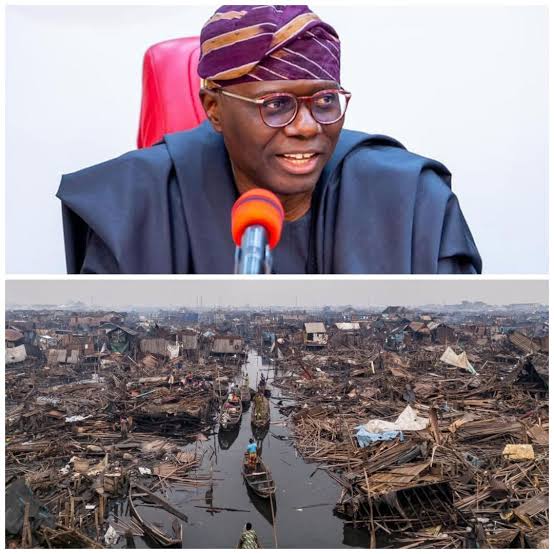
Change, as the saying goes, is the only constant in life. Yet, humanity often struggles to accept it, especially when change disrupts long-standing ways of living. In rapidly expanding cities like Lagos, shifting realities of urban growth, safety and infrastructure inevitably force difficult decisions—none more emotive than the ongoing demolition exercises in Makoko.
Makoko, a sprawling waterfront settlement, has long existed at the margins of Lagos’ urban plan. To many who have visited the area, the harsh living conditions raise serious concerns. Beyond environmental degradation, the settlement’s proximity to critical infrastructure such as the Third Mainland Bridge and high-tension power lines poses significant safety risks.
There are also fears that the area could serve as a hideout for criminal activities, while exposing residents—particularly children and unborn babies—to long-term health hazards.
Amid the controversy, several local and international non-governmental organisations (NGOs) have taken up the defence of Makoko residents, staging protests and criticising the Lagos State Government.
However, questions have been raised about the true basis of this advocacy, particularly following allegations by Governor Babajide Sanwo-Olu regarding grants received by some NGOs from international donors.
The governor’s comments have sparked debate over whether the NGOs are primarily defending the welfare of Makoko residents or protecting interests tied to donor funding.
Critics argue that if the NGOs were genuinely committed to the long-term wellbeing of the residents, they would prioritise collaboration with the state government to facilitate orderly relocation to safer and more habitable areas, rather than confrontational protests.
Observers also note that resisting government policy may only delay the inevitable. Even if the current administration exercises restraint, future governments may proceed with demolition in the interest of public safety and urban planning.
From this perspective, constructive engagement—rather than outright opposition—may offer residents a better chance of securing relocation support and social safeguards.
The issue took centre stage at the Lagos State House of Assembly on Thursday, January 28, 2026, when lawmakers reconvened to deliberate on the matter.
During plenary, the House called on Governor Sanwo-Olu to direct the Commissioner for Information to intensify public enlightenment on the ongoing demolition exercises across the state. The aim, lawmakers said, is to curb misinformation and ensure proper public understanding of government actions.
The resolution followed a motion raised under Matters of Urgent Public Importance by Hon. Ogundipe Stephen, representing Oshodi-Isolo Constituency I. In his remarks, the Speaker of the House, Rt. Hon. Mudashiru Obasa, urged affected residents to remain calm, assuring them that the Assembly had constituted a committee to address their concerns.
While commending protesters for approaching the Assembly to air their grievances, Obasa cautioned against allowing mischief-makers to hijack the protests and foment unrest. He warned that some individuals had infiltrated the protests with the intent to cause mayhem, advising genuine protesters to remain vigilant and law-abiding as the House works towards resolving the issues.
Earlier in the week, Governor Sanwo-Olu had robustly defended the demolition exercise. Speaking after signing the ₦4.4 trillion 2026 Appropriation Bill into law, he said the partial demolition in Makoko was carried out to avert a looming tragedy.
“The safety of lives and property is paramount and must be safeguarded,” the governor said. He cited recent incidents, including a tanker accident involving 33,000 litres of fuel, where residents reportedly rushed to scoop fuel, as evidence of the dangers posed by unsafe living conditions.
Sanwo-Olu stressed that the government was not demolishing the entire Makoko community but clearing specific areas encroaching on the Third Mainland Bridge and high-tension power lines.
He further alleged that some local and international NGOs had benefited significantly from donor funds meant for the area without delivering on promised interventions.
“We are studying it and will present evidence,” the governor said, adding that such organisations often “cry louder than the bereaved” to mask their own shortcomings. According to him, the government had engaged with these groups for over two years and could no longer ignore the risks to public safety.
The governor also announced that palliative measures had been approved to cushion the impact of the demolition on affected residents.
Ultimately, the Makoko situation underscores the difficult balance between compassion and necessity in urban governance. While displacement is painful and disruptive, many argue that continued habitation in unsafe environments is neither humane nor sustainable. As Lagos continues to evolve, the challenge for all stakeholders—government, NGOs and residents alike—is to manage change in a way that protects lives, preserves dignity and offers realistic pathways to a safer future.