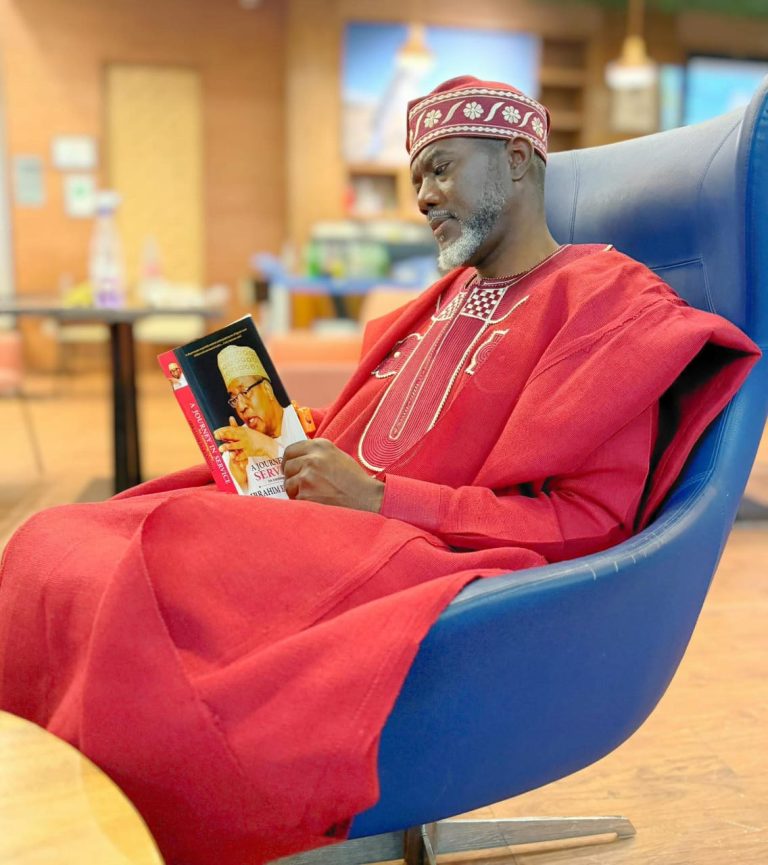
Public affairs commentator and author, Reno Omokri, has shared his initial thoughts on the newly released autobiography of former military president, General Ibrahim Babangida, titled A Journey in Service.
In a detailed review posted on Friday, Omokri expressed surprise over what he described as an “unbefitting” cover photo, noting that it failed to capture Babangida’s renowned charisma. He contrasted this with the presentation of former President Olusegun Obasanjo’s books, which, in his view, project “a command presence of strength and warmth.”
Beyond aesthetics, Omokri critiqued Babangida’s opening approach, arguing that the former leader was too apologetic in tone. He highlighted Babangida’s admission that “memory has dimmed, and recollections may have lost acuity” as a statement that could cast doubt on the credibility of his accounts.
“History has not been as harsh on him as he may imagine,” Omokri wrote, adding that some of Babangida’s achievements — including the movement of Nigeria’s capital to Abuja, the construction of the Third Mainland Bridge, and the creation of new states — remain pivotal milestones in the country’s progress.
He, however, questioned the necessity of including certain controversial details, such as the implication of Major General Hassan Katsina by coup plotter Lt. Colonel Bukar Suka Dimka, arguing that it needlessly cast a shadow on a respected northern statesman who is no longer alive to respond.
On a more personal note, Omokri praised Babangida’s enduring affection for his late wife, Maryam Babangida, which he described as touching and revealing a softer side of the former leader often perceived as “hard as nails.”
While acknowledging the difficult decisions taken during Babangida’s regime — including the execution of his friend, Major General Mamman Vatsa — Omokri suggested that they were made reluctantly, showing the human side of the former military ruler.
Commending the very act of writing the autobiography, Omokri said it was rare for African political and business leaders to document their lives and lessons for posterity. “That you did is commendable. It will help Nigeria navigate nationhood better, prevent us from repeating history, and then accusing it of repeating itself,” he concluded.