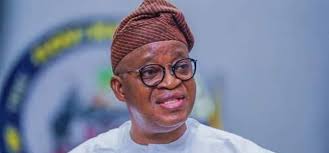
The Minister of Marine and Blue Economy, Mr. Adegboyega Oyetola, has projected that the Lekki Deep Sea Port will deliver over $200 billion in government revenue during its 45-year concession period.
Oyetola made this disclosure on Wednesday in Lagos at a breakfast meeting organised by the Nigerian Chamber of Shipping in partnership with Lekki Port.
He explained that since the commencement of commercial operations, the facility has significantly reduced congestion at Lagos ports and improved Nigeria’s profile as a competitive logistics hub.
“Lekki is already easing congestion in Lagos and other ports, while enhancing Nigeria’s competitiveness as a logistics hub. It is projected to contribute over $200 billion to government revenue over its concession period, with a reach extending beyond our borders to serve neighboring states. Yet it currently operates at only 20 per cent of its capacity, signaling vast untapped opportunities for investors, operators, and service providers,” Oyetola said.
Highlighting the port’s potential, he noted that its world-class infrastructure underscores enormous opportunities for stakeholders in the maritime and logistics value chain.
In his remarks, Mr. Wang Qiang, Managing Director of Lekki Port, described the facility as a model of how ambitious policies, state-of-the-art infrastructure, and strategic partnerships can transform trade, drive industrial growth, and advance Nigeria’s blue economy agenda.
According to him, the port’s Post-Panamax Ship-to-Shore Cranes can unload vessels twice as fast, reducing turnaround time, cutting logistics costs, and boosting efficiency.
“The port is estimated to impact the economy to the tune of $361 billion within 45 years — a multiplier effect about 230 times the cost of construction. It is also expected to generate up to $201 billion for state and federal agencies in taxes, royalties, and duties,” Qiang stated.
He added that with transshipment operations already underway since 2023, Lekki Port is strategically positioned as a regional trade hub, helping Nigeria reclaim maritime business previously lost to West African countries while supporting the import and export needs of landlocked neighbors.