BY TAIWO OGUNMOLA -OMILANI
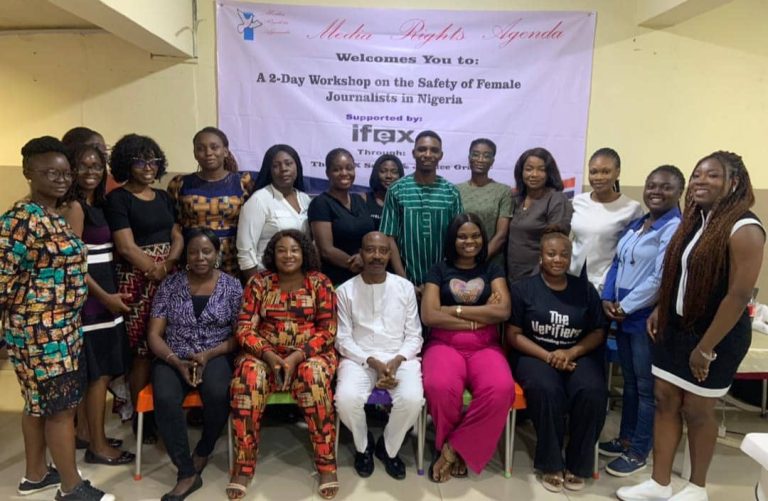
Media Rights Agenda (MRA), in collaboration with the International Freedom of Expression Exchange (IFEX), has concluded a two-day workshop aimed at enhancing the safety and protection of female journalists in Nigeria.
The workshop held in Lagos brought together 24 female journalists from print, broadcast, and digital media across public and private sectors. It featured a series of sessions facilitated by media professionals, legal experts, and civil society advocates.
In his welcome address, Mr. Ayode Longe, MRA’s Deputy Executive Director, emphasized the increasing threats faced by female journalists in Nigeria—ranging from gender-specific harassment to professional intimidation.
He stressed the importance of equipping women in the media with legal knowledge, protection strategies, and access to redress mechanisms at national and international levels.
“This workshop is part of our efforts to implement the United Nations Plan of Action on the Safety of Journalists, with a focus on the growing and often unaddressed dangers female journalists face in the course of their work,” Longe said.
The sessions addressed a wide range of topics including identifying gendered and non-gendered attacks, planning for physical and digital safety, legal remedies, and creating inclusive and secure newsroom environments.
At the conclusion of the workshop, participants issued a communiqué highlighting key observations and recommendations. They noted that female journalists are increasingly exposed to life-threatening risks, often without institutional support or access to justice.
Gender-based violence, online abuse, sexual harassment, and workplace discrimination are frequent challenges.
A lack of accountability for perpetrators—ranging from security agents and political actors to colleagues and online trolls—has worsened the climate of impunity.
Most media organizations lack gender-sensitive safety policies and support mechanisms for women journalists.
Part of recommendations include: Government at all levels should publicly condemn attacks on journalists and prosecute offenders.
Legislatures should amend laws to explicitly protect female journalists from gender-based threats.
Media organizations must adopt sexual harassment prevention policies, provide legal and psychological support, and ensure safe working conditions—especially during high-risk assignments like elections or protests.
Female journalists should be trained in threat assessment, and a national protective support network should be established, possibly through the Nigeria Association of Women Journalists (NAWOJ).
Emotional and institutional support should be provided by media houses, journalist unions, and families.
Employers must provide safe transportation and accommodation when late work or risky assignments are involved.
Open-door policies should be implemented to allow young female journalists to report abuse or threats without fear.
Participants also emphasized the importance of rest and mental well-being, urging female journalists to prioritize their health and avoid burnout.
The communiqué concluded with a call to action for governments, media stakeholders, civil society, and the public to recognize that protecting female journalists is essential to safeguarding media freedom, democracy, and national development.
The event was supported through IFEX’s Safety and Justice Grant based in Toronto, Canada. Participants expressed appreciation to MRA and IFEX for organizing and funding the workshop.