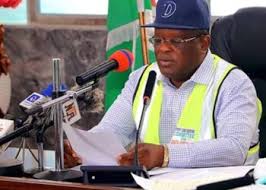
Minister of Works, David Umahi, has called on cement manufacturers to lower the price of cement to ₦7,000, citing the recent appreciation of the naira and a drop in petrol prices.
Expressing his concerns, Umahi said, “I’m happy that the policies of Mr. President are working. Today, a dollar is about ₦1,400. At the time the dollar was almost ₦2,000, cement prices rose from ₦7,500. Now that the President has stabilized the exchange rate, why is cement still selling at ₦9,500?”
He urged manufacturers to adjust their prices accordingly, warning that if the reduction is not implemented within a week, he would escalate the matter to President Bola Tinubu.
Umahi Pressures MTN, RCC on Enugu-Onitsha Expressway Completion
Regarding the Enugu-Onitsha Expressway project, Umahi set a definitive completion date of May 10, 2026, following an agreement with MTN Nigeria and construction firm RCC Nigeria Ltd.
Addressing concerns over the slow progress, the minister emphasized that MTN, which is funding the project under the Infrastructure Development and Refurbishment Investment (Tax Credit) Scheme, would be held accountable for any financial delays. He also ruled out any discussions on price variations (VOP) until the project is completed.
In a statement by his media aide, Uchenna Orji, Umahi reaffirmed the government’s stance, saying, “There will be no variation or VOP on the project. RCC must adhere to contract terms, and MTN must not prioritize business profit over its funding obligations.”
During a meeting in Abuja, Umahi addressed representatives from MTN and RCC, alongside Minister of State for Works, Mohammad Bello Goronyo, and Permanent Secretary, Mr. O.O. Adebiyi.
He stressed the importance of a written commitment between MTN and the Federal Ministry of Works to ensure compliance, warning that further project delays could lead to increased costs.