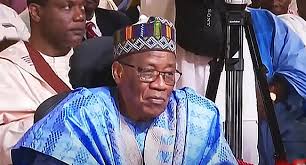
In his memoir, former military president General Ibrahim Badamasi Babangida (IBB) detailed how the failed coup attempt led by Major Gideon Orkar on April 22, 1990, caught him off guard.
He wrote: “By April 22, 1990, yet another military coup took place in the history of our administration. I must confess that what became known as the Orkar coup hit me as a rude surprise.”
Recounting the events of that fateful night, Babangida explained that he had just retired to bed after seeing off visitors at his Dodan Barracks residence. His wife, who had gone to the bathroom, rushed back to alert him about unusual troop movements outside.
“The troop movements and formations she had noticed were unusual in the security protocol of the residential part of Dodan Barracks,” he wrote. Upon verifying the situation himself, he saw troops taking up strategic positions. Moments later, gunfire erupted, targeting his residence and office quarters, followed by heavy artillery bombardment.
His aide-de-camp (ADC), Lt-Col. U.K. Bello, swiftly took charge, ensuring Babangida and his family were evacuated to safe houses. Meanwhile, the coup plotters attempted to breach the residence but were repelled by loyal guards.
Despite the rebels sabotaging a military tank near the residence, loyal troops engaged the coup makers while military communication networks were activated. General Sani Abacha led the counteroffensive, coordinating loyal forces to quash the rebellion.
“By late morning on April 22, the coup had been successfully foiled. The treasonous broadcast on the radio was replaced by sustained martial music. The disloyal troops were on the run,” Babangida recounted.
Following the failed coup, the government moved swiftly to restore order. Military formations nationwide reaffirmed their loyalty, and arrests of the coup plotters commenced. By the afternoon, Babangida addressed the nation, reassuring citizens of the government’s stability and the coup’s failure.
Reflecting on the incident, he expressed disappointment at the involvement of some officers he had personally assisted, including Orkar and Colonel Tony Nyiam. He also criticized the coup plotters’ demands, particularly their proposal to expel five states from the federation, calling them “laughable and adolescent accusations.”
The coup attempt, though unsuccessful, reinforced the resilience of Nigeria’s unity, according to Babangida.
“Even if the coup attempt was not as sloppy as it was, the public received very negatively the broadcast of certain states being expelled from the federation,” he noted. “The adolescent pronouncements of the coup planners sought to devalue our national leadership, reduce our politics to petty name-calling, and undermine our strength in diversity as a nation.”
The trials and investigations were concluded, and those found guilty were punished for high treason. The failed coup became a significant event in Nigeria’s political history, emphasizing the importance of national sovereignty and stability.