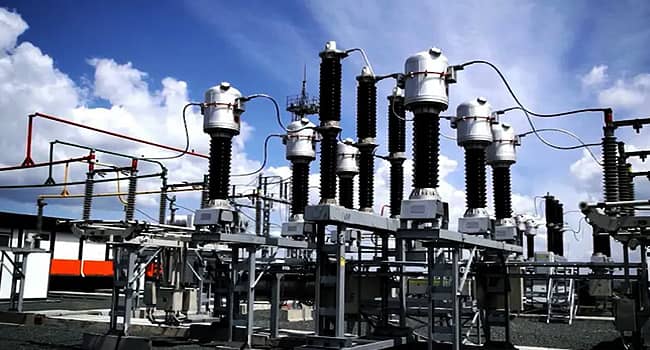
The national grid has collapsed again, plunging millions of Nigerians into darkness.
The collapse, which occurred on Wednesday, marks the first grid failure in 2025.
Confirming the incident in a post on X, the Ikeja Electricity Distribution Company reported that the system outage happened at 11:34 am local time.
> “Please be informed that we experienced a system outage today, 12th February 2025, at 11:34 hrs, affecting all our feeders.
Restoration of supply is ongoing in collaboration with our critical stakeholders,” the company stated.
Similarly, the Abuja Electricity Distribution Company also confirmed the development on X, saying:
> “Dear Valued Customer, we regret to inform you that a system disturbance occurred on the national grid at 11:34 am today, causing a power outage across our franchise areas.
While gradual restoration of power supply has commenced, please be assured that we are working closely with relevant stakeholders to fully restore electricity as soon as the grid is stabilized.”
This incident follows a pattern of instability, with the grid suffering approximately 12 collapses in 2024 alone.
Meanwhile, a popular Nigeria National Grid account on X also acknowledged the disruption, stating:
> “There was a GRID DISTURBANCE before noon today (Wednesday). Parts of the country experienced an outage.”
Coleman MD Calls for Homegrown Solutions
Reacting to the persistent grid failures, the Managing Director of Coleman Wires and Cables Industries Limited, Mr. George Onafowokan, has emphasized the urgent need for homegrown solutions to address Nigeria’s power sector crisis.
Speaking on the government’s recent push for investment in the sector, Onafowokan stressed the importance of industrializing power infrastructure and fully deregulating the industry.
> “There is a need for industrialization within the sector. Obsolete wires and cables must be replaced, and all transmission and power project materials should be locally sourced. Nigeria has more than enough capacity to meet and exceed its needs,” he stated.
Onafowokan acknowledged that locally manufactured products might come at a higher cost due to production challenges but maintained that private-sector-driven policies were key to long-term sustainability.
Reflecting on Nigeria’s electricity challenges, he commended the current administration for refocusing attention on the power sector but noted that solutions would take time.
> “These problems have persisted for years, and I sympathize with this government because they inherited them. Solving electricity issues is not an overnight task. When we returned to democracy, we started well, but after eight years, we became complacent.”
He further explained that the frequent grid collapses and unstable power supply stem from an imbalance between power generation and transmission.
> “The billions allocated to the sector won’t make a difference without proper policy implementation,” he added.
The Coleman MD emphasized that policy continuity is essential to resolving the power sector’s challenges.
Regarding the recent increase in electricity tariffs, Onafowokan pointed out that manufacturers play a critical role in supporting the government’s economic stability efforts by creating jobs and boosting local production.
With yet another grid collapse disrupting businesses and homes, industry experts and stakeholders continue to call for urgent, lasting reforms in Nigeria’s power sector.