
 BY TAIWO OGUNMOLA -OMILANI
The Vice Chancellor of Babcock University, Prof. Ademola Tayo, has called on the Federal Government to extend electricity subsidies to private institutions, emphasizing that students trained in such schools ultimately contribute to national development.
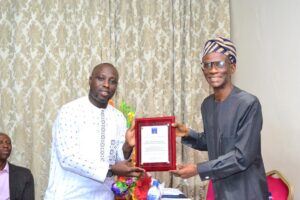
Prof. Tayo made this appeal during a dinner organized in honor of the Education Writers Association of Nigeria (EWAN) at the university’s guest house.
He expressed concern over the substantial costs incurred by the institution on electricity, urging President Bola Tinubu’s administration to include private universities in subsidy plans to ease their financial burden.
Reflecting on his tenure as Vice Chancellor, which is nearing its conclusion, Prof. Tayo also highlighted the critical role of education writers in shaping public discourse.
He praised their commitment to factual reporting and their contributions to fostering accountability and innovation in Nigeria’s education sector.
“Your steadfast commitment to reporting on educational matters and championing excellence has fundamentally transformed governmental perspectives and institutional approaches to education,” he said.
“Here at Babcock University, we have greatly benefited from the caliber of your journalism and your dedication to our institution.”
Prof. Tayo also outlined the university’s achievements during his tenure, including the establishment of an entrepreneurship training center in Ekiti, the Babcock Business School in Lagos, the Center for Open Distance Learning, the diversification of academic programs, infrastructure enhancements, and the expansion of research capabilities.
He noted that these advancements have positioned Babcock as a leading institution synonymous with quality and innovation.
As he prepares to conclude his term, the outgoing Vice Chancellor reiterated his commitment to fostering strong partnerships between the university and stakeholders, including the media.
He urged education writers to continue promoting narratives that foster unity and national development while upholding journalistic integrity.
“In an era where misinformation spreads rapidly, it is crucial for journalists to adhere to the highest standards of accuracy, fairness, and accountability,” he said. “As education writers, your role transcends mere reporting. You wield the power to shape public discourse, foster harmony, and ignite positive change.”
Prof. Tayo concluded by calling on journalists to leverage their platform to promote unity and compassion, emphasizing the importance of education in advancing societal progress. “Let us embrace our diversity while pursuing common goals. Together, we can safeguard and nurture our nation for the betterment of all,” he said.