BY TAIWO OGUNMOLA -OMILANI
The Nigeria Employers’ Consultative Association (NECA) has disclosed that President Bola Tinubu holds the exclusive authority to set the minimum wage rate, following the recommendations of the tripartite committee established by the federal government.
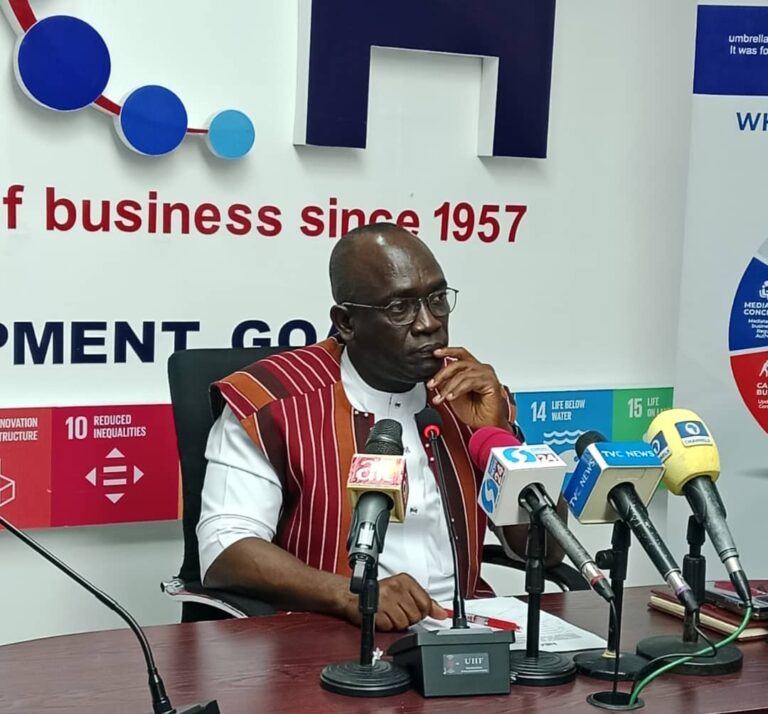
Mr. Adewale Oyerinde, Director-General of NECA, revealed this during a forum with the Labour Writers Association of Nigeria (LAWAN) in Lagos.
According to Oyerinde, the tripartite committee was formed in 2019 in response to a dispute over the minimum wage rate. While state governors proposed a rate of ₦22,000, the federal government suggested ₦30,000. The committee was established to align on a unified rate.
“Whatever the tripartite committee presents to the government is a recommendation; the president remains the sovereign authority to decide. He might choose to set the rate higher or lower than what the committee suggests. If we are dissatisfied with his decision, we will wait for the National Assembly to call for a public hearing to voice our position,” Oyerinde stated.
The tripartite committee’s deliberations in 2019 included negotiations where state governors offered ₦22,000, the federal government agreed on ₦28,000, and labor and private sectors aligned on ₦30,000.
Oyerinde emphasized that it was an alignment rather than an agreement to avoid the implication of collusion. He reiterated that any contrary opinions would be presented during National Assembly hearings.
Oyerinde highlighted that the parties involved in setting the minimum wage often have differing interests, which may not always align. He stated, “We may agree or disagree, but our ultimate goal is to protect workers. The more we employ, the stronger organized labour becomes, and conversely, if the private sector retrenches, labour loses members. Our strength lies in our members. The goal is to protect both current and potential labor members.”
He also stressed that productivity and competence should be key factors in determining the minimum wage. He cited an example of a biscuit factory that started production in October last year but closed down by March, illustrating the challenging business environment in Nigeria.
Additionally, Oyerinde called on the federal government to address issues of insecurity, food inflation, and transportation.
He maintained that discussions about the minimum wage should focus on the purchasing power of the money.
Finally, he urged the government to support small and medium enterprises (SMEs), as they are the backbone of the nation’s economy.