BY TAIWO OGUNMOLA-OMILANI
Professor Olabisi Yusuff, a renowned Professor of Sociology, has outlined strategic steps that can help eliminate barriers preventing women from advancing to leadership positions in higher education in Nigeria.
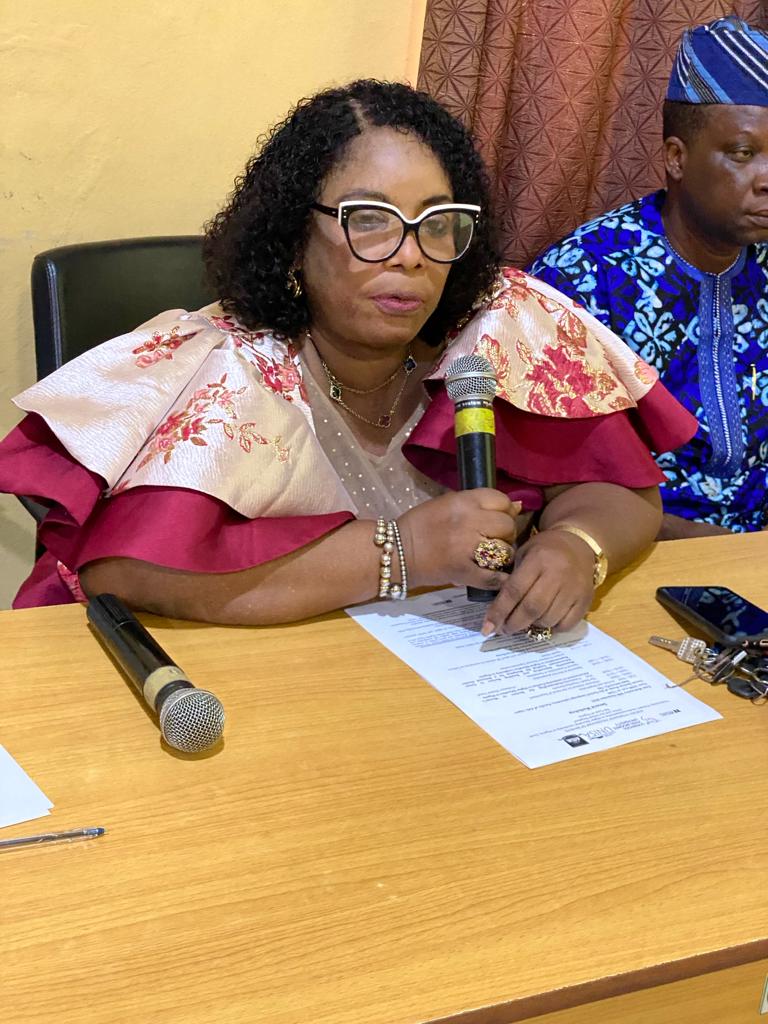
These steps were presented at the second phase of the AURORA project workshop, which took place on Wednesday, at the Seminar Room, Central Language Laboratory, Faculty of Arts, main campus, Ojo, Lagos.
The workshop was attended by educational experts, policymakers, and community leaders who gathered to discuss and find solutions to the obstacles faced by women seeking leadership roles in higher education. Professor Yusuff, the first facilitator at the workshop, focused on the topic “Understanding the Barriers to Women’s Advancement to Leadership Position in Higher Education in Nigeria.”
She highlighted various barriers, including cultural stereotypes, traditional gender roles, institutional policies, limited educational opportunities, and socioeconomic factors. Professor Yusuff emphasized the importance of breaking down these barriers to create a pipeline of capable and qualified women leaders in academic institutions.
To address these challenges, Professor Yusuff proposed a series of strategic steps. These included fostering collaboration between educational institutions, policymakers, and community leaders; empowering women through education, mentorship, and advocacy; recognizing and valuing the contributions of women in leadership; and acknowledging the inherent benefits of diversity by embracing the perspectives and talents that women bring to the table.
In her concluding remarks, Professor Yusuff stressed that dismantling the barriers hindering women’s advancement to leadership positions in Nigeria would create a more inclusive and dynamic academic landscape. This, in turn, would unlock the full potential of the nation’s diverse talent pool and contribute to the advancement of knowledge and society at large.
The event was chaired by Professor Omolola Ladele, a senior member of the Department of English. Professor Ladele acknowledged the changes that have taken place over the years and urged women to overcome barriers and stereotypes to make their marks. She also encouraged participants to speak their minds and fully engage in the discussions.
The second presentation, titled “Mentorship, Networking and Breaking Barriers to Career Advancement: Creating the Workplace for a Balanced Gender Representation in Higher Education Leadership in Nigeria,” was led by Professor Simeon Dosunmu.
Professor Dosunmu identified the complex challenges faced by women in academia, such as family responsibilities, low aspirations, physical appearance biases, gender bias, and limited representation in leadership positions.
He also discussed pragmatic and programmatic approaches to address these issues, including the creation of a strong database, identifying areas of deficit, implementing advocacy campaigns, lobbying for political support, motivating grassroots efforts, fostering national sensitization, and promoting collaboration and mentorship.
Following the presentations, participants were divided into three groups to brainstorm and discuss mentorship and networking, breaking barriers, and the influence of gender stereotypes.
At the end of the workshop, Dr. Henry Hunjo, the Convener and Co-Principal Investigator of the AURORA project in Nigeria, expressed gratitude to the Vice-Chancellor, Professor Ibiyemi Ibilola Olatunji-Bello, as well as the Dean of the Faculty of Arts, Professor Taiwo M. Salisu, and the Head of the Department of English, Professor Pius Akhimien, for their continuous support. Dr. Hunjo also thanked the participants for their active participation, which fulfilled the requirements for the AURORA project’s completion.
It is worth noting that the first phase of the workshop was held on Wednesday, December 13th, 2023, with Professor Omolola Ladele and Professor Abolaji Mustapha as facilitators.