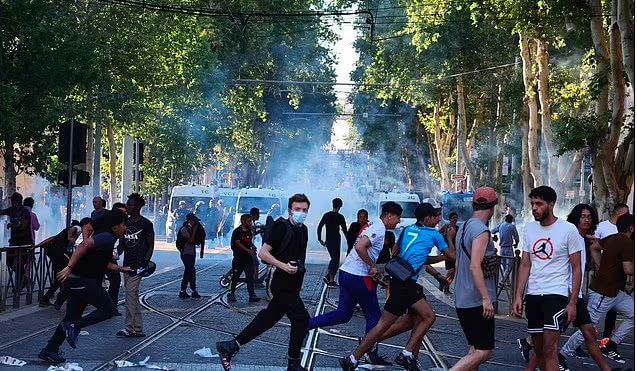
French authorities on Saturday sent extra troops to flashpoint cities to deal with a fifth night of rioting as the 17-year-old whose killing by a policeman sparked the violent protests was laid to rest.
Police arrested 1,311 people overnight Friday to Saturday, the highest figure since the violent protests began over the point-blank shooting by a policeman of Nahel M. in the western Paris suburb of Nanterre on Tuesday.
Shops were ransacked and town halls attacked in various locations across the country by gangs, often made up of teens organised on social media and armed with fireworks.
Interior Minister Gerald Darmanin told reporters that 45,000 members of the security forces would be deployed overnight Saturday to Sunday — the same number as the night before. But extra forces and equipment had been sent to Lyon, Grenoble and Marseille, which saw the worst rioting the previous night.
Paris and its nearby regions would be policed by 7,000 officers, he said.
Numbers would be “considerably reinforced” in these cities “in order to completely restore republican order”, Darmanin said.
The protests over the death of the teen, who was of Algerian origin, have again exposed the severe racial tensions in modern France and increased scrutiny on the police who have long been accused of singling out minorities.
The unrest has raised concerns abroad, with France hosting the Rugby World Cup in the autumn and the Paris Olympic Games in the summer of 2024.
Britain and other European countries updated their travel advice to warn tourists to stay away from areas affected by the rioting.
The unrest has had a major impact on cultural events in France with singer Mylene Farmer forced to cancel stadium concerts and French fashion house Celine cancelling its menswear show in Paris scheduled for this weekend.
A 38-year-old policeman has been charged with voluntary homicide over the teenager’s death and has been remanded in custody.
The UN rights office said Friday that the killing of the teen of North African descent was “a moment for the country to seriously address the deep issues of racism and racial discrimination in law enforcement”.
The French foreign ministry dismissed the criticism, saying any suggestion of systemic discrimination in the police force was “totally unfounded”.