
BY TAIWO OGUNMOLA-OMILANI
.
The administration of the President Elect, Asiwaju Bola Tinubu that will be sworn in on the May 29, 2023 would inherit more challenges apart from the huge debt that President Muhammadu Buhari will leave for the administration.
One of the major problems Tinubu must quickly proffer solutions to is how to remove about 18.4 million Out-of School-Children from the streets.
The number of Out-of School-Children in Nigeria increases every year because the government has not taken it as a priority.
The stakeholders engagement organized by Universal Basic Education (UBEC) in collaboration with the United Nations International Children’s Emergency Fund (UNICEF) disclosed the number of out of school children and the roles of government in solving the problem.
A 2 -day stakeholders engagement for the finalization and adoption of the national framework of action for addressing the Out-of-School children phenomenon in Nigeria held in Lagos and participants came from all over the states.
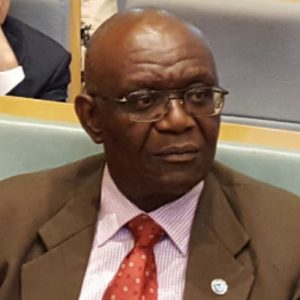
Speaking with Upshot in an interview, Mr. Olugbemiro Jegede, an Associate Professor at the National Open University of Nigeria (NOUN), expressed his displeasure over the huge number of Out-of-School children in Nigeria.
According to him, I have attended quite a number of international conferences, particularly on distance learning, and everywhere I went, I was embarrassed by the comment they make about Nigeria having the highest number of Out-Of-School children in the world.
“We got to know during the stakeholders meeting that there are 10.2 million out of school at the primary level, 8.1 million out of school at the junior secondary level respectively in Nigeria. This accounts for 15 per cent of the total number of out of school children globally.
Prof. Jegede, who is also a consultant to UNICEF and UBEC, opined that government is not doing enough to solve the problem in the area of spending more on education and making education free for all.
“The progress we make as a nation in terms of education and development is dependent on the last child that must be educated and that is why I am happy that UNICEF and UBEC have taken the bold step supported by the Federal Ministry of Education to work on national implementation plan to make sure we get these children out of the streets.
“We just finished reviewing the draft and very soon it will go both national and international. If those in power think that it doesn’t matter or that it is not a priority, then we will not move on.
“If you are talking about development, security, literacy and eliminating poverty, that is reducing it to the barest minimum; if you don’t have large literate public, you have not started at all.
“We are also talking about leaving no one behind and to us in the classroom, we say the progress you made is determined by lowest learners. Education is seen as the cornerstone of development. If you don’t spend money on education, you cannot move forward,” he added.
Jegede said that Nigeria has best brains, good ideas and policies, but zero implementation.
His words: “Of course, we have issues in this country, it is not how well you plan or write, but it is implementation. Nigeria is rated as having written policies and ideas because God has given the country the best brains in the world, but implementation is zero.
“We should be putting our eggs in one basket of implementation. There are two things a nation must spend money on: education and health. These are the two basic foundation for national development. We need to prioritize everything about education.”
The Associate Professor stressed further that the constitution of Nigeria stipulates that education is free and that the government is responsible for financing of education, but that the government is not implementing what the constitution says.”
Actually, if we can take the government to court, they are liable because they are not doing what they supposed to do.”
He blamed the masses for not holding the government responsible in terms of doing what is expected of them.
“The masses are not interested in some of these things even those, whose children are affected. We have women across the country frying potatoes to send their children to schools, when in actual fact, the constitution says that they should not spend a dime on the school fees of their children.
“Nigerians are not conscious enough to question the government. We are not interested in telling the government what they should do.
“We elect people to the National Assembly to represent us and they have money earmarked for constituency projects and there is nothing that says we should not force them to use that money within their community to send some of these children to school. We keep saying there is no money but there is money,” said Jegede.
He maintained that lawmakers can use the money earmarked for constituency projects to remove children from the streets, but that they are not doing it.
“The government needs to convince a child selling by the roadside that they will be responsible for him or her and teach such child marketing skills.
“Again, the world is moving to digital literacy. If you don’t have this, you cannot move on.
“That is why Indians are working all over the world because they embark on digital literacy several years ago.
“The Nigerian government is not saying anything about digital literacy. If we can fast-track this I can tell you that Nigeria will rule the world,” he said.