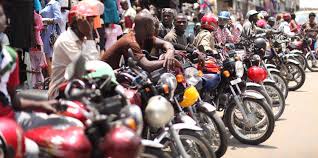
Traders are hard hit by the ban of motorcycles in several states and the threat by the Federal Government to outlaw commercial motorcycles, popularly called “Okada.”
Motorcycle imports into Nigeria declined by 35.92 per cent in the second quarter of 2022, according to the foreign trade report of the National Bureau of Statistics for the period.
The PUNCH observed that the total motorcycle imports crashed to N47.8bn in Q2 2022, from N74.59bn in Q1 2022.
In Q1 2022, Nigeria imported motorcycles worth N57.17bn from India, N17.34bn from China and N84.63m from Indonesia. In this quarter, it was 1.26 per cent of total imports and was the 6th most imported item.
By Q2 2022, Nigeria imported motorcycles worth N31.98bn from India, N15.28bn from China, N528.98m from Indonesia and N0.96m from Pakistan. In this quarter, it was 0.88 per cent of total imports and was the 12th most imported item.
This decline comes as the Federal Government considers banning the use of motorcycles and mining activities following the terrorist attacks on the Kuje correctional facility on July 5 as well as others recorded nationwide.
The Attorney-General of the Federation, Abubakar Malami, revealed that the use of motorcycles allowed the terrorists to move around funds sourced from mining and channelled to purchase arms.
“The issues deliberated borders on the logistics being used by the terrorists, Boko Haram, and bandits, among others, in executing their unfortunate act of terrorism and terrorising the country.
“It was extensively deliberated upon as to what needs to be done for the purpose of ensuring that their means of logistics are indeed adequately considered and necessary steps are taken in degrading their capacity to move around.
“The government would look into that possibility, with particular regard to restriction on use and distribution of motorcycles, which is the most conventional logistical means being deployed by terrorists,” Malami said.